‘Why does my family have to live in so much fear when all they want is peace?’ | Opinion
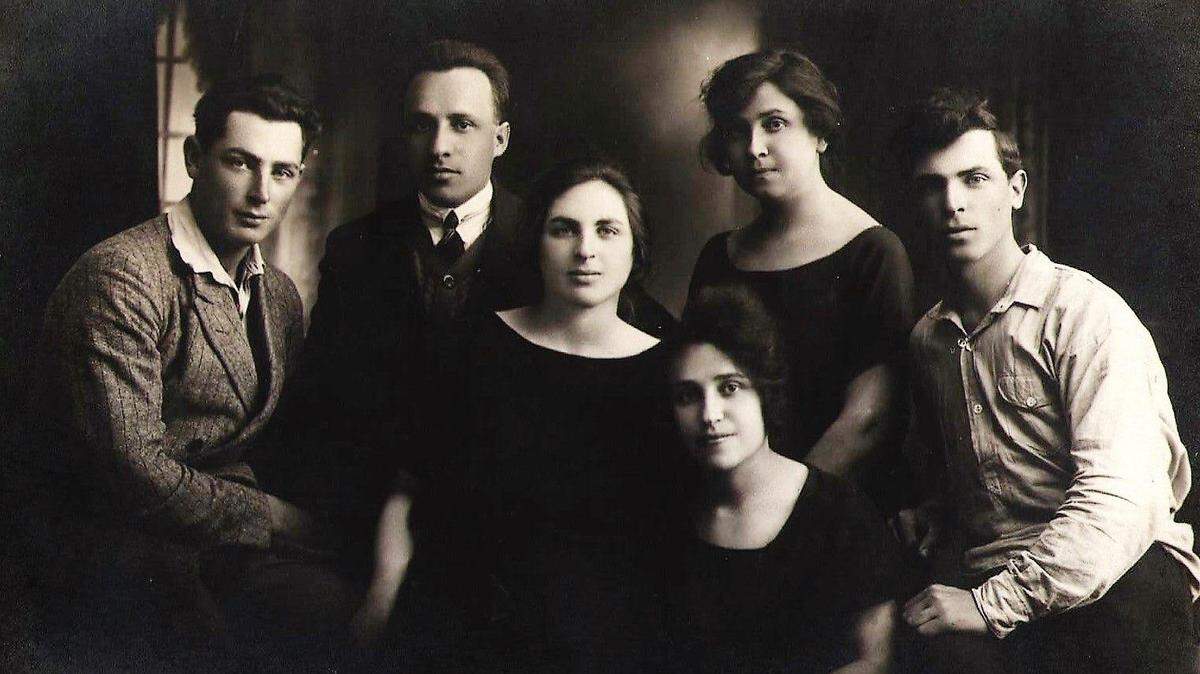
They say I look the most like her. The big brown eyes, the round face, the less-pronounced Semitic nose. But I don’t really know what she looked like. The only memories I have of my Bubbe are from a few black-and-white photos. I’m about 2 years old with long dirty blond hair and a contagious smile, while she is stern with large glasses and a frock.
It is hard to see any resemblance at all. I see only a worn woman — someone who had been through a lot in her lifetime. This you can see clearly.
There were five siblings, but I only really know of two. My Bubbe and her younger sister. Maybe it is because I am the younger sister that I relate to the story, of an older, stronger one, with eyes like mine, getting her sister out of the Ukraine and settling her in Israel. A place she herself tried to make a home, but eventually left.
When I go to Israel I cannot keep up with the number of cousins and relatives who live there. There are too many leaves and branches on the family tree to count. But what I can recall is that every single one of them wants to see me, in fact, they insist on it. To them, family is everything. I usually leave exhausted from all the attention.
And each time I go and I am smothered in love, I think maybe I will live here one day. Maybe this is my home. There has always been a certain comfort in knowing that there is a place waiting for me with open arms. Now, like Jews all across the world, I am left in shock and horror as if a new diaspora has emerged.
Esther Rabinowitz, my Bubbe, was in dental school in Odessa. A woman. A Jew. This was the exception and not the rule. But she ended up in the Bronx, then Los Angeles, spending most of her life working long days on her feet, never completing her degree, settling into life in the States — yet still visiting Israel on occasion.
The first time I went to Israel to serve as a volunteer in the Navy, I was reminded of the scene in the movie “When We Were Kings,” about Muhammad Ali.
There is a scene of pure elation when he flies on an African airline for the first time and realizes there is a Black pilot, that everyone on the plane is like him, his excitement palpable.
The first time I landed in the Holy Land, I, too, could not believe it. I kissed the ground like I did the family in front of me and realized everyone around me was actually Jewish. I was elated — and calmed.
As I stare at the TV or scroll through social media, I still cannot believe that this has happened. That terrorism so brutally attacked and dismembered helpless people. Yet here I sit. Conflicted. Terrified. But most of all heartbroken. I can only imagine that I am experiencing an alchemy of syndromes, part survivor’s guilt, part transgenerational trauma, part PTSD, part anxiety. And just plain old sadness.
Why does my family have to live in so much fear when all they have done is try for peace? The media have a way of distorting events.
Just because someone chooses to live in the Holy Land does not mean they believe in war, violence or harm. In fact, most of them want peace. Why don’t we hear these stories?
When I think of my life, I am reminded of another movie, “Sliding Doors,” where a woman is able to see how her life would have turned out entirely differently if she had changed just one simple event.
I know that empirically my grandmother staying in Israel would not mean I would be there now. She would have not met my grandfather and subsequently, the events that led to my birth would not have occurred. Still, I am Jewish, with big brown eyes and a less pronounced nose. These days I resemble her most. I am here, but there. I am worn — someone who has been through a lot in her lifetime.
I am her, and she is me. And we are all with Israel wherever we have ended up.
Elana Rabinowitz is an ESL teacher and writer.