‘I live in the West Bank, under Israel’s military occupation’ | Opinion
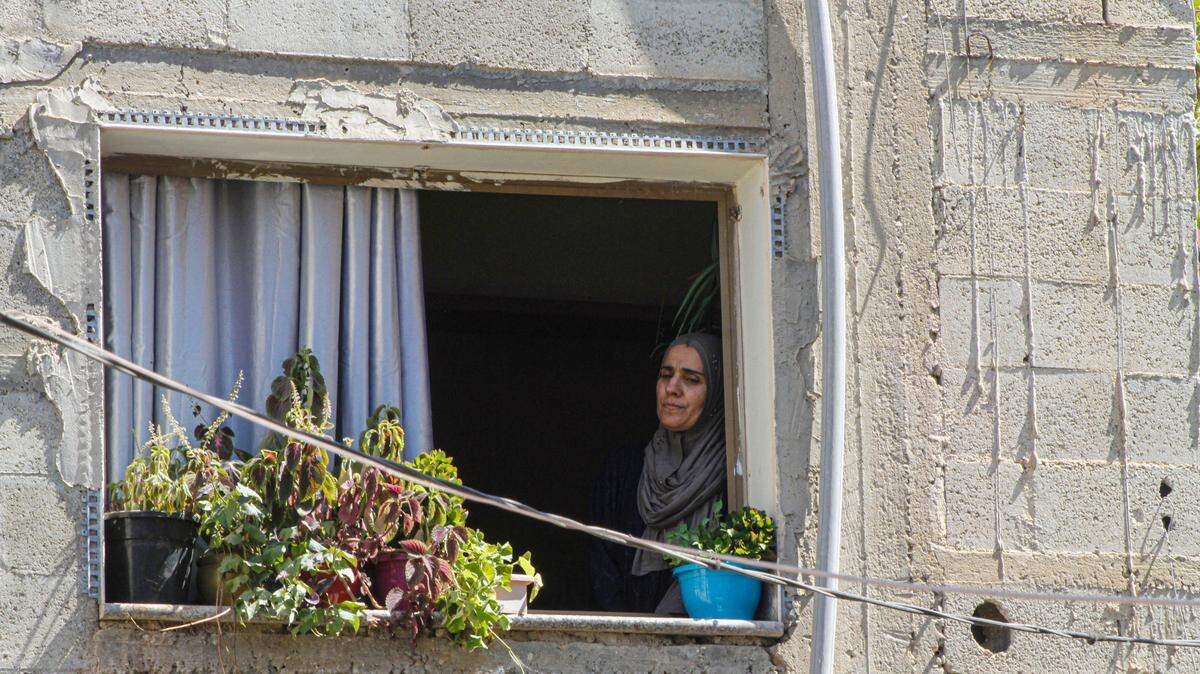
Everything in the Palestinian territories is measured in a relative state. We consider safety relatively; pain is relative — and happiness is as well.
On a usual day, I wake up hopeful that the roads will be open and our trip to school and work will be relatively safe.
As an American who moved to the West Bank a few years ago in the hopes of continuing my research and fieldwork, my journey has been conflicting. On one hand, I am collecting lots of primary data ripe for rigorous research on the political landscape in the Middle East and, more specifically, agency and gender within a colonial context. But on the other, I am fearful of my daughters’ safety on a daily basis.
My girls and I are based in a small town neighboring a large settlement in the West Bank. Since we are located on areas B and C, as determined by the Oslo Accords signed in 1994, our security and civil affairs are all controlled by the Israeli authorities.
We are, as most would classify, under complete military occupation. Access to water is restricted.
Access to electricity is restricted. Access to roads and areas within the West Bank is restricted.
Even movement in and out of the West Bank is completely restricted by the military. On a usual morning, we wake up unsure of whether roads are open or closed. My children’s trip to school every day is not guaranteed.
This is normal life for most Palestinians in the West Bank. The sight of Israeli military checkpoints and Israeli soldiers close to our home is a common and frightening sight. The more we get used to it, the more it becomes part of our everyday existence.
Living in the West Bank taught me to work around the occupation. On a day in which my town is experiencing full military closure, which is quite common, I improvise and switch all of my university lectures to zoom meetings and group calls and give my children a day off from school. This is the only way we are able to survive.
Today, however, we are not as confident as usual. The situation is escalating at an alarming rate, and the Palestinian loss of life is being shared by the Israelis. This in and of itself frightens me of what is to come.
Back home, in the United States, my government is calling for full-scale support of Israel’s military operations, as opposed to encouraging de-escalation on both sides. For me, this is the time to truly decide if its worth it or better to head home to the Sunshine State.
Lana Shehadeh, Ph.D., is an assistant professor of political science at the Arab American University. She was born and reared in Miami and currently lives in the West Bank with her daughters Lilly and Talia.