
Their leader hints at violence against enemies. The GOP continues to bow down | Opinion
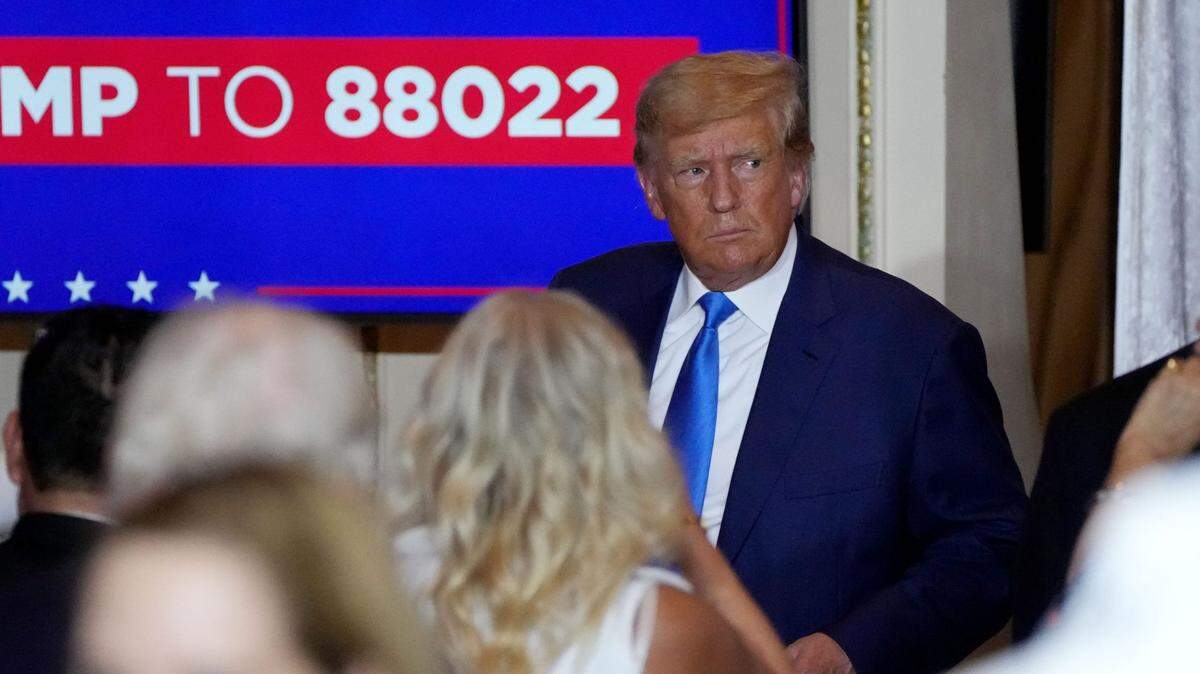
Donald Trump has shown his authoritarian mentality from the moment he entered the 2016 presidential elections. Back then, Americans brushed off as hyperbole comments like his offer to pay the legal fees of supporters who knocked “the crap out of” protesters at one of his rallies.
It was, thanks to Trump, that for the first time in American history, rioters stormed a democratic institution — the U.S. Capitol — to stop the certification of an election.
There are no lessons learned. Trump leads national and state Republican presidential primary polls, and his rhetoric has gone from off-the-cuff remarks to straight-up violent.
He’s suggested a military general he appointed to the Joint Chiefs of Staff should have been executed. Trump wrote on his social media website Truth Social that Gen. Mark Milley’s phone call, done in coordination with Trump’s defense secretary, to China after Jan. 6 was “an act so egregious that, in times gone by, the punishment would have been DEATH.”
Trump also posted a photo on Truth Social of a law clerk who works for the New York judge presiding over his civil fraud trial, an invitation for violence against the judiciary. That prompted the judge to issue a gag order barring Trump from speaking publicly about his staff.
Trump told Republicans in California that shoplifters should be shot, raising the obvious comparison with a strongman Trump personally praised: Former Philippines President Rodrigo Duterte, whose war on drugs embraced extrajudicial killings of thousands of suspects without a trial.
Trump has also vowed to investigate media outlets he sees as enemies, showing his disregard for the Constitution and freedom of press. He’s called on Republicans to shutdown the federal government to stall the criminal cases against him and urged the House to impeach President Joe Biden because the “lowlifes Impeached me TWICE.”
As have authoritarians before him, Trump sees the state’s machinery as a mere conduit to his own interests and retribution, which he masks under the guise of making America great again or draining the swamp.
The problem isn’t just that Americans have become numb to his remarks. Many see violence and the eroding of the institutions that keep a democracy strong as justified means to achieve the greatness that the former president sells them. It’s become part of the GOP platform to defund federal agencies like the FBI, which also investigates local crimes that Republicans themselves promise to curtail if they return to the White House. Few conservatives seem bothered when Trump vows to use the U.S. Department of Justice to investigate his political rivals
If Trump is a symptom of our polarized times, he’s made the annihilation of one’s opponents a righteous cause. A pastor’s opening prayers at an Iowa Trump rally over the weekend said, “We ask that those who stand against [Trump] be put to silence.”
If reelected, could Trump incite another Jan. 6, or something worse? That’s a possibility that few of his rivals in the presidential primary publicly contemplate. Instead, many of them escalate Trump’s violent rhetoric.
If the former president considered bombing drug labs in Mexico, Florida Gov. Ron DeSantis said he wants to send military troops into the country to fight drug cartels. That would be the type of foreign intervention that Republicans themselves say prevents the country from putting “America First.” DeSantis also vowed to “start slitting throats” of federal bureaucrats.
Republicans who call out Trump’s threat to democracy are losing ground in their party. That’s dangerous because an emboldened Trump back in the White House, seeking revenge for his perceived victimization, could do more damage than he did in his first go-round.
Click here to send the letter.
BEHIND THE STORY
MOREWhat's an editorial?
Editorials are opinion pieces that reflect the views of the Miami Herald Editorial Board, a group of opinion journalists that operates separately from the Miami Herald newsroom. Miami Herald Editorial Board members are: opinion editor Amy Driscoll and editorial writers Isadora Rangel and Mary Anna Mancuso. Read more by clicking the arrow in the upper right.
What's the difference between an op-ed and a column?
How does the Miami Herald Editorial Board decide what to write about?
The Editorial Board, made up of experienced opinion journalists, primarily addresses local and state issues that affect South Florida residents. Each board member has an area of focus, such as education, COVID or local government policy. Board members meet daily and bring up an array of topics for discussion. Once a topic is fully discussed, board members will further report the issue, interviewing stakeholders and others involved and affected, so that the board can present the most informed opinion possible. We strive to provide our community with thought leadership that advocates for policies and priorities that strengthen our communities. Our editorials promote social justice, fairness in economic, educational and social opportunities and an end to systemic racism and inequality. The Editorial Board is separate from the reporters and editors of the Miami Herald newsroom.
How can I contribute to the Miami Herald Opinion section?
The Editorial Board accepts op-ed submissions of 650-700 words from community members who want to argue a specific viewpoint or idea that is relevant to our area. You can email an op-ed submission to oped@miamiherald.com. We also accept 150-word letters to the editor from readers who want to offer their points of view on current issues. For more information on how to submit a letter, go here.
This story was originally published October 10, 2023 at 12:00 AM.