Schools should use the ‘hidden curriculum’ and give all kids a chance to excel | Opinion
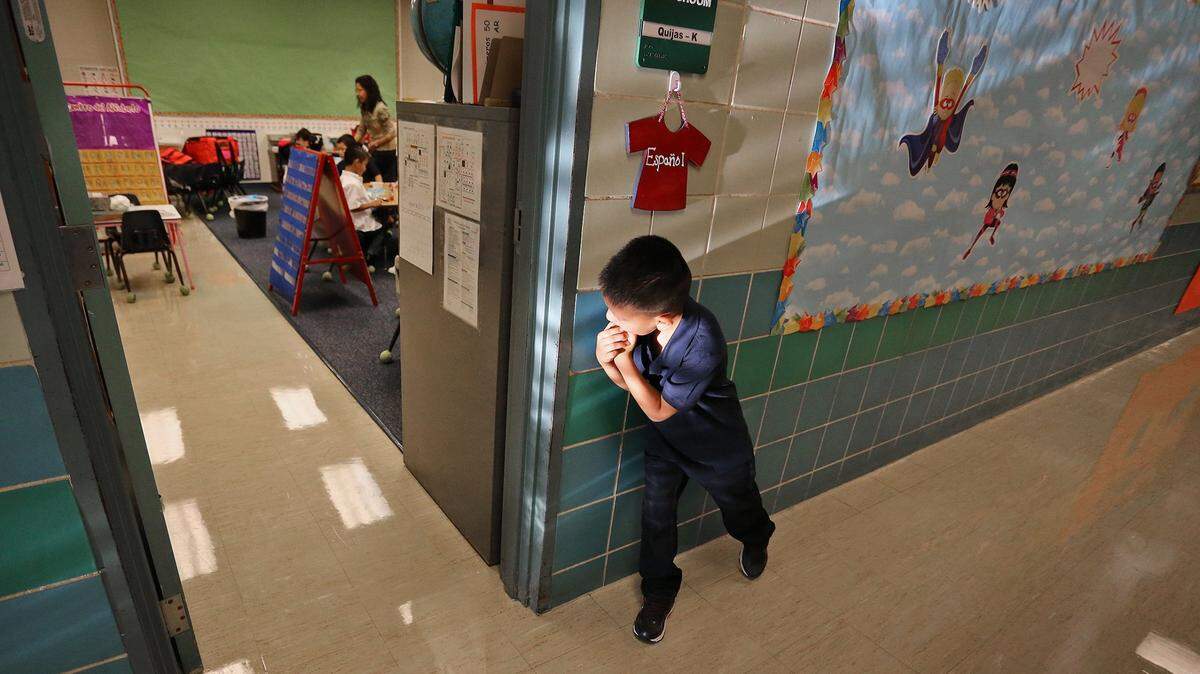
Education insiders use the term “hidden curriculum” to describe unspoken rules that govern schools. The hidden curriculum is made up of relationships and behaviors within a school and decides who achieves and who does not.
Little things — like having a teacher who always calls on you — matter a whole lot. So do big things, like if you have to pass through metal detectors each morning to enter your school. We use these to make sense of the world and our place in it.
This school year, I propose that we expose the hidden curriculum and give all students a shot at excellence. These are three of the unspoken rules for achievement that Florida school districts should explicitly offer students this school year:
▪ Students must be allowed to find purpose in all of their activities.
Students care more about “why” than “what.” They are constantly assessing if something is worth their time. Call it youthful wisdom. The hidden curriculum is that educators engage with students as if they are stakeholders of their own education.
For example, one student was in an Individualized Education Program from elementary to high school. Everyday he sat in the back of his classes, head down, writing in a tattered notebook. Finally, his 10th-grade English teacher askedwhat Jay was writing and asked if he would share. He revealed pages upon pages of eloquent rap lyrics. She decided to use the opportunity to connect with the student over his passion for prose.
Public school students need a rich curriculum to relate to what they’re learning. That means not hastily banning age-appropriate and accurate books and curricula on African-American or LGBTQ people because they make some parents uncomfortable. Instead of hasty ideological censorship, we should ask why certain topics make people uncomfortable in the first place. All students need to see their place in historical context. They must be shown that their opinions, differences and torn notebooks matter.
▪ Students must be taught how to form meaningful relationships in school.
Most young people get their first jobs because they have an existing connection, not because of their academic accomplishments. They should be taught to network and shown how to ask for help. They need to see other people as a resource for when they get stuck.
The teacher of the student who wrote the rap lyrics went a step further after realizing her student’s love of music. She connected him to a friend who worked at a recording studio. The student was invited to record a few of his own songs, one of which he performed in front of classmates, receiving a standing ovation.
Teaching and learning are social. It’s beneficial when young people see themselves as members of the same community. When we teach them how to develop meaningful relationships — with peers and adults — we set them up for success outside of the classroom. And when we band together despite difference, we also become better prepared to handle social-level problems, from pandemics to hurricanes.
▪ All students and teachers’ mental health must be supported.
Young people’s mental-health indicators are at all time-lows. A national teacher shortage continues to hemorrhage qualified professionals from public education, often because new policies restrict their freedom. These are not mutually exclusive problems, and these conditions do not inspire learning.
Growing up in a broken home, the talented student dealt with many stressors. He almost joined a gang for the camaraderie it offered. But from the relationship he formed with his teacher — one he maintains years later — he realized he had the potential for more. His self worth grew from his teacher believing in him.
Our schools must be places where students and educators see themselves as worthy and valuable. While the pandemic posed a hypothetical opportunity to reimagine education, the vision was not realized. Instead, we have continued the same top-down accountability that puts too much weight on meaningless tests in determining the resources schools and students get. Interventions, like meditation exercises to start the morning, are more effective at increasing achievement and curbing unwanted behaviors than homework.
Ultimately, teaching students the hidden curriculum requires positioning public education as the primary responsibility of society. And if we think about it, the same rules apply to society at large, too. We only have to decide what kind of world we want to live in.
Anindya Kundu (@DrAnindyaKundu; @DrBengaliTiger) is an assistant professor of educational leadership at Florida International University. He is the author of “The Power of Student Agency “and is writing his second book, “The Power of Educational Leadership.” His TED Talks have received over 6 million views.