State lawmakers should butt out. Miami Beach’s historic buildings should not be destroyed | Opinion
When I was boy, my dad took me to a watchmaker on Washington Avenue and 11th Street in Miami Beach. A few blocks away, sat Ocean Drive, its old, dilapidated hotels and front porches occupied by old folks. “Waiting to die,” Dad said.
Then, taking me to the Nemo Hotel on First and Collins, he said, “I used to work here. I want to show you where I worked as a waiter when I first came to America. In 1923. I had 18 cents in my pocket. It was beautiful then.
He said that Miami Beach was the place to be. He met my mother at the dog track. Fifth Street was the furthest north. “There were two policemen, he said. “They let one go in the summer. Nothing for him to do.”
We walked down Ocean Drive, a few blocks from where he parked his new 1953 Cadillac. I was 11. Dad was 49. The hotels, neglected remnants the past, seemingly ached to be razed, replaced with new structures, even then. And they might have eventually been torn down, but for Barbara Capitman, a 1980s preservationist, and some far-sighted city officials.
History teaches us so much, and those Art Deco buildings allow us to contemplate what our community once was. That’s why we must tend to them. Treasure them. Look at them as the works of art that they are, representing how things were when they were built.
Miami Beach is a relatively young city, its character still in development. But unrestrained development and legislators’ efforts in Tallahassee perversely threaten to destroy our heritage, like those who wish to not recognize dark chapters of the American experiment.
Cities, also, are experiments, and their futures depend on who wins the never-ending battle between developers and preservationists.The function of a historic preservation board is to balance the necessity of development. Yes, development is necessary, but so is historic preservation. Contributing structures do that. Historic preservation board meetings last all day with architects, developers, and preservationists appearing, presenting arguments and HPB board members agonize, argue, analyze and decide over details of new structures to conform to standards that will not decontextualize historic districts.
The people who volunteer to serve on those boards are among the most dedicated, conscientious and careful guardians of their communities. They are local citizens dedicated to beauty and culture. They are not elected politicians who either pander to a base or receive campaign contributions. Responsible developers and architects work with these board members to develop buildings that contribute to, and not detract from, neighborhoods. They appear at public hearings, bringing renderings and plans to be impartially scrutinized. This is a crucial process, and the Legislature shouldn’t tamper with it.
Flood-zone resiliency can be achieved with assessing the vulnerabilities of a historic structure, maintaining the surroundings, including flood barriers and strengthening foundations, and raising buildings above flood level.
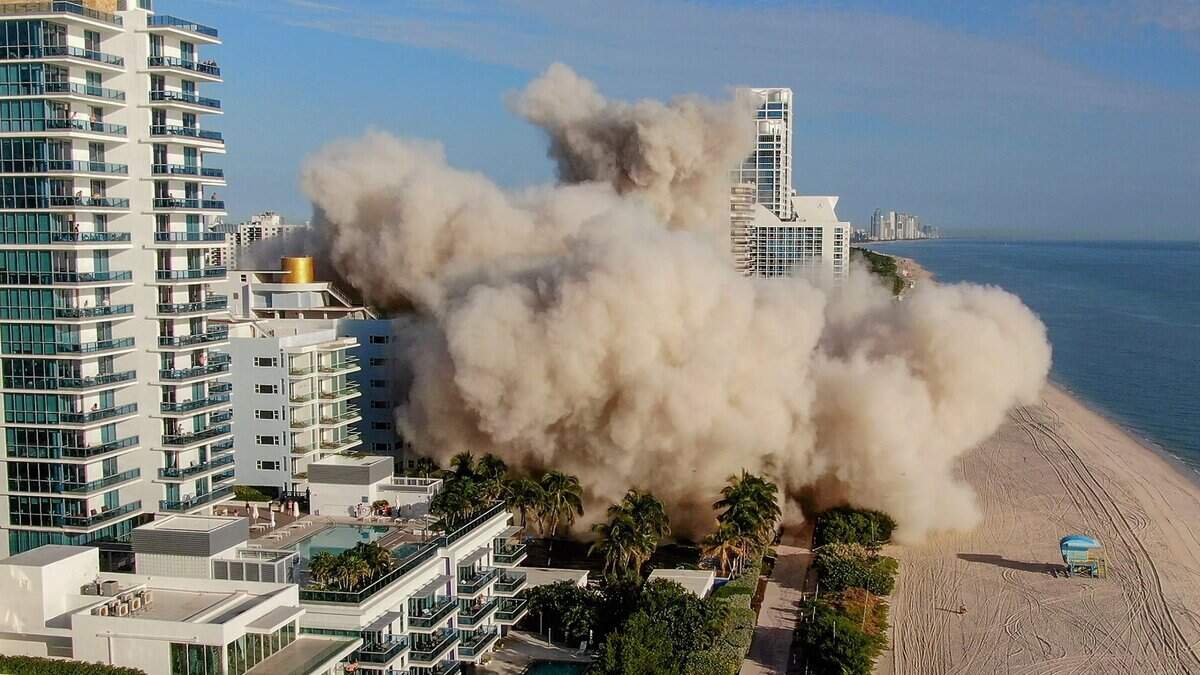
Now Florida legislators threaten Miami Beach’s historic structures, supposedly in the name of resiliency, vulnerable to being bulldozed and replaced with elevated cubes.
Miami claims to be “world class.” (I hate that term.) But think about cites in that category: London, Paris, Rome, New York, to name a few. Along the grand boulevards of Paris, the structures are old. The national government respects decisions of local authorities to preserve their character. A burned-out Notre Dame is being painstakingly reconstructed, to the tune of almost $900 million, according to the government. New Yorkers still lament the destruction of the original Penn Station. Still, a landmarks commission protects historic structures. In Charleston, South Carolina, the waterfront district and meticulously preserved buildings ensure that its history is preserved. Even the slave market is one view.
The arguments for historic preservation are solid: maintain cultural heritage and inherent architectural value; provide a learning tool for future generations; support for the local economy; encourage public gatherings, economic growth through tourism; reduce the environmental impact of new construction and minimize waste; flood mitigation; and shelter.
Miami Beach’s historic buildings should be protected, and even elevated. But they should not be destroyed. They are not “waiting to die.”
David Wieder, a Miami Beach attorney, served on the Miami Beach Historic Preservation Board, 2012-2018, chairing it for two years.