
Investing in climate education is a must to secure Miami’s future | Opinion
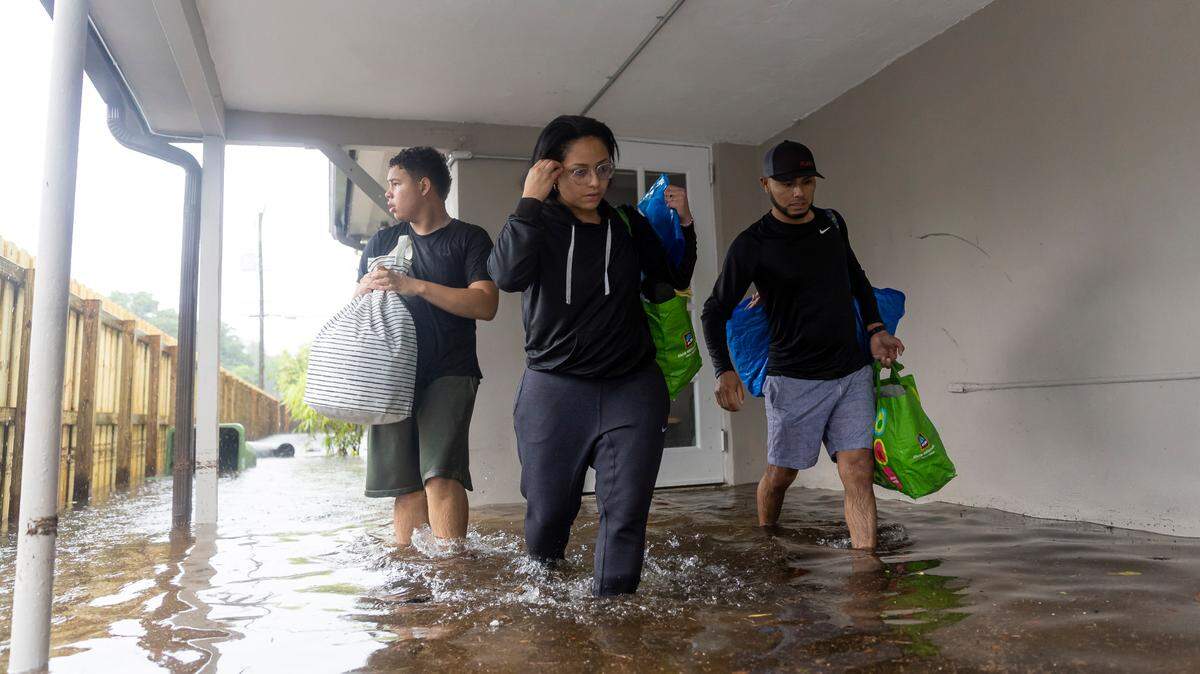
Last week’s historic deluge in South Florida closed airports, stranded commuters, caused gas shortages and millions of dollars in damage. It was called a one-in-1,000-year storm — again.
The weather system responsible was so unique that it took five days for meteorologists to finally categorize it as a supercell — or rain bomb — but most gloomily agree that this is just a sign of more extreme weather to come.
As the 53rd anniversary of Earth Day approaches on April 22, there is a nagging need to educate the public and take collective action to address pressing environmental issues. The signs and symptoms are all around us.
Consider this:
For the past few years, coastal communities in Florida have been dealing with mounting problems caused by a massive influx of sargassum that can be seen from space! While this seaweed itself does not pose a health risk, when it decomposes it unleashes an unpleasant odor reminiscent of rotten eggs. The tiny sea creatures that live in the seaweed can also cause blisters and skin rashes. And our tourism, fishing and boating industries in the area continue to suffer from this aquatic blob.
Many experts believe that the invasion of sargassum is the result of human pollution and climate change, since warming waters and changing ocean currents favor the earlier onset growth and spread. Beyond the sargassum invasion, Florida has also been experiencing extreme heat in recent years. Last year, the state recorded its hottest August ever recorded, with many day temperatures regularly exceeding 90.
Rising temperatures lead to an increase in the frequency and intensity of storms and flooding events in Florida like the one we just experienced. For every degree (Celsius) that Earth’s atmospheric temperature rises, the amount of water vapor in the atmosphere increases by about 7% according to NOAA and NASA.
In 2022, our state experienced a series of severe tropical storms, as well as hurricanes Ian and Nicole, which caused widespread flooding, property damage and power outages. Last week’s heavy rain in Miami-Dade and Broward counties followed drier-than-usual conditions, in line with trends predicting more extreme weather. The more water vapor that air contains, the more energy it holds. This energy fuels intense storms, which results in devastating events like this past week.
These events are not only costly in terms of property damage, rising property insurance costs and cleanup, they can also be dangerous for residents, especially the most vulnerable, making building climate resilience an imperative for all Floridians.
At the CLEO Institute, we firmly believe that climate and environmental literacy, coupled with strong civic engagement, must be a priority for South Florida to be climate and future-proof.
As Miami continues to be on the front lines of extreme weather, it is also experiencing rapid population growth at a high cost, placing a tremendous burden on precious ecosystems such as the Everglades and Biscayne Bay.
It is with this urgency that we are launching our inaugural Walk The Talk Miami Earth Day 5K event on April 22 at MAST Academy. This event will take place alongside beautiful Biscayne Bay, and while sporting in nature, it is also a call to governments, academic institutions, school district, chambers of commerce, businesses and Miami residents to join us in making this issue a top priority.
We are scheduled to welcome Miami-Dade County Mayor Daniella Levine Cava who will release the county’s Climate Action Strategy progress report. The superintendent of Miami-Dade Public Schools will also be on hand to speak about the district’s sustainability efforts and to emphasize the importance of educating our youth in climate science and resilience.
Funds raised from the event will support climate-resilience education in Miami-Dade through CLEO’s innovative PSA campaigns, Climate Resilient Schools programs in partnership with Miami-Dade Public Schools STEAM department and the Empowering Resilient Women’s program geared to vulnerable communities.
This year’s Earth Day theme is “Invest in the Planet” for a better future. Let’s pause and consider where we are heading ecologically and how we can balance sustainable economic growth with environmental stewardship and conservation.
Walk the talk. Miami, and our kids’ future, depend on it.
Yoca Arditi-Rocha is executive director of The CLEO Institute.
This story was originally published April 20, 2023 at 11:21 PM.