America’s seaports aren’t in great shape. PortMiami sets a high bar for them to emulate | Opinion
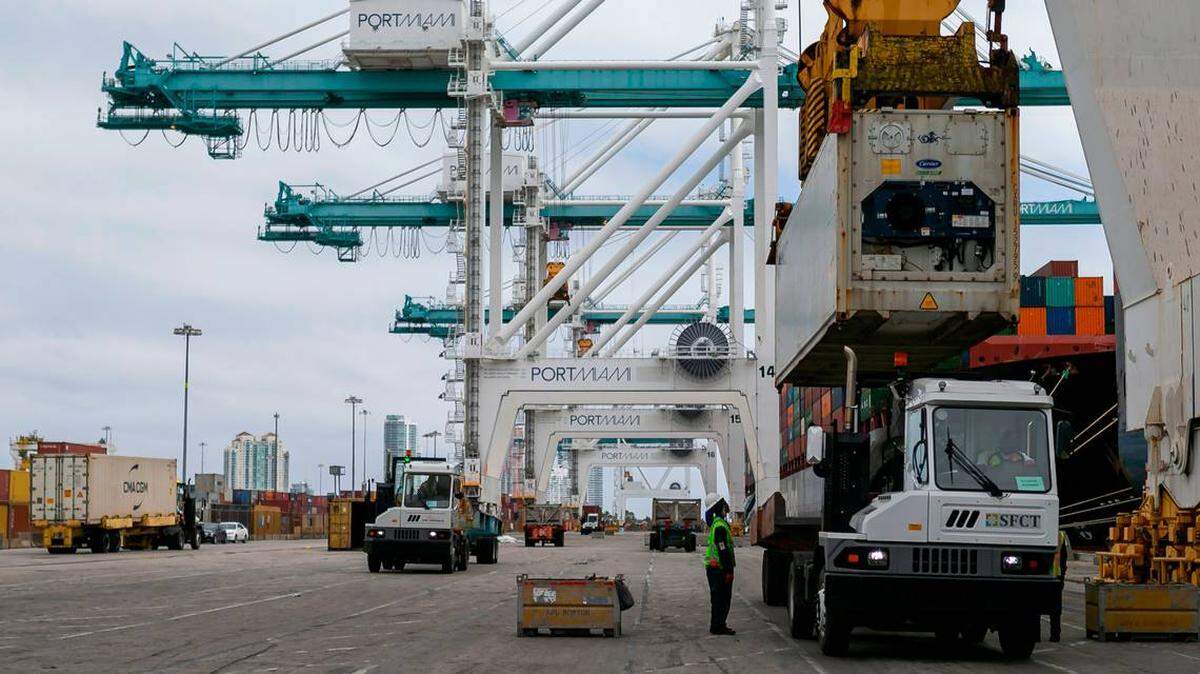
Seaports are a vitally important part of the national economy. They are gateways for domestic and international trade, with more than 95% of the cargo entering the United States arriving by ship. More than 360 commercial seaports help to move these goods to their destinations in communities across the nation. U.S. ports also are a significant resource for national defense and emergency preparedness.
PortMiami, a crown jewel in our economic landscape, is among the nation’s busiest, annually contributing more than $43 billion and more than 334,000 jobs to Florida’s economy. The port has elevated Miami to the status of Cruise Capital of the World and Global Cargo Gateway.
Unfortunately, despite the diverse sources of revenue and funding, American ports lack the financial resources to perform efficiently. While seaports fare far better the nation’s airports when it comes to infrastructure, the American Society of Civil Engineers (ASCE) awards them little more than a passing grade.
In dollar terms, ports handle more than $6 billion of goods each weekday, with $378 billion in tax revenue generated by port activity. The value of economic activity related to ports equals $5.4 trillion annually.
When it comes to the national economy in 2021, the country’s nine largest ports handled a record 50 million shipping containers, a 16% increase from 2020. But this huge volume of traffic caused problems at several U.S. ports. Dozens of container ships with cargo to unload were forced to park themselves outside the ports of Los Angeles and Long Beach due to space constraints. As detailed in numerous reports, American ports and rail terminals are struggling to cope with unprecedented surges of imports from Asia.
In terms of public policy, in November 2021 the White House announced a Biden-Harris Action Plan for America’s Ports and Waterways to address underfunded port and waterway infrastructure and to boost the nation’s global competitiveness.
Many U.S. ports have bridge or depth limitations that restrict their ability to receive the larger, post-Panamax vessels that are the future of ocean shipping. Also, the surge of cargo coming off larger vessels can strain outdated landside infrastructure.
According to the American Association of Port Authorities, Congress and the administration should pass a robust surface transportation authorization that prioritizes freight mobility and intermodal access to seaports. The industry argues for a national freight policy that considers cargo flowing through ports and the integration of existing connectors between interstate highways and intermodal facilities, such as seaports.
In addition, ports themselves must adopt new technologies to reduce wait times at docks, boost efficiency, improve resilience and increase security.
Finally, the public and private sectors must cooperate more closely to improve· freight and landside connections to strengthen the entire freight system and reduce congestion that is costly to the economy when moving goods.
While the outlook is improving for America’s seaports, their current condition and performance are subpar. Though some ports are in much better shape than others, overall U.S. ports do not meet the test of a global economy that seeks to attain and maintain primacy in international commerce and optimal productivity and efficiency in domestic commerce.
To date, PortMiami has welcomed more than 300 post-Panamax vessels and plans are under way to improve port infrastructure further. Nationwide there is an urgent need to invest in our ports. Unquestionably, PortMiami is a model for other U.S. ports to follow.
Jerry Haar is a business professor at Florida International University and a global fellow of both the Woodrow Wilson Center in Washington, D.C. and the Council on Competitiveness. He sits on the board of the World Trade Center Miami.