
Congress should extend HOPE and HELP to boost Haiti’s vital apparel industry | Guest Opinion
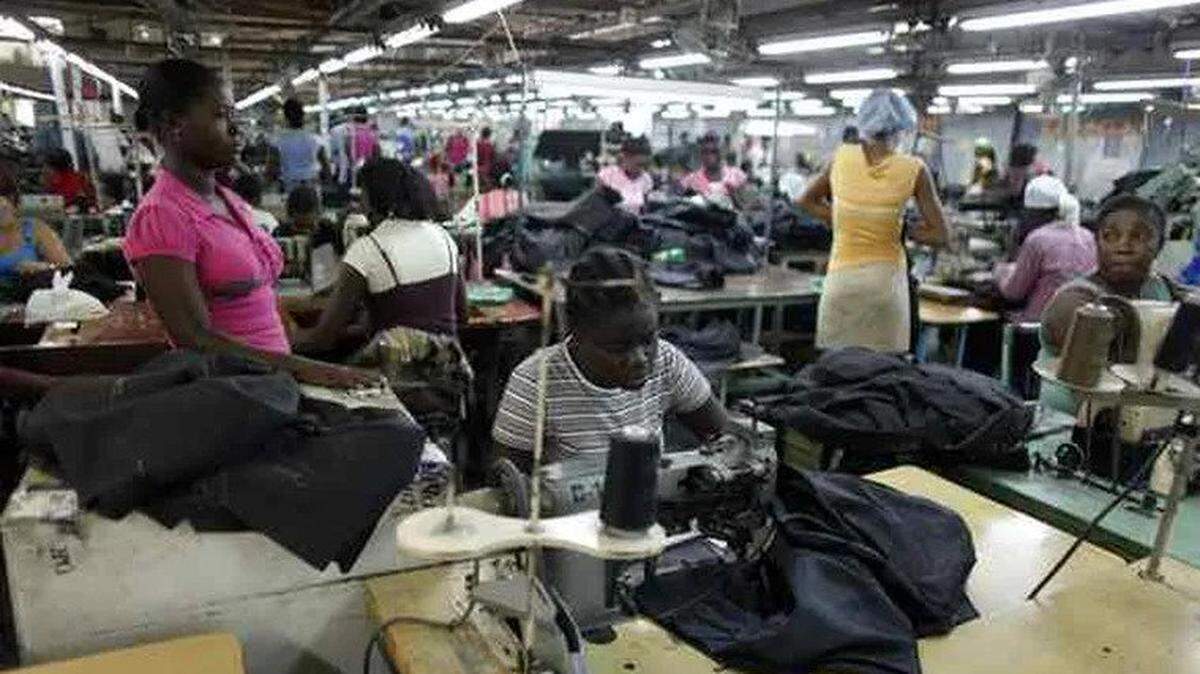
Despite the devastation of gang violence and persistent political instability, the Haitian apparel industry, one of the pillars of our economy, up to this point, has fared remarkably well.
Sadly, though, the situation is taking its toll on the apparel industry, the families that depend on it for their livelihood and Haiti’s economy at large.
Our industry grew from a mere 8,000 workers in 2005 to 60,000 in 2020, thanks to the bipartisan efforts of then-U.S. Rep. Charlie Rangel, D-New York, and Republican Sen. Mike DeWine, now governor of Ohio, to enact trade preferences, now known as HOPE/HELP. These enable our industry to flourish.
The apparel industry accounts for 90% of all Haitian exports. However, it now is down to about 40,000 jobs because of several uncertainties. In the U.S. context this may not seem dramatic, but for the poorest economy in the Western Hemisphere, these jobs are precious. Each apparel-industry job supports up to eight secondary jobs.
The export industry’s generation of foreign exchange is critical to the stability of our Gourde currency, essential to fighting inflation and helping mitigate further violent protests that result from the increased cost of necessary imports like petroleum fuel, cooking oil and U.S. rice and beans.
This is why it is vital for the U.S. Congress to renew the HOPE-HELP preference program before adjourning for the year.
We need President Biden and his administration to speak loud and clear on the importance of including the HOPE-HELP extension in an end-of-the year omnibus legislative package.
Haitians, with the help of the international community, must deal with our security, humanitarian and political challenges. We are resilient, and I am confident we will overcome these hardships. Once we emerge from the present crisis, we must have the necessary economic resources to create jobs.
With a long-term extension of the HOPE-HELP legislation, employment in the Haitian apparel industry can exceed 100,000, reaching even as much as 200,000.
Prime Minister Ariel Henry recently wrote to the U.S. Congressional leadership outlining why the immediate renewal of HOPE-HELP is vitally important for Haiti. A long list of Democrats and Republicans are stepping up to help.
Recently, Congressman Brad Wenstrup, R-Ohio, introduced legislation to extend HOPE-HELP through September 2035. DeWine recently reached out to his former colleagues, urging them to support these efforts. The list of those who are pressing for an extension is impressive: Sens. Marco Rubio, Dick Durbin, Raphael Warnock and Bill Cassidy; and Florida U.S. Reps. Maria Salazar and Frederica Wilson, in addition to U.S. Reps. Terry Sewell and Virgin Islands Delegate Democrat Stacey Plaskett.
We are now in the final hours of the 117th Congress, and the stakes are high for the Republic of Haiti. With the help of Biden and his team, we are confident the U.S. Congress will give us the framework to grow our apparel industry, so Haiti once again can fully utilize the opportunities that HOPE-HELP offers.
Wilhelm Lemke is the president of the Association des Industries d’Haiti (ADIH), the Haitian Manufacturers Association.