
It’s time for leaders in Cuba and exiles in Miami to sit down and talk | Guest Opinion
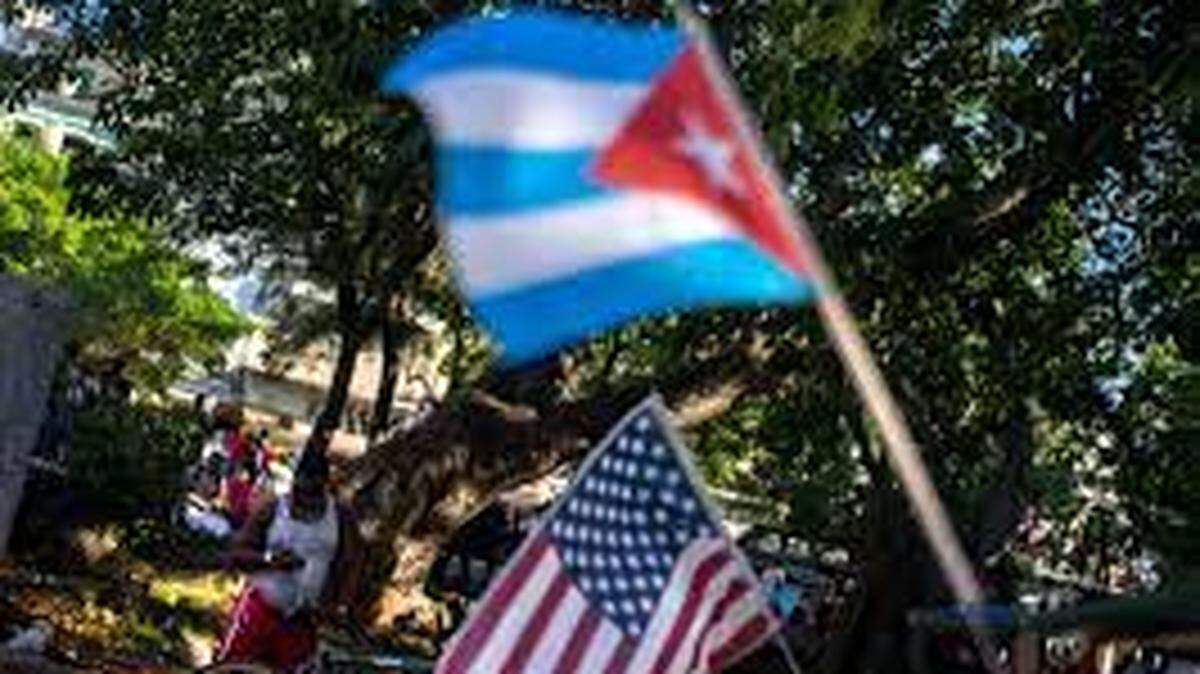
At the end of October, a group of entrepreneurs that included five Cuban Americans visited Havana. My friend Joe García, a former member of the U.S. Congress, accompanied them. There, they met face to face with President Miguel Díaz-Canel and heard him say: “You’ve taken the risk to work with us, to come here to build bridges and not walls. We want to strengthen our relationships with the United States, regardless of ideological differences.”
Then Díaz-Canel made the meaningful choice to praise the exiled Cuban diaspora with the observation that, “There are Cuban compatriots living outside of our homeland who want to be a part of the development of our country.”
For the large majority of members of the Cuban diaspora in Miami this message sent by the Cuban president does not sound credible. They have already heard similar statements in the past, but no real change has occurred.
Why should they believe that the Cuban government finally has decided to acknowledge that the body politic of the nation includes Cubans both on the island and in exile?; that after so many decades of divisions and ideological struggles, a genuine Patria para Todos must embrace all generations, ideologies, life experiences, creeds and identities?
As a non-Cuban and a former Czech diplomat, I am writing solely as a long-time engaged observer of the contemporary Cuban situation. I am well aware of the position of most of my Cuban-American friends: There cannot be any dialogue with the current Cuban government as long as it pursues policies of systematic violations of human rights and imprisons and persecutes the members of Cuban democratic opposition.
I respect that view, but I disagree with it.
The most recent message sent to Miami from Havana may really be an opportunity — and not more of the same. A real offer for serious negotiations may be finally on the table. I am convinced that Cuban Americans in Miami should look seriously at the most recent message sent from Havana and act accordingly.
Over 30 years ago, Poland, Hungary and Czechoslovakia made their own transitions to democracy by engaging in both literal and metaphorical handshakes between the dissidents and the political establishment of the time. In the Czech case, the real game-changer in the days that followed the student demonstration on Nov. 17, 1989 was a meeting between Vaclav Havel, the uncontested leader and the face of our Velvet Revolution, and Prime Minister Adamec, who became an indispensable player in the ensuing political process.
Change came with ever-increasing speed and surprised not only outside observers, but also us, the “revolutionaries” in the middle of it all. All these years later, we can trace a long and laborious road from Charter 77 to the Civic Forum.
These transitions had their own negotiation processes, times, disagreements and ruptures, but all notably featured government leaders willing to play a pivotal role in facilitating the changes that now seem so inevitable.
There is one major challenge for the exile Cuban community in Miami: to consider seriously what political, economic and democratic reforms within Cuba might warrant re-engagement.
There’s no question that the release of political prisoners and real dialogue with the Cuban opposition are necessary. The unsuccessful examples of Cuban economic reforms in the past offer us plenty of evidence that without all necessary constitutional guarantees for Cuban entrepreneurs and foreign investors and guaranteed fundamental rights and freedoms for all Cubans, there can be no authentic new beginning on the horizon. Those actions can only come from the current Cuban government.
And, if these steps are really taken, can Cuban Americans work together across party lines for their suffering homeland and finally achieve some visible results for their efforts? Or will they be trapped forever by their own stubborn idiosyncrasies and keep the status quo — shouts and demonstrations, but no change for Cuba or the Cuban people?
I have already registered several positive signals in the international realm that something new is in the air and real change a possibility. In Miami, a Cuban American has just offered $5 million in humanitarian aid to be sent directly to non-governmental organizations and religious institutions on the island. As of this moment, the Cuban government has not rejected the offer. If this humanitarian project gets off the ground, not blocked, but enabled by the Cuban government, it will be a significant test for its credibility.
I’ve always defended human rights and the bravery of those who oppose the Cuban regime, and I’ve had the mettle to act on my convictions as a dissident.
Don’t reject my advice out of hand. This is the moment to begin a dialogue among the entire Cuban community about their homeland’s future.
Martin Palouš is a senior fellow at Florida International University’s School of International and Public Affairs and director of the Václav Havel Program for Human Rights and Diplomacy. He also is president of the International Platform for Human Rights in Cuba. One of the first signatories of Charter 77 in 1977, seeking guarantees of human rights, Palouš was elected to the Czechoslovakian Federal Assembly in 1990 and served as ambassador of the Czech Republic to the United Nations from 2006-2010.
This story was originally published November 18, 2022 at 2:04 PM.