Congress should pass ENABLERS Act to reduce money laundering in places like Miami | Opinion
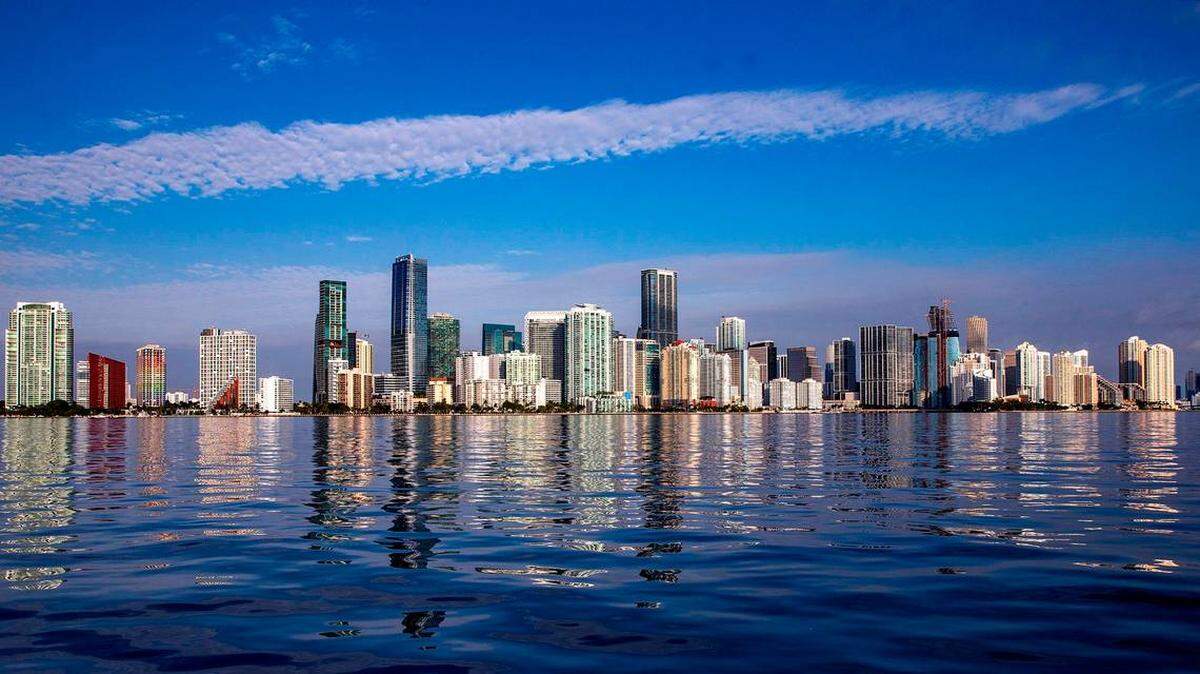
Exposés have long tied money laundering schemes to investment in and through Miami. From cocaine money that rebuilt parts of the city in the 1970s and 1980s to corrupt Latin American officials hiding stolen assets to today’s focus on Russian oligarchs evading sanctions, Miami has developed a reputation as a welcome center for the corrupt and criminal to launder money through real estate and other investments.
It’s time to change both the city’s reputation and, bigger picture, the laws that allow such illicit behavior to thrive in Miami, New York and throughout the country. Fortunately, a bipartisan bill working its way through Congress right now would provide that change.
Stories of ghost condos in “Little Moscow” and other foreign investments with secret, and often sketchy, origins share one commonality: They all had help from American “enablers.” Creating a complex layering of anonymously owned companies, routing investments through multiple countries and returning those illicit funds to the U.S. — all this requires a network of lawyers, accountants and money managers. Given gaps in current U.S. anti-money laundering law these “enablers of corruption” offer their assistance — legally — with a little willful blindness.
Consider the example of a Florida-based corporate service provider who received an email from academics posing as agents of a shady investor. The undercover academics asked about the use of anonymous corporate structures, presumably for the unstated purpose of moving illicitly obtained funds through the United States, to which the service provider responded, “[Y]our stated purpose could well be a front for funding terrorism … Seriously, if you wanted a functioning and useful Florida corporation you’d need someone here to put their name on it, set up bank accounts, etc. I wouldn’t even consider doing that for less that 5k a month…”
The alarming aspect of this exchange is not the discovery that there are bad people in the world — we know there are all too many. It’s that under current laws, the provider would have done nothing illegal by offering his services. Such service providers can grant their clients access to our financial system without asking or receiving any additional information about them — including whether they have ties to corrupt, criminal or terrorist activities. That must change.
Corruption and criminality
If we are serious about cracking down on these abuses of our system and about starving bad actors of illicit profits, we must update our anti-money laundering laws to cover the facilitators of corruption and criminality.
The bipartisan bill, appropriately titled the ENABLERS Act, would provide authority to the Treasury Department to develop risk-based rules requiring those who form companies or trusts and manage and move assets to know who they are assisting and, potentially, report suspicious transactions made by those clients to the Treasury Department.
This idea is not a new one. American banks have had comparable anti-money laundering responsibilities for decades, but as the amount of dirty money making its way into the U.S. has grown, so, too, has the sophistication and adaptability of money laundering schemes — including the use of “enabler” service professionals.
As a result of opaque money-laundering arrangements, we now better understand the need to provide our police, criminal investigators and prosecutors with the modern-day tools to identify and hold these dangerous actors accountable.
Rubio could help
Florida’s own Sen. Marco Rubio has been at the forefront of pushing transparency efforts to root out corruption. He was a lead sponsor of the Corporate Transparency Act, a bipartisan bill passed by Congress recently to crack down on the abuse of anonymous corporate structures.
ENABLERS is the next step in this work toward effective accountability. The ENABLERS Act has already passed the House as part of a larger, must-pass defense spending bill. We urge him to help ensure that the ENABLERS Act is also included in the Senate’s version of the defense bill in order to increase the chances it stays in the final, negotiated legislation.
There are a dwindling number of issues on which members from both parties can agree. Thankfully, cracking down on money laundering is still on the list.
The ENABLERS Act would disrupt the financial architecture of transnational crime and corruption — including as it has affected Miami. It would provide those we ask to find and hold accountable the leaders of illicit enterprises with the access and information needed to do so. It’s time for Congress to act.
Gary Kalman is executive director and Scott Greytak is advocacy director of Transparency International U.S.