
Miami-Dade can spur housing, prevent sprawl, create jobs and boost transit all at once | Opinion
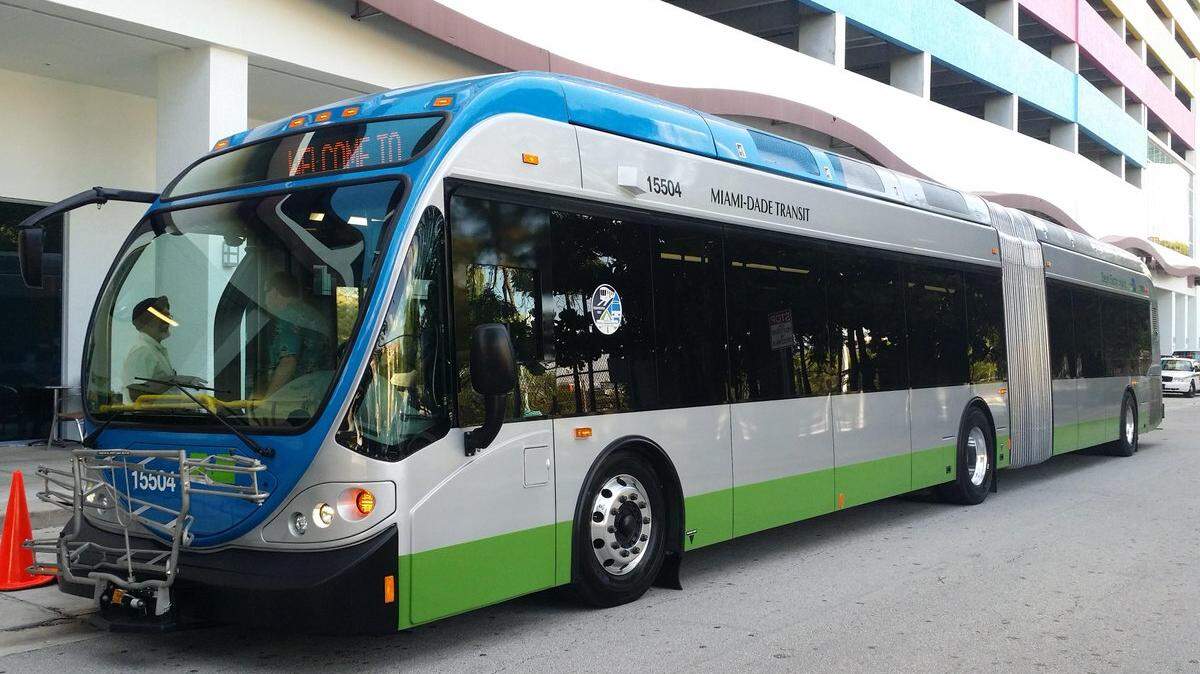
Miami-Dade County’s Rapid Transit Zone Ordinance (RTZ) would create a zoning district that fosters development along mass transit corridors. The RTZ is meant to implement the County’s policies of attracting transit ridership, establishing a more-compact and efficient urban profile within the Urban Development Boundary and developing residential density, along with commercial and employment intensity, necessary to support mass-transit systems. The proposed ordinance is the product of conversations and suggestions from people from every segment of the community.
Throughout the drafting process, I’ve had public meetings with eight county commissioners and several meetings with Miami-Dade County League of Cities representatives, business leaders; transportation, land-use and housing experts; and residents and elected officials from various cities. In response to their input, the proposed ordinance establishes areas within one-half mile of each of the SMART Plan rights-of-way, except for the east-west corridor, for which the buffer is one mile; this coincides with the boundaries of the Transportation Infrastructure Improvement District (TIID), which helps fund construction and operations of new transit corridors. For properties in unincorporated Miami-Dade that fall within the buffer, the ordinance maintains minimum floor-area ratios — the proportion of a building’s entire usable floor area to the total area of the site on which it is situated — and requires 12.5% of the units to be dedicated for workforce housing for residential developments of four units or more. It also creates a streamlined rezoning process. The county would exercise jurisdiction over the approval of rights-of-way and zoning of county-owned properties within the buffer along the corridors.
For properties in municipalities that fall within the buffer, municipalities are given two years to study and propose a corridor plan that is consistent with RTZ policies, while also balancing the need to protect the character of their communities. Municipalities maintain their zoning and land-use authority. In both municipalities and unincorporated Miami-Dade, all areas zoned for single-family homes or being used in that manner are exempt from this ordinance. Cities have said that they know their areas best; they understand the challenges facing us as a community and they want to craft the corridors in ways that comply with RTZ guidelines, but that don’t change the character of their individual communities. Therefore, as such decision-making will be at the municipal level.
Those who say, “not in my backyard,” should remember that we all have backyards. The magnitude of the problem requires collective action and communal resolve. We have long since lost the ability to segregate ourselves from soaring housing prices and paralyzing gridlock, and we need community-wide solutions to tackle the challenges we all are facing.
For those among us who say that this is not the right time, they are correct. Perhaps the right time was in 1985 when the first phase of the Metrorail was completed. Had this ordinance been in place, it is estimated an additional $1.378 billion for transportation funding could have been generated. Or maybe the right time was 30 years ago, in 1992. The RTZ ordinance would have generated $936 million for transportation funding.
It’s possible that the right time was in 2002 when voters approved the People’s Transportation Plan. The ordinance would have generated $414 million for transportation funding. If we had adopted the RTZ guidelines proposed in the foregoing years it would have also created additional housing stock, which would have helped bring down the price of housing, and additional economic development, which would have created jobs for our ever-growing population.
This ordinance is not perfect, but it will address major issues that could have been resolved long ago through a collaborative approach. That, in itself, is progress. I have heard the calls for greater, more drastic action. I also hear the cries that say the ordinance does too much. While both positions are offered sincerely, we must compromise in the creation of policy for the greater good.
During the past 30 years, we’ve watched our population and traffic congestion increase. We have watched development happen without coordinated and comprehensive planning. We have watched housing prices outpace wages. We have watched urban sprawl become a countywide development strategy by default.
The time for waiting and watching has passed. It’s time for action.
Oliver Gilbert III represents District 1 on the Miami-Dade County Commission.
This story was originally published August 29, 2022 at 3:46 PM.