
Firefighters — ‘natural environmentalists’ — need more tools to fight results of climate change | Opinion
Securing a safe and prosperous future for communities across America depends on expanding sustainability measures. Climate provisions in President Biden’s newly signed Inflation Reduction Act signal the most audacious investment in environmental sustainability ever taken, a course correction toward curbing future projections of climate change.
As Americans wait for the full integration of those legislative initiatives, communities are left to contend with the current effects of “climate changed.”
I am not a climate scientist. I am a firefighter and paramedic, viewing this issue from a perspective rooted in public safety. Our warming climate is accelerating unsafe conditions throughout communities.
Across the pond, a sweltering summer heat wave has cooked its way through Europe. The mid-July scorcher saw firefighters from the London Fire Brigade experiencing their busiest day since World War II. Research published this month in the journal Advances in Atmospheric Sciences forecasts similarly brutal heat waves as regular occurrences. Increasing frequencies and intensities of extreme heat events are expected to bring greater risks of heat-related illnesses, likely increasing hospitalizations and deaths.
Our changed climate also carries a fullspectrum of water-related events. July saw historic flash flooding ripping through eastern Kentucky, extinguishing at least 37 lives. Flash flooding in Las Vegas deluged casinos. In Miami, torrential rains at the open of hurricane season submerged Brickell.
Meanwhile, a historic southwestern drought is ravaging an already-parched landscape. From California’s snow-barren Sierra Nevada mountains, usually relied upon to replenish one-third of the state’s freshwater supply; to the shrinking Colorado River, the main artery sustaining western development; to Lake Mead, the receding reservoir at 27% of capacity on the Arizona-Nevada border; aridification threatens to reshape America’s West.
According to the U.S. Bureau of Reclamation, the Colorado River Basin will undergo significant water-usage cuts, threatening agricultural livelihoods, putting pressure on the most fundamental resource for the Basin’s 40 million residents. Water is both essential in supporting life — and pretty important to firefighters. Undoubtedly, prioritizing water usage among competing interests requires difficult decisions to be made. Sustaining life and providing for life safety must be non-negotiable.
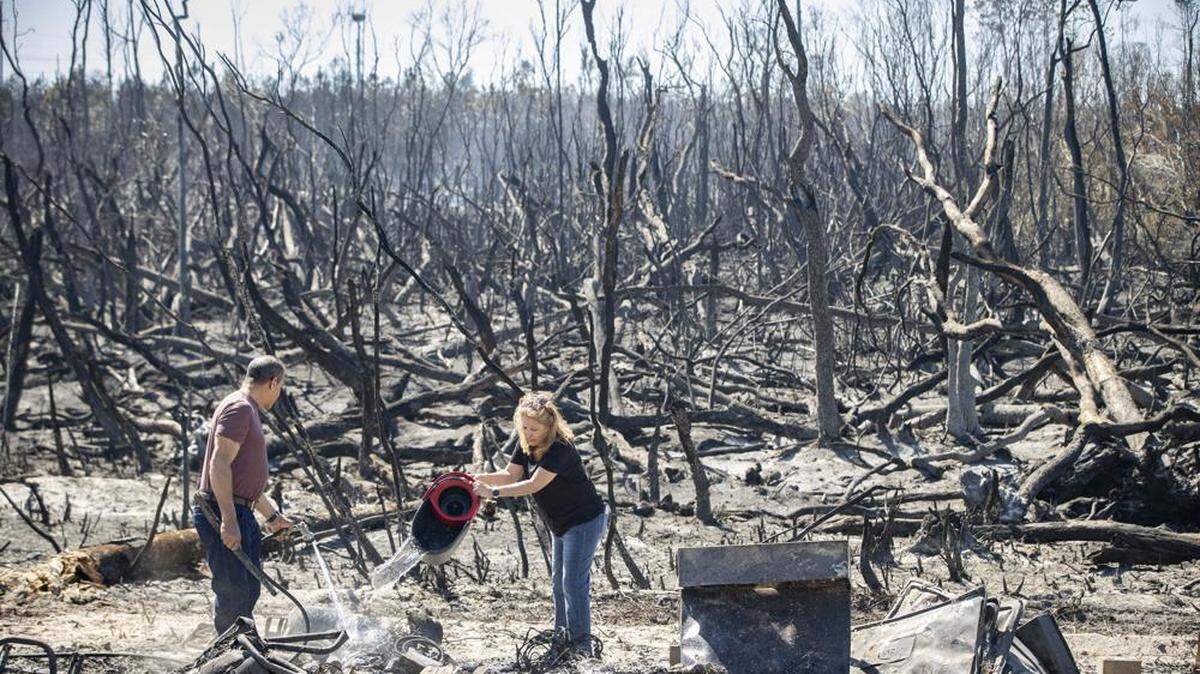
Megadroughts also make for ideal wildfire conditions. Consider the increased occurrences and intensities of wildfires across America. In 2005, 245 structures were lost in wildfires. Thirteen years later, in 2018, structure loss increased by 10,000%. That’s according to National Fire and Aviation Management and the National Interagency Fire Center. Whole communities become fresh fuel. In attempts to downplay the causal effects of our changed climate, critics cite forest overgrowth as the culprit.
However, the most extensive vegetation in California is not forest, it is chaparral (shrubs adapted to dry summers and wet winters). The increased occurrences and intensities of wildfires are a result of our changed climate. Increases in wind velocity removes moisture from vegetation. Any dried out vegetation meeting an ignition source will undergo a rapid, wind-accelerated spread, without respect to territorial, political or economic boundaries.
The present sounds bleak, resembling an apocalyptic blockbuster. As such political satires go, Adam McKay’s 2021 film “Don’t Look Up” is otherworldly. Denial in the face of empirical truth, “Don’t Look Up” should probably leave viewers hunched over, the recipients of a meteoric punch to the metaphoric gut.
Policymakers must dedicate resources not only to climate initiatives, but to public safety as well. Demand that firefighters receive training in urban-wildland interface firefighting. Support increasing federal funding for Urban Search and Rescue personnel, specially trained to carry out swift water rescues during flash flooding.
Finally, we must all hold elected officials accountable and force them all to “look up.” Navigating our changed climate demands dedicating resources to public safety.
Firefighters are natural environmentalists. We protect people, property, and the environment. Call on your local elected officials to adequately staff fire rescue units, improving safety for both residents and firefighters.
No one wants a public-safety landscape presenting more fires than there are firefighters to fight them.
John O’Brien is president of the South Florida Council of Firefighters and co-chair of Miami Climate Alliance’s Legislative Committee.
This story was originally published August 24, 2022 at 12:33 PM.