
Oswaldo Payá never saw freedom, but 10 years after his death, he inspires Cubans fighting his fight | Opinion
The world is engulfed in struggles for democracy — in Ukraine and Belarus, in Cuba and Burma, in Russia, China and Venezuela, among others. People are risking their lives to secure the right to speak, think, worship and associate as they wish.
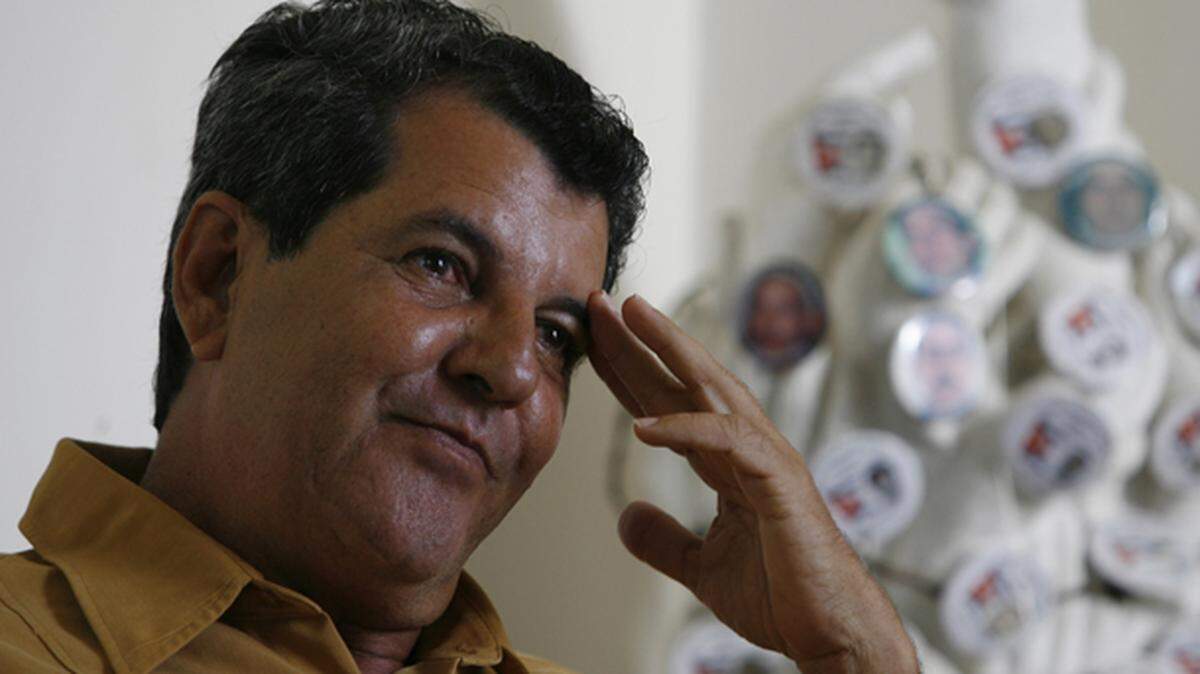
What does it take to square off against a powerful authoritarian regime? There are important lessons from the life and work of Cuban opposition leader Oswaldo Payá, who died in a suspicious car wreck 10 years ago.
In studying Payá’s years-long quest for democracy and human rights for a new biography, “Give Me Liberty,” I found that he took a hard and lonely road. He was surveilled and threatened by state security and lacked the means or resources to reach people.
Fidel Castro alone dominated Cuba as the maestro of the masses and delighted in mobilizing frenzied crowds. Outside the revolution, Payá had no access to radio or television or newspapers — or the power of today’s digital networks. He had no way to reach people other than going from house to house, person to person.
Payá’s bedrock belief was that the rights of every person are bestowed by God, not the state. For a long time, he talked about the goal of a free Cuba, but was not at all sure how to get there. He spent years in frustrating, trial-and-error experimentation.
As a teenager, he had protested the crushing of the Prague Spring with Soviet tanks in 1968 and was sent to Castro’s forced-labor camps. Later, as a member of the Catholic laity, Payá urged church leaders to stand up for human rights, but, weakened by decades of repression, they were more interested in reconciliation than confrontation. Payá could not remain silent. With several friends, he began to publish a leaflet, Pueblo de Dios, brimming with his ideas and commitment to truth and freedom.
He knew of a long-overlooked provision of Cuba’s constitution under which citizens could initiate legislation through a petition that would require 10,000 signatures. By the 1990s, when the collapse of the Soviet Union plunged Cuba into economic despair, Payá decided to use the laws of the state against itself. This provision would be his tool. In 1991 he began to collect signatures for a referendum, a national dialogue and democratic change. But he was targeted for an acto de repudio, in which government-backed thugs ransacked his house and sprayed graffiti on the walls outside: “Payá, you worm,” “CIA agent” and “Long live Fidel.”
Payá picked himself up and started anew. He wrote a detailed, 46-page “transition program.” But it was too complex. In 1995, he joined others in forming a civil-society umbrella group, Concilio Cubano. Castro’s state security arrested the leaders and shut it down.
Finally, Payá came up with a simple, direct approach, the Varela Project, with five demands for liberty. Astonishingly, over several years, at least 35,000 people signed, with names, addresses and identification numbers. They stood up to be counted.
For his effort, Payá was in state security’s crosshairs. Seventy-five independent journalists and activists, including those who had worked with him, were arrested and imprisoned in 2003 during the “Black Spring.” Many were given long prison sentences for nothing more than collecting signatures for the Varela Project. Today, almost 10 times that many people are in detention in Cuba, unjustly, for taking part in the protests of July 11, 2021, when many raised their hands in the “L” for Liberación, a sign of Payá’s movement.
The Varela Project grew from the deep frustrations of daily life in Cuba. Two decades later, those deprivations have not abated and, once again, sparked protest. Payá was a trailblazer for the 11J generation.
Payá knew his work was risky. He repeatedly received death threats. He once confided to a friend, “I see very few chances of getting out alive.” The car wreck that killed him on July 22, 2012, has never been satisfactorily investigated. Who rammed the car from behind, and why?
Payá showed that a single, determined voice can inspire change, even in a totalitarian system. He never lived in a state of liberty, but liberty lived in his mind. As a commentator in Ukraine put it recently: To secure democracy, you have to be ready to fight for it relentlessly — with bare hands if necessary.
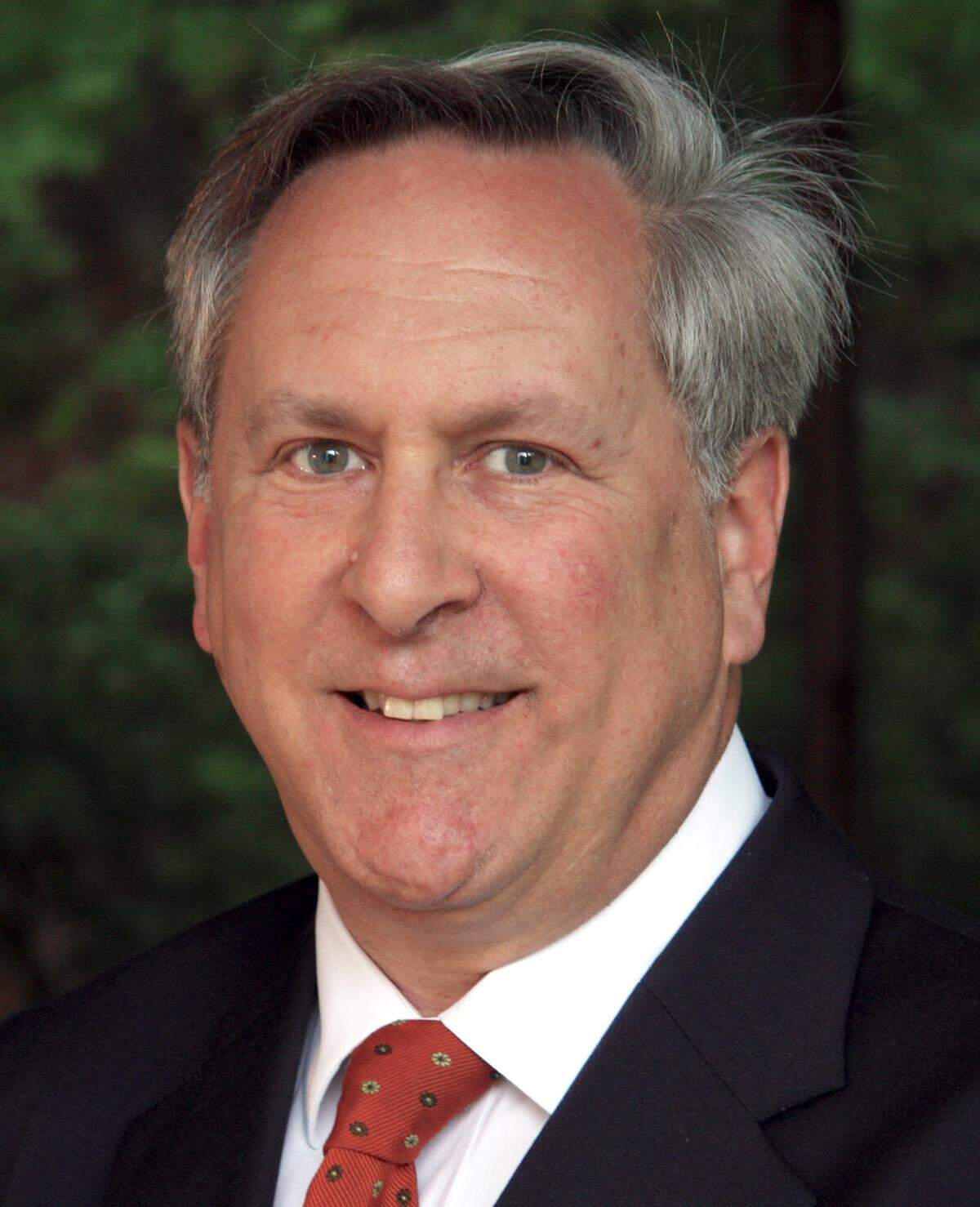
David E. Hoffman is the author of “Give Me Liberty: The True Story of Oswaldo Payá and his Daring Quest for a Free Cuba,” to be published June 21 by Simon & Schuster. He will subject of his book, Oswaldo Payá at 7:30 p.m. June 22, at Books & Books, 265 Aragon Ave., Coral Gables. Tickets are free. Click here to register.
This story was originally published June 17, 2022 at 2:31 PM.