
Florida acts like ‘Big Brother’ when it tries to ban books from the classroom | Opinion
I was a Florida teacher for many years and I’m worried that teachers will leave the state because of new laws that threaten them for using “forbidden” words, teaching history the “wrong” way or for using books that non-educators say should be banned.
In 1964, I taught English at Key West High school. What I learned from that time remains relevant today.
My students were reading George Orwell’s “1984,” a dystopian novel about a totalitarian government, led by Big Brother, that controls citizens’ lives by limiting the use of language access to information. Big Brother even watches people through their televisions.
Orwell wrote it in 1949 in response to Adolf Hitler’s Germany and Josef Stalin’s Russia. One day, I was called to the principal’s office. Sitting near the principal was a man holding a copy of “1984” in one hand and a Bible in the other.
He was a lay preacher on his way to meet other preachers to organize a movement to ban the book — and me — for using “obscene” material. He held up “1984” and cried, “Students can read this trash ...“ then he held up the Bible: “but schools are not allowed to teach the word of God!”
I knew the principal had read the book, so I asked the preacher if he had read it. No, he said. He only had opened it at random and read a scene where the two main characters were making love. To me, it was nothing obscene. Their lovemaking was a rebellion because they loved each other more than Big Brother. They would suffer terrible consequences later. The preacher’s response was a perfect example of misinterpreting something when it’s taken out of context.
The principal and I told him that the book was an extension of Orwell’s disgust with communist Russia. This surprised the preacher. I told him that my students, including his son (who never said anything to him about the book) understood that context.
I invited the preacher to come to my class. But he never did. I also agreed with the preacher that the Bible should be taught in school, which calmed him down a bit. But I didn’t ask if he worried that the Bible describes incidents more disturbing than what he read in “1984.”
I have to commend the preacher. He had every right to question what he thought was objectionable in his son’s class, but he talked to the principal and me first and didn’t carry out his plan to have the book banned.
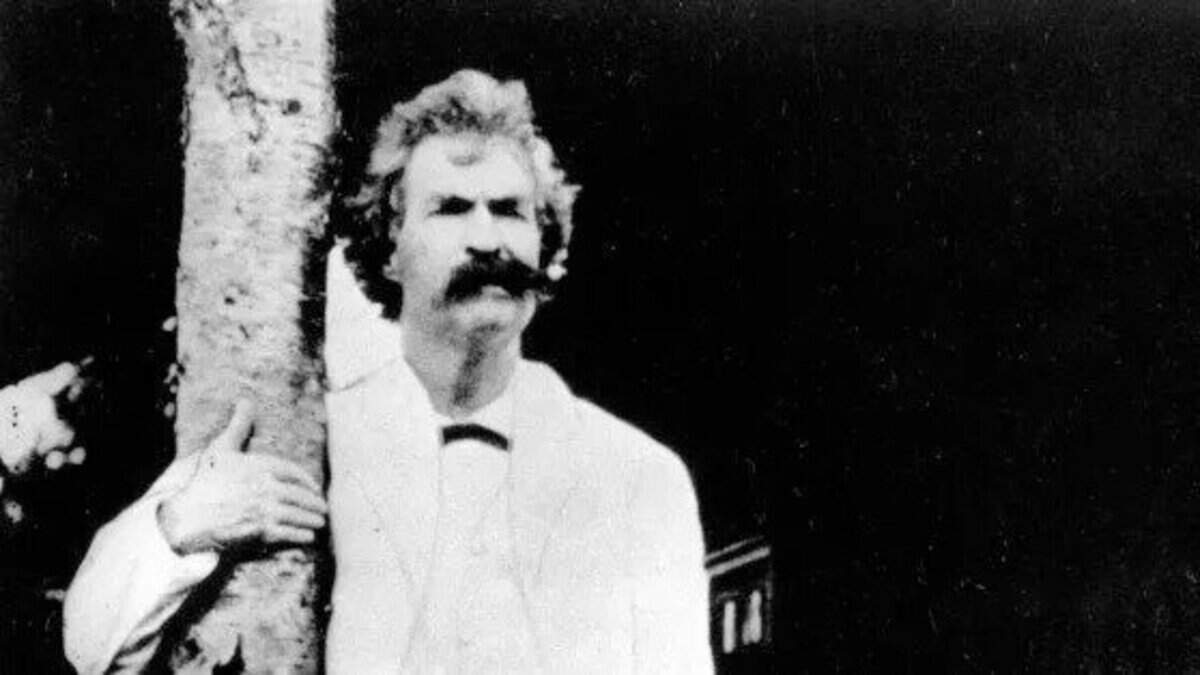
I also taught Mark Twain’s “Huckleberry Finn” in Key West. It wasn’t a bestseller when first published, and Louisa Mae Alcott, the queen of American literature during her time, hated the book. She had it banned in Massachusetts libraries “because of its dirty little incidents.” That made Twain happy.
He took out ads in magazines all over the country that read: “My book, ‘Huckleberry Finn,’ by Mr. Mark Twain, Was Banned In Massachusetts Libraries Because Of Its Dirty Little Incidents!”
Sales soared. Censors should take note. Alas, “Huckleberry Finn” is now banned from many public schools. It’s the N-word problem, another example of what happens when something is taken out of context. Twain admired Black people, but the book goes back to the days of slavery. It’s clear that Twain was disgusted with how Black people were treated. And one of the main character in the book is a noble Black man, a slave who escaped and is a loving friend of Huck.
But how could Twain ignore the language, what low-class whites called Black people? In Key West, when Black schools were closed and students learned in integrated classes, I was using Twain’s book. I asked the Black students who signed up for my class to meet with me. I asked how they felt about the book. They finally said it would be OK and they managed it well. White students were empathetic and the discussions interesting.
Yes, the book should be taught; it’s the beginning of American literature.
Years later, in Volusia County, “Tex” by S.E. Hinton, was banned from middle schools because it used the “Lord’s name in vain.” This time, the word “god----” was taken out of context. But when I found the book in the library, I saw comment written in pencil at the bottom of a page: “Pretty good book.”
I could tell by the handwriting that the reader was a young teen. I’m sure others her age read it too because it was banned. But how “pretty good” the book was would have been if it were discussed in school with a skilled teacher and other students.
A state government that removes books from the classroom sounds just like a Big Brother. The government should actually require by law parents or others who want to ban books to meet with the teachers and principals before any ban is imposed, and they should not be allowed to push to ban a book they haven’t read.
Again, it’s all about context.
Skip Lowery was a teacher in the state of Florida.

This story was originally published June 13, 2022 at 3:58 PM.