Women doctors are bearing the hidden cost of a medical career — infertility
“I would love to be a surgeon, but I worry about not being able to have the family I always wanted.”
As an advisor for premedical and medical students, I hear this too often from my female advisees. We have all come to accept the challenges of juggling a demanding profession with the needs of a family. What we have failed to reckon with is that, for many of us, it may be improbable to even start a family.
Studies suggest that one in four female physicians will experience infertility, nearly twice the incidence in the general population. It is exciting to see an increase in women entering medical school, but saddening to know this may come at a cost — infertility.
Two major factors driving this statistic are the extensive training period required to practice medicine and lack of awareness regarding fertility risks. Residency training, which all physicians are required to complete and lasts three years or more, coincides with peak childbearing years. The median age for first childbirth for female physicians is 32 years, compared to 27 years for their non-physician counterparts.
The demands of training and long work hours in residency often prompt women to postpone starting a family. In a comprehensive survey of female physicians, 52% said they would have pursued childbearing earlier if they had been aware of the infertility risks. While the structure of medical training in the United States is difficult to modify, we can advocate for fertility awareness and structural support for childbearing.
Infertility has a profound impact on a woman’s physical and emotional well-being and, if she is a physician, often leads to burnout. The expenses associated with infertility treatments and cryo-preservation — egg-freezing — can be limiting for many.
The state of Florida is rated “C” on the State Fertility Scorecard, meaning we have poor support for families requiring fertility treatments. Florida does not mandate coverage for fertility preservation or treatments, which is detrimental for many individuals suffering from infertility.
State-mandated insurance coverage has shown to be beneficial to both individuals and the state. While there is increased utilization of these services, there is a lower number of embryos transferred per cycle, which leads to lower number of multiple gestation pregnancies — and, thereby, fewer complications during and after delivery.
At an institutional level, healthcare organizations and residency training programs could partner with insurance plans that include fertility benefits and offer fertility checkups with specialists. This can help female physicians make educated decisions about family planning. It is imperative that we destigmatize taking time away from work to pursue fertility appointments, knowing that helping women reach their reproductive potential can contribute to their overall well-being and, therefore, keep them in medicine.
Fertility should not be a factor that limits a woman’s ability to pursue a career in medicine. Society has told us for years that women cannot be mothers and physicians; they have shown time and again that they can. The race against biology is not easy, but with awareness, planning and structural support it is possible for women to accomplish both their reproductive and professional goals.
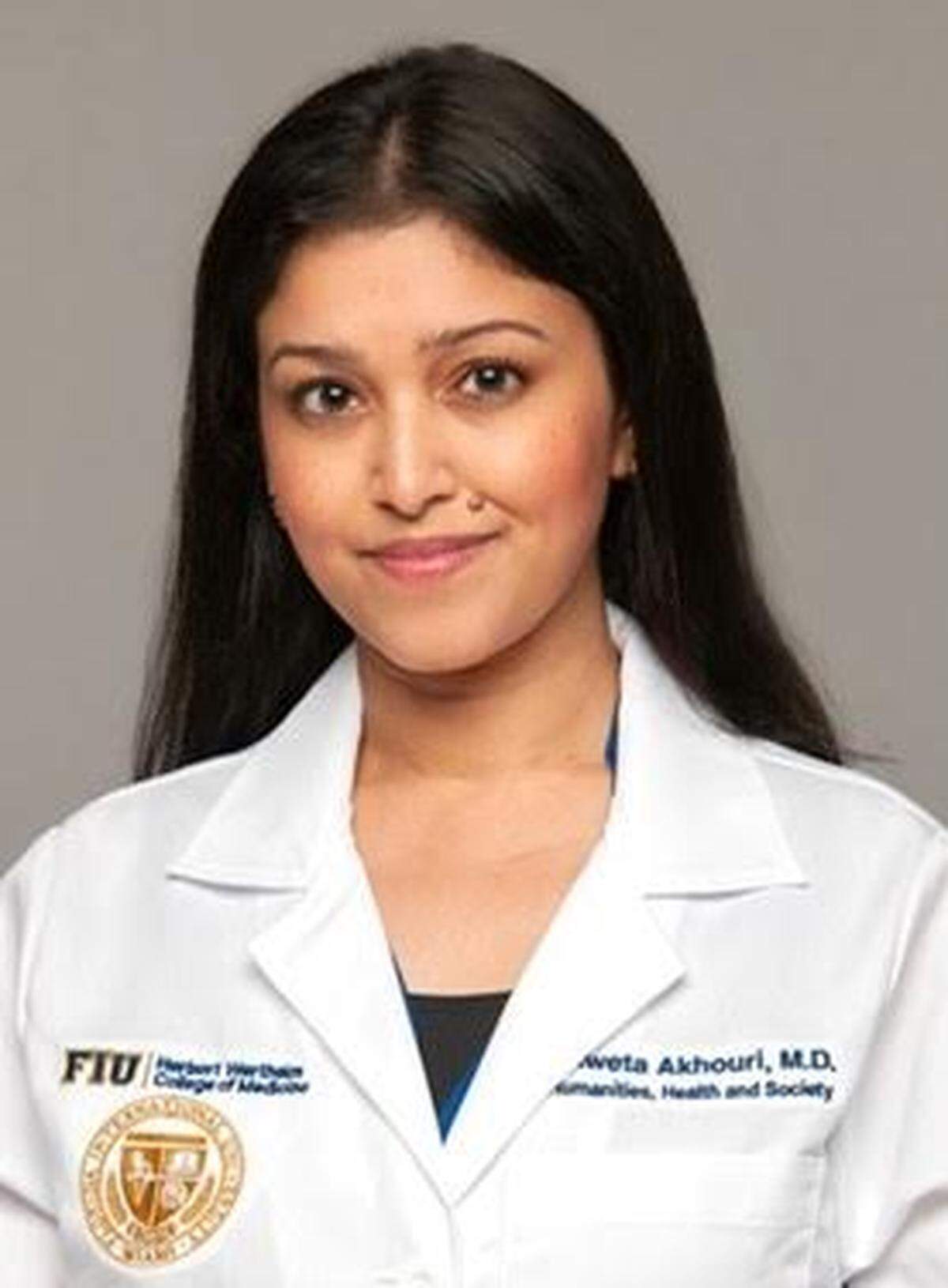
Shweta Akhouri, M.D., is a family-medicine physician and assistant professor at FIU’s Herbert Wertheim College of Medicine.