
Latin America, Caribbean play significant roles in ensuring world’s food security | Opinion
The world is in a state of unrest, fueled by the convergence of a pandemic, the disintegration of logistics chains, extreme droughts, overall climate vulnerability and a war between two leading players in agrifood and energy production and trade, thereby disrupting markets and destroying production infrastructure.
This situation may potentially cause other “black swans” of various types and levels of disruption to go undetected and is creating uncertainty in the agrifood systems of the Americas — the world’s major net food exporter, cornerstone of global environmental sustainability and biodiversity, and a leading energy and mineral supplier at the global level.
The mounting tensions are destabilizing the fragile balance of the planet’s food, nutritional and environmental security, undermining its foundation. Meanwhile, countries’ ongoing concern about another challenge is intensifying — how to supply their people with food at affordable prices, while also ensuring farmers a basic level of profitability.
If one includes North America, almost one-third of the food produced and consumed on the planet originates in Latin America and the Caribbean.
However, this bird’s-eye view fails to reveal the contrasting realities of a heterogeneous region in which large exporters (primarily the MERCOSUR countries) co-exist with net food importers. The region has a relatively low value-added export basket and a low level of intra-regional trade (14%), in comparison to trade within North America (46%) and the European Union (65%).
Socially, the pandemic has set us back almost two decades. Poverty and extreme poverty have mushroomed, along with food insecurity, and projections of slow economic expansion are cause for concern, as we may possibly be facing another lost decade in terms of development.
The war between Russia and Ukraine is creating further pressure and hitting specific exports from countries such as Ecuador, Colombia, Paraguay and Uruguay, which have a significant amount of trade with the Russian market in bananas, beef and dairy products. The rise in the price of food commodities will be a hard blow for countries where malnutrition is prevalent, such as Haiti, those in Central America’s Northern Triangle, as well as Grenada, Venezuela, Bolivia, Nicaragua and St. Lucia.
Rising energy prices also are having a multiplier effect on the costs of inputs, products and services throughout agrifood chains. Meanwhile, Russia and Belarus — traditional leading suppliers of nitrogen-, phosphorus- and potassium-based fertilizers — have been hit by trade sanctions.
The concurrence of these crises will compel the region — as a mainstay of the planet’s food and nutritional security and a pillar of environmental sustainability and diversity — to focus efforts on vulnerable populations and to facilitate ongoing intra-regional and international trade. It’s a matter of urgency and should foster a true partnership that promotes agricultural trade in Latin America and the Caribbean.
Countries will need to join forces and to strengthen policy coordination bodies, prioritizing collective action for all’s benefit.
At the same time, to strategically address short- and medium-term needs, it is imperative that there be a major coordinated effort between science, technology and innovation, coupled with the corresponding public policy and investment framework, while setting ambitious and structured goals. Namely, our agrifood systems must make the most efficient use of natural resources, creating decent and socially inclusive employment and facilitating diets that are healthy and sustainable, from an environmental perspective.
The war has merely reaffirmed the fact that food security is one of the planet’s chief concerns and that the region of the Americas should reinforce its relevance and leading role as the guarantor of a healthy and abundant global food supply.
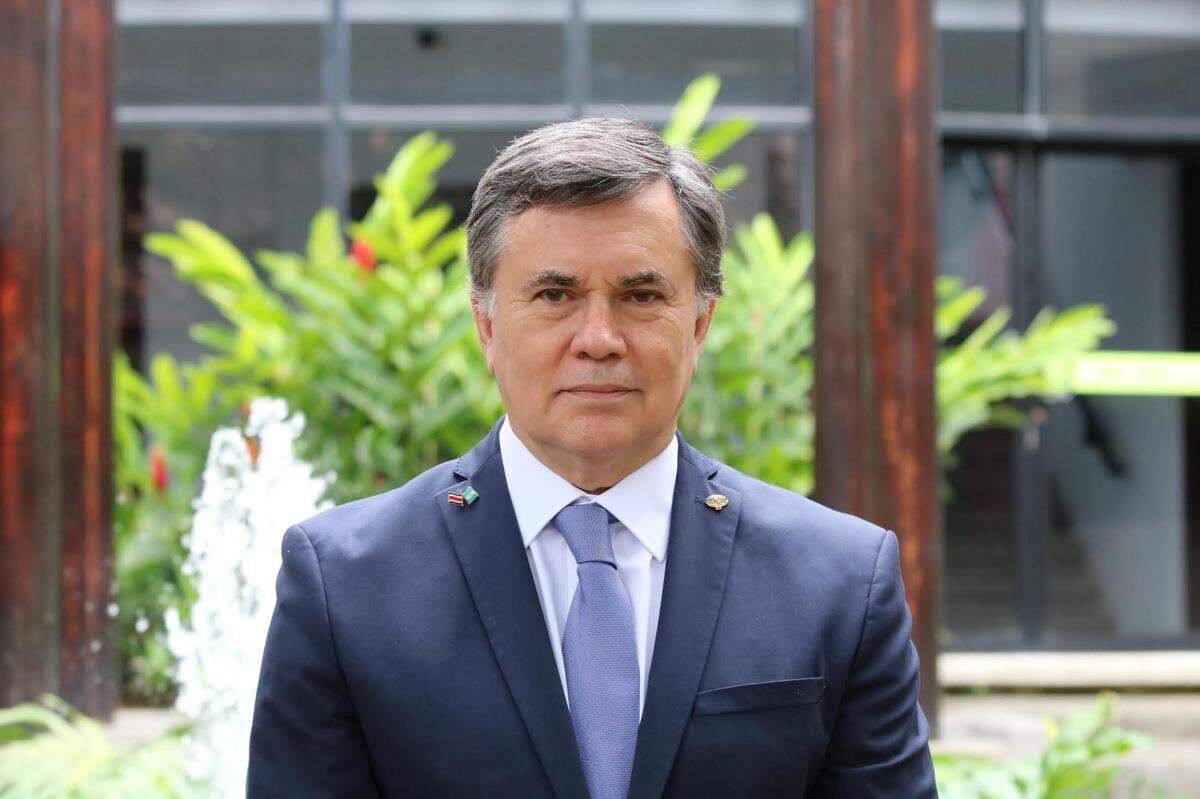
Manuel Otero is director general of the Inter-American Institute for Cooperation on Agriculture.
This story was originally published April 14, 2022 at 3:06 PM.