
If you stand for racial equity, take a stand for paying a living wage | Opinion
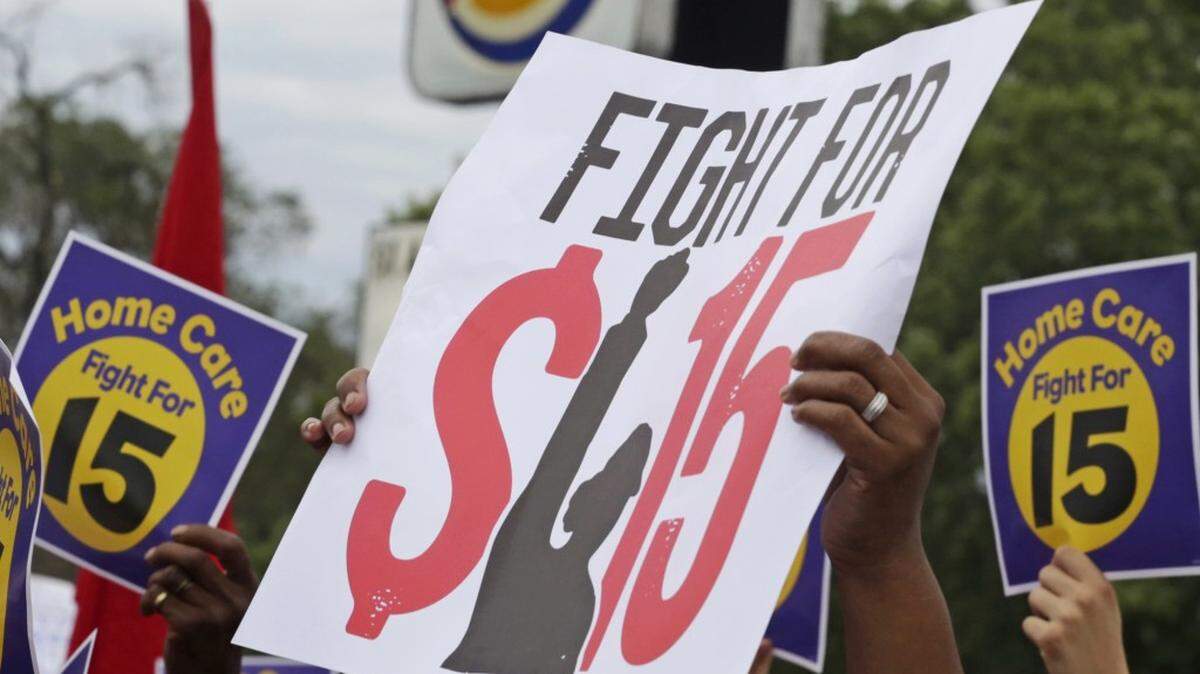
As our friends at YWCA South Florida close out the second week of their Stand Against Racism Challenge, I thought about the importance of a living wage.
While each week of this challenge is undeniably important, this issue, in particular, hit home. My father worked three jobs to provide for my family. We had our fair share of financial struggles, sometimes going without heat because there was no money. Life was challenging at times.
However, I still received the healthcare I needed. I never went without food. We had a roof over our heads and opportunities to excel in life.
Sadly, that’s not the case for almost half of the country, and especially for people of color. To make matters worse, in almost every state, more than half of all women of color earn less than a living wage.
I don’t take that lightly. That means that most individuals living and working in America aren’t making enough to get on sound footing, creating an unhealthy condition that makes it nearly impossible to get ahead. Imagine trying to run an uphill race, yet with every step the incline increases, making it harder and harder to reach the finish line.
Several years ago, an MIT study found that a living wage in the United States equates to $16.54 an hour. Even if Florida is gradually increasing its minimum wage to $15 an hour by 2026, you don’t need to be a math whiz to figure out the discrepancy. There’s still a gap.
This reality means that an individual working a 40-hour-a-week job making anywhere close to minimum wage will not have the means to succeed despite their ability and willingness to work and support their family. They would need to make difficult sacrifices to make ends meet. This does not bode well for single moms working two jobs. Children suffer from this formula.
And, things are getting worse.
We have to understand that one’s health is profoundly tied to their economic stability. We need to advance systems that create greater access to safe homes, healthy food and healthcare. Simply put, living wages create fair wages so that everyone can meet their fundamental needs. By advocating for a living wage, we are advocating for the health and advancement of our communities. When one family rises, we all rise.
In South Florida, we face an escalating affordability crisis among vulnerable, low- to moderate-income populations. We must educate ourselves about this issue to help connect low-income communities and communities of color to greater social and economic opportunities. Underserved communities need our support. By getting involved with YWCA’s Stand Against Racism Challenge, we can learn how to close the gap and stand up to discriminatory systems that hinder growth.
According to a study done by the Brookings Institution in 2019, almost half of U.S. workers between 18 to 64 are employed in low-wage jobs. Despite the growth in the economy, technology and society in general, the minimum wage still lags behind. Over the years, the minimum wage has not evolved with the pace of the market. It’s not enough to accommodate basic needs, much less inflation and living conditions.
This dichotomy hinders economic development, our collective wellness, and health in Miami-Dade and beyond. It contributes to an imbalanced system — a system that leaves groups of people behind and keeps them from achieving an adequate and healthy standard of living.
By participating in the Stand Against Racism Challenge, I already have learned that the practice of tipping stems from racist roots. Instead of paying formerly enslaved Blacks employed after the Civil War, companies — many in hospitality — forced them to rely on tips from white customers for most of their pay.
I have been reminded of the racial and gender disparities that exist today and my ability to advocate for equitable opportunities for all. I’ve been challenged to respond to inequality by advocating for a living wage so that every worker can pay for the necessities of life and participate as an active citizen in our community.
If we all get involved with the Stand Against Racism Challenge, we are taking a step together toward achieving racial equity for our community. As concerned neighbors — as good neighbors — we can learn, grow, listen and discuss the deep-seated issues of systemic racism and inequities plaguing marginalized communities.
We must do this to improve the health and well-being of South Florida for all of us.
Loreen Chant is president and CEO of the Health Foundation of South Florida.
This story was originally published April 13, 2022 at 3:48 PM.