Mistrust the news from Ukraine? Believe established journalists, not anonymous tweets | Opinion
Let’s not let Putin kill good journalism, too.
What, who, where, when and why. The famous five W’s of good journalism have resonated in my head in recent weeks. I remember my time as a journalism student and I remember the professors teaching us good professional practice when there was no Twitter, there were no haters or fact checking companies or conspiracy theorists because, among other things, they didn’t have opaque social media accounts to hide behind.
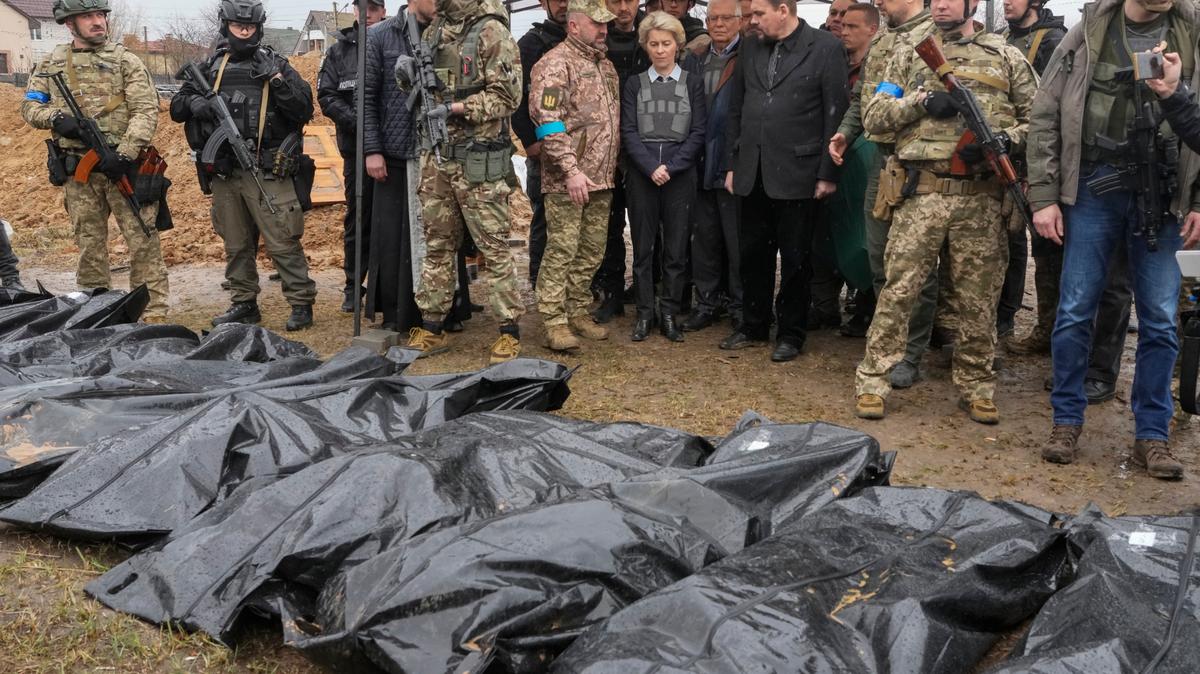
The denial of the Russian massacre of civilians in the Ukrainian city of Bucha has been one more step in the destruction of prudence and common sense that the social media networks — especially Twitter — are imposing. Having to listen to statements like “You have to listen to both versions,” “The deaths could be a set up” or “How can you accuse Putin of being responsible if you weren’t there” are a threat not only to journalism and the media — they already have enough problems — but also for the verification and writing of History, with a capital letter.
Would anyone in their right mind have avoided condemning the slaughter of Jews in World War II while waiting for the Nazi version? Could it have been argued that the images of the skeletal and crowded corpses of the murdered Jews were a set up by the Allies? Would it have been necessary for anyone lamenting this barbarism to actually be looking through a hole into the gas chambers?
These questions sound ridiculous, but today, 77 years later and with the Russian invasion of Ukraine as the scene of war, the media and journalists have fallen for this kind of provocation to justify ourselves when we shouldn’t be — because we have seen, heard and read rigorous and professional chronicles from correspondents who have told us what they are seeing, as is their obligation. And many of them are paying with their lives.
Sometimes the work of verification companies can seems exaggerated or ridiculous, a kind of internal affairs department investigating journalists — the direct witness, the one who in another time was considered a professional who carries out social work, a public service. Because even if the New York Times uses satellite images to show that the massacre in Bucha took place while Russian troops were still in the city, Putin’s propaganda and his subsidized media will continue to deny it.
Trusting the news
I have repeated many times when I have been asked on radio and television that the survival of journalism involves making the audience understand that they have to look for information in the great proven historical brands that have journalists in the places where the news takes place. Anonymous profiles on Twitter can never be a source of information.
Let us then trust the serious media and their journalists regardless of their editorial line. It is legitimate and healthy that there are newspapers, radio stations and television networks with a conservative vision, just as there are those with a more liberal or leftist tendency.
In South Florida, a disconcerting movement is emerging that claims to be fighting misinformation, especially accusing Spanish-language radio stations of having a Republican agenda and of spreading falsehoods. But — surprise — when one investigates the profiles of the promoters of the movement, one finds that they are analysts and opinion makers with a Democratic tendency. Politicians are not good advisers to a free media.
At this point, I want to return to my journalism class and remember the five Ws. Facts are one thing and opinion is another. Let us demand that the media clearly separate information from opinion. Everything is a matter of good professional practices. There is still hope.
Manuel Aguilera is founder and CEO of the HispanoPost Media Group. He is a former executive editor of Univision’s online platform.