This Valentine’s Day and Black History Month, I pledge to do my part for Black L.O.V.E. | Opinion
This year, for Black History Month, let’s do something truly transformative. Let’s stop pathologizing and stigmatizing Black Americans as we seek social progress and racial equity.
Instead, let’s shift to a more aspiration-focused approach to deliver on the promise of liberty and justice for all.
At OneUnited Bank, America’s largest Black- owned bank, with an office in Miami, we refuse to ignore social challenges confronting Black people, but we also refuse to define the Black community by our challenges.
After 250 years of slavery, 100 years of Jim Crow and only 50 years since the Civil Rights Act was passed, today we know that focusing on our assets — called Asset-Framing — is the next step to fulfilling our aspirations to freely Live, Own, Vote and Excel (L.O.V.E.) in America.
Some of the important ways OneUnited Bank does its part to build Black L.O.V.E. is by being unapologetically Black and using technology to offer affordable financial services, not only in Florida but in all 50 states.
We also partner with organizations that support our community’s aspirations, like the 79th Street Corridor Neighborhood Initiative for the development of the Poinciana Industrial Center in Liberty City.
Everyone can do their part by taking the Black L.O.V.E. Pledge as well. The network behind this cultural shift to asset framing is BMe Community, based in Miami.
Since 2013, this network of grassroots leaders, social innovators, and donors, including myself, has been committed to investing in building upon Black aspirations and contributions to all of society.
Founded by Trabian Shorters, a Black former tech entrepreneur and John S. and James L. Knight Foundation vice president, BMe’s leadership programs, training and communities are rooted in leading-edge research and understanding of cognitive, social and cultural psychology.
At the heart of this change is the realization that in being crisis, deficit, disparity and problem-focused, governments, charitable foundations and corporations unintentionally work in concert to stigmatize Black Americans so that they can attract resources to address the problems that they name.
They fail to realize that in doing so, they succeed at writing Black Americans into the public’s mind as a problem to be solved and a threat to be mitigated rather than foremost as aspiring and contributing human beings.
Subsequently, our progress gets anchored to the exhausting emotions of blame, shame, pity and fear. When, in fact, we can raise more money, create better policies and get more people to support racial equity and justice if we simply acknowledged Black aspirations and contributions in every discussion of Black people.
This alternative way of thinking — Asset-Framing – works, even beyond the Black community.
Charitable crowd-funding platform DonorsChoose.org enables hundreds of thousands of donors to fund over 10,000 classroom projects each year and they have found that even though both approaches work, “The asset-framed projects raise more money than the deficit-framed ones,” according to founder Charles Best. So, we don’t have to denigrate-for-dollars. We just don’t know any better.
The Solutions Journalism Network is a multi-country network of professional journalists and editors who are committed to rigorous solutions-oriented reporting. They have found that “Asset-Framing is a powerful tool for shaping impactful public discourse away from stigmatizing tropes and toward high impact solutions,” according to co-founder and NYT columnist, David Bornstein.
So, we don’t have to crucify-for-coverage.
Our old habits of thought can no longer serve us. In honor of Black History Month and Valentine’s Day, take the Black L.O.V.E. Pledge and join me and others in a different mindset that delivers hope, inspiration, joy, L.O.V.E. and power. #BlackLOVEPledge
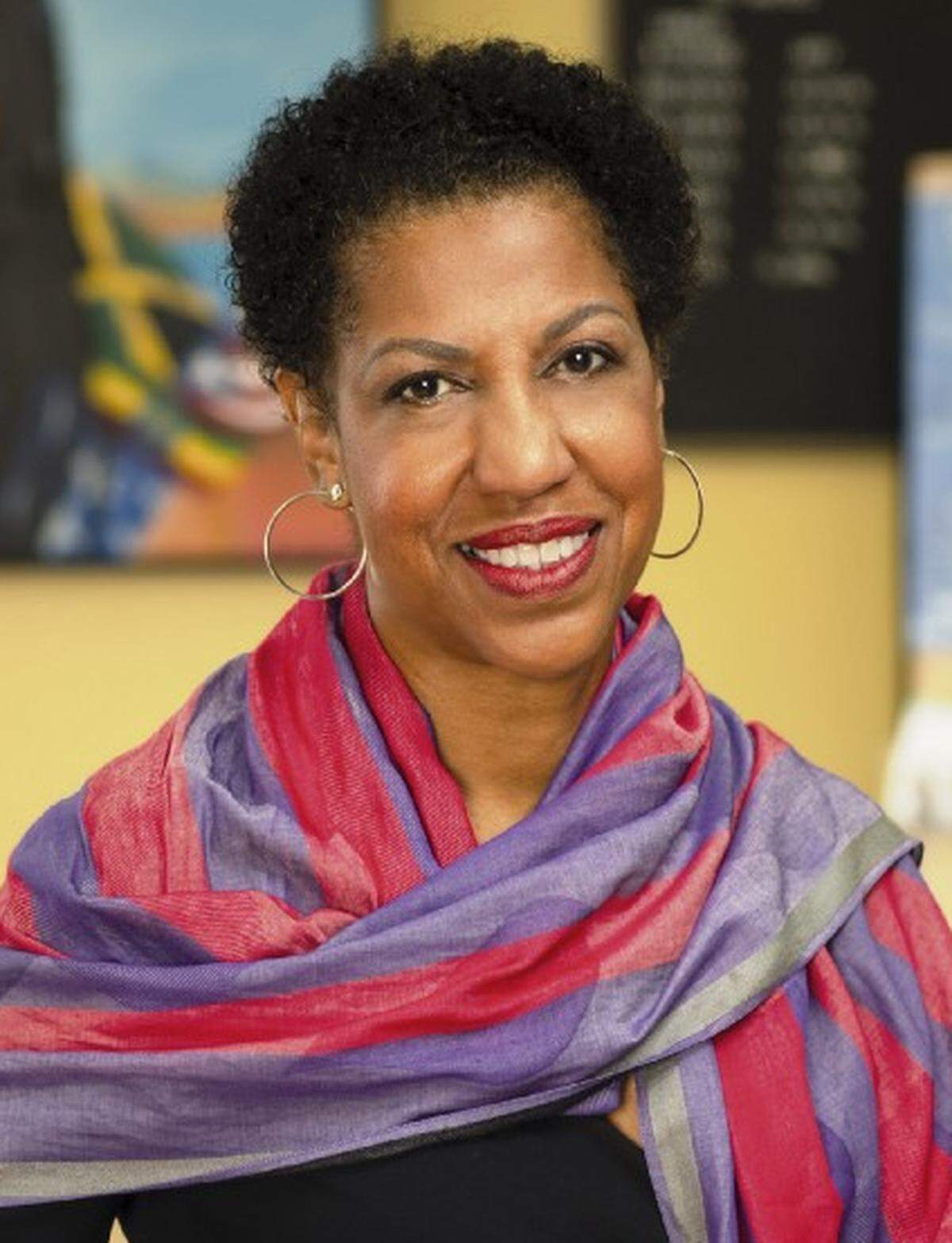
Teri Williams is president, COO and owner of OneUnited Bank, the largest Black-owned bank in America.