
El Salvador was the first country to adopt Bitcoin. It might be the first to go broke, too | Opinion
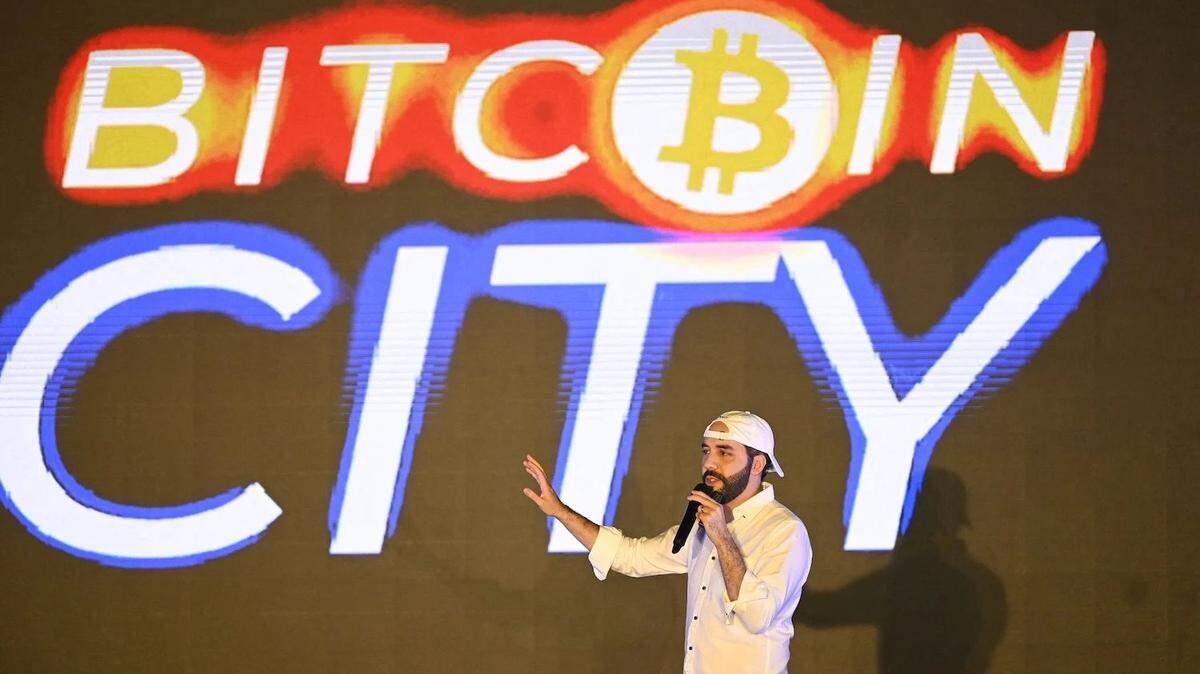
El Salvador made big headlines last year when it became the first country to adopt Bitcoin as legal tender, allowing people to use it to buy everything. But following the almost 50% drop in bitcoin’s value in recent days, the question is whether it will become the first country to go broke because of a crypto-currency.
Many big-name economists believe that’s already happening.
“El Salvador’s adoption of Bitcoin has been an unmitigated disaster!” tweeted Nouriel Roubini, the economist who is best known for predicting the 2008 crisis. “They country is now effectively bankrupt.”
El Salvador’s populist president Nayib Bukele, 40, first announced his decision to adopt Bitcoin at a Miami conference in last June. The Bukele-controlled Congress later passed a law making Bitcoin legal tender and making it mandatory to accept payments in that crypto-currency, although that part of the law was never enforced.
In recent days, when the price of Bitcoin plunged from more than $61,000 in October to $35,000 on Jan. 23, Bukele doubled down and purchased another $15 million in Bitcoins. He defiantly tweeted, “Some guys are selling really cheap.”
But economists aren’t amused by his bravado.
“This experiment has already cost the country $200 million in funds that don’t contribute at all to our economic development,” says Alvaro Trigueros, head economist of FUSADES, one of El Salvador’s best-known non-government think tanks. “It’s wasted money.”
Trigueros told me that his $200 million estimate includes the treasury funds used to buy Bitcoin, the cost of the government’s “Chivo wallet” application to transfer Bitcoin, and the program to implement the one-time $30 Bitcoin handout that Bukele gave all Salvadorans as a way to encourage them to use of the crypto-currency.
El Salvador’s government now finds itself short $1.4 billion to meet its domestic and foreign debts. To make things worse, the nation’s “country risk” — a measure that banks use to gauge its ability to pay its debts — has soared, and the value of El Salvador’s bonds has plummeted.
“We’re now in a high-risk situation, in which the economy could collapse,” Trigueros told me.
El Salvador’s Bitcoin experiment already was in trouble before the crypto-currency’s latest price plunge.
Despite the government’s $30 Bitcoin handout for each person who downloaded its Chivo Wallet Bitcoin application, only 10% of Salvadoran companies say they have made at least one transaction in Bitcoin, according to a FUSADES poll.
Many Salvadorans used their $30 government handout to make purchases when the program was rolled out late last year, and have not used Bitcoin since.
A separate poll of 480 business people by El Salvador’s Chamber of Commerce and Industry found that only 1% of the value of their sales involved Bitcoin. The U.S. dollar, El Salvador’s legal currency, continues to be used for virtually all commercial transactions.
“The implementation of the Bitcoin wallets program was very deficient. There were all kinds of technical problems,” Jorge Hasbún, president of the Chamber, told me. “Some people made purchases in Bitcoins, and the money mysteriously disappeared.”
Hasbún added that, because of the digital wallet’s technical problems and the wild swings in the price of Bitcoin, Salvadorans have become increasingly skeptical about the crypto-currency.
About 2% of family remittances sent by Salvadorans living in the United States to their relatives back home are being sent in Bitcoin. But, other than that, virtually no Salvadorans are using Bitcoin, Hasbún told me.
There is nothing wrong with El Salvador allowing Bitcoin for some transactions, such as family remittances from abroad, to help people reduce bank commissions. But Bukele went too far by gambling large amounts of government funds to buy an extremely volatile currency.
To make things worse, his entire Bitcoin program has been shrouded in secrecy, with few details known about the government’s crypto-currency transactions.
My suspicion has always been that Bukele passed his “Bitcoin Law” as a public-relations ploy to portray himself as a cool, technologically-savvy leader — and to divert public attention from international criticism over his increasingly authoritarian rule.
Now, the country may pay a heavy price for his publicity stunt.
Don’t miss the “Oppenheimer Presenta” TV show on Sundays at 7 p.m. E.T. on CNN en Español. Twitter: @oppenheimera; Blog: www.andresoppenheimer.com

This story was originally published January 26, 2022 at 5:00 PM with the headline "El Salvador was the first country to adopt Bitcoin. It might be the first to go broke, too | Opinion."