
Florida needs rooftop solar power. This bill in the Legislature would kill it | Opinion
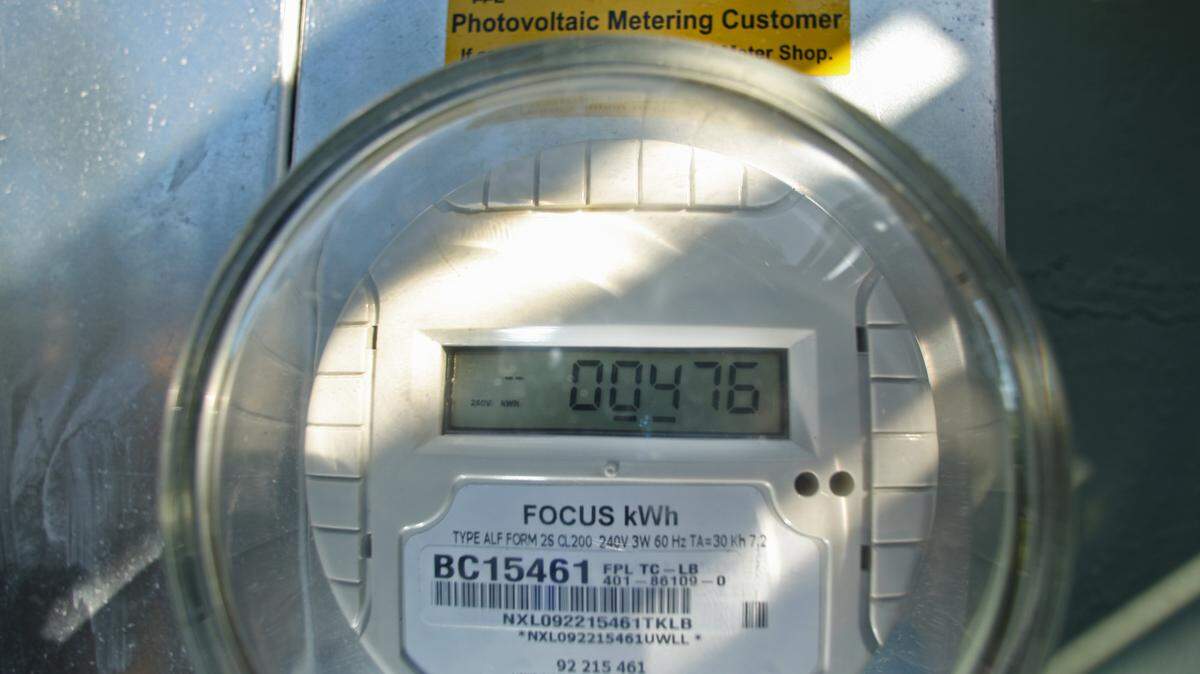
Florida Senate Bill 1024, written by Florida Power & Light (“Documents show FPL wrote bill to slow rooftop solar’s growth by hampering net metering,” in the Miami Herald on Dec. 20) and filed by Sen. Jennifer Bradley, will destroy Florida’s rooftop solar industry by making rooftop solar uneconomical. Rooftop solar installations declined 85% in other states that passed similar bills.
A 2021 study by Conservatives for Clean Energy finds that rooftop solar in Florida supports 40,000+ jobs, adds $18.3 billion to the state economy, provides $3.2 billion in household income and generates $3.3 billion in tax revenues. If SB 1024 becomes law, most independent rooftop solar companies, nearly all of them small businesses, will go bankrupt.
SB 1024 would redefine the utility’s financial relationship with rooftop solar owners. Currently homeowners with rooftop solar push power to the grid during the day and draw it back at night at the same price — an even swap called net metering.
Deal is ‘robbery’
Under the new terms, the utility would pay homeowners at the ultralow “avoided cost” rate, about 2.5 cents/kWh, while continuing to charge the retail rate of about 12 cents/kWh for grid power drawn at night. This new, highly asymmetric deal would greatly increase the net cost of rooftop solar, beyond the breaking point. Homeowners, having paid significant capital costs to generate power, would receive almost no return on investment. The utility on the other hand, having incurred no capital costs in generating this clean power, would resell it at the retail rate, a 260% markup. This deal is robbery and everybody knows it.
The utilities justify SB 1024 with the argument that Florida’s current net metering rule is unfair to non-solar customers who pay to maintain the power grid. This logic is false and was handily rejected by Florida voters in 2016 when big power companies attempted to enshrine the same flawed argument in the state constitution.
The absurdity of the sponsor’s argument, that the 1% of rooftop solar customers receive an unfair subsidy from residential rate-payers, becomes apparent when you realize FPL’s residential customers are currently charged 50% more per kWh than their business customers, a multi-billion dollar electric subsidy by residents to businesses.
In fact, rooftop solar helps to stabilize the grid by supplying power needed by air conditioners during the hottest summer days. The rise in electric vehicle charging can overwhelm neighborhood power transformers but rooftop solar with battery backup can keep the grid functioning. Absent continued residential solar and battery installations, the grid will have to be reinforced at enormous cost to utility customers.
Economic harm
The economic harm this bill would cause reaches far beyond Florida’s solar industry. Without the significant renewable power that rooftop solar could supply, utilities must develop clean energy by covering existing farmland with solar panels, taking that land out of production.
Miami-Dade County is the fourth largest food producer in Florida. But with only 68,000 acres of farmland left, our county is dangerously close to the point where local agriculture loses economy of scale. The collapse of our farm sector would leave farmland vacant and vulnerable to piecemeal development, hindering aquifer recharge and compromising Everglades restoration, which we depend on for our water supply and fishing/tourism economy.
Miami-Dade’s utility, Florida Power & Light, is one of the few utilities that refuses to commit to 100% renewable energy in our lifetimes (“Miami-Dade’s new plan to cut emissions in half by 2030 only gets 2/3 of the way there,” Miami Herald, Oct. 27). At the same time as FPL denies 100% clean power to all customers, it wrote and supports SB 1024, which would make it cost-prohibitive for customers to provide clean power for themselves.
What the utilities are doing is morally wrong, but it’s a double sin that FPL is slow-walking Florida’s carbon-free power transformation while undermining those who have invested their life savings to make it happen and thwarting those who see the urgency for clean energy now to fight the intensification of hurricanes and flooding of our coastlines.
Need rooftop solar
SB 1024 is a brazen attempt to kill rooftop solar when we need it most. With the new technology, solar customers are more independent and less needy during a storm outage, and many can help their neighbors as well as themselves. Our county saves millions of dollars through the investment homeowners have made in rooftop solar and home batteries. In South Florida, where we are so susceptible to tropical cyclones, we need more distributed solar investment, not less.
Enough is enough. SB 1024 must be opposed for our small businesses, to protect electricity customers from grid outages sparked by mass EV charging, for our farms and our food supply, for the future of the Everglades and our drinking water, for the proud Floridians who seek energy independence and power stability after storms, and for all residents of the Sunshine State who seek to protect our traditions of independence and life on the water’s edge.
Raul Vergera is the owner of Cutler Bay Solar Solutions. Peter Schnebly is the owner of Schnebly’s Redland Winery. Margie Pikarsky is the owner of Bee Heaven Farm.

This story was originally published January 24, 2022 at 2:41 PM.