Embracing China will be a perilous move for Honduras’ new president to make | Opinion
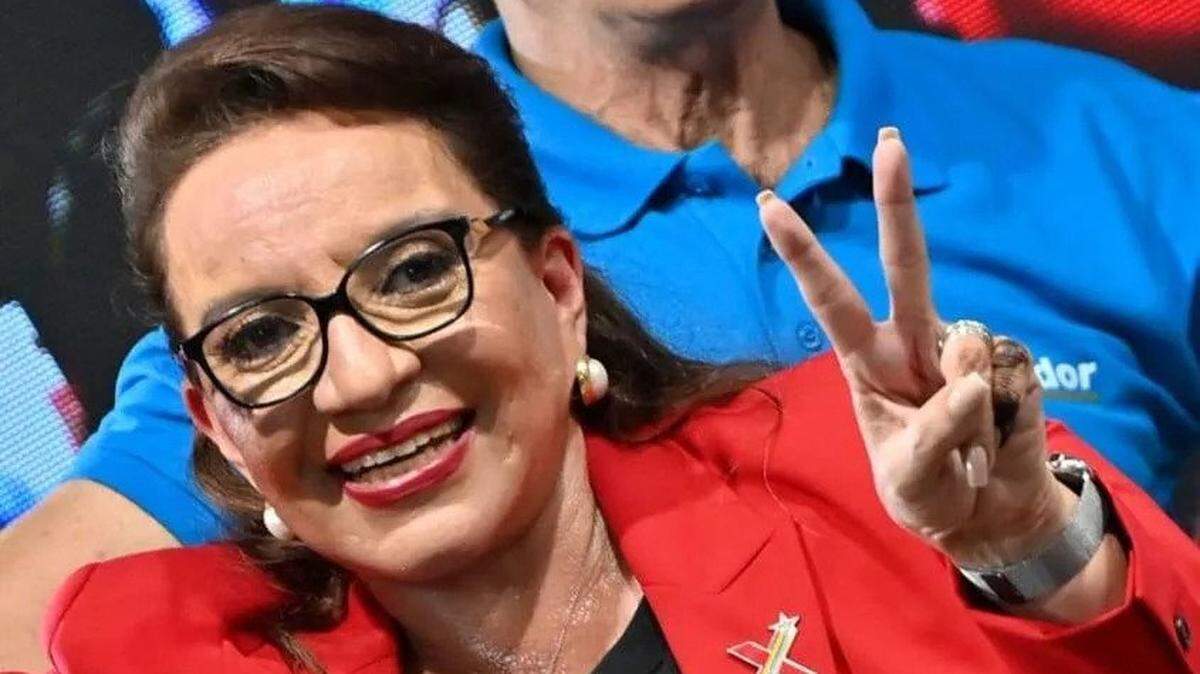
With leftist candidate Xiomara Castro having won Honduras’ presidential election, China aims to extend its reach in the Americas. During the course of her campaign, Castro promised to establish formal diplomatic relations with Beijing and sever ties with Taiwan. This would be bad for Honduras, bad for Taiwan and bad for the United States of America.
Even as COVID raged and Beijing attempted to woo Tegucigalpa with promises of vaccine supplies, departing President Juan Orlando Hernández stuck by Taipei. He perhaps recognized that deeper engagement with China ultimately would undermine Honduran sovereignty and that formal ties with Beijing would not alleviate the security threats he saw resulting from China’s expanding relationships with his neighbors. Better to keep the fox outside the henhouse.
Castro should not dismiss that old adage. She ran largely on fighting corruption and strengthening democratic institutions, but embracing China could make addressing those challenges all but impossible. Beijing routinely makes grandiose economic promises to lure countries to abandon Taiwan, so embracing Beijing might seem like a good way to tackle poverty and unemployment. But doing so would also short-circuit any initiatives to counter graft and improve governance.
Why? Because China thrives in environments in which corruption is endemic. Its modus operandi is to engage in and encourage corrupt business dealings, and to undermine democratic processes to give its own economic and political entities the advantage. If Castro wants to entrench government corruption — and, incidentally, create even more space for narco-traffickers in which to operate — establishing diplomatic relations with Beijing would be a good way to do so.
Decisions made in Tegucigalpa, moreover, could have consequences that extend far beyond Honduran borders. On Dec. 10, Nicaragua severed ties with Taiwan, bringing Taipei’s diplomatic partners down to 14 worldwide — eight in Latin America and the Caribbean. If Honduras jumps ship, that could contribute to a domino effect in the region. With Honduras, China would secure diplomatic relations with five of seven Central American states, likely leading to Taiwan’s expulsion from the Central American Integration System (SICA), the Central American Parliament and the Central American Bank for Economic Integration. That contraction of its international space would be bruising.
Worse, continued reductions in the number of Taiwan’s diplomatic allies will be destabilizing in Asia. As that roster shrinks, China will be only more convinced of its own inevitability, emboldened to push forward Taiwan’s annexation. Taipei’s maintenance of a slate of diplomatic partners is an important aspect of the presiding status quo in the Taiwan Strait. That China has so enthusiastically taken aim at that status quo does not bode well for peace in the region.
That is one reason that the United States is keenly interested in how Honduras handles its relations with Taiwan and China. Continuing diplomatic defections will further upset the precarious cross-Strait equilibrium, making a crisis more likely.
Washington is prepared to put blood and treasure on the line to defend Taiwan’s de facto independence, but it would rather not have to. It comes as no surprise, then, that in a visit to Tegucigalpa just days before the election, U.S. Assistant Secretary of State for the Western Hemisphere Brian Nichols reportedly told both Castro and her opponent, Nasry Asfura, that the United States wants Honduras to maintain its ties to Taiwan.
But the United States is not just concerned about developments in Asia. Washington also hopes to deny China yet another foothold in Central America — especially in Honduras, which hosts Joint Task Force-Bravo, America’s most important military unit in the region.
Last spring, recently retired Adm. Craig Faller, former commander of U.S. Southern Command, told the Senate Armed Services Committee that the Western Hemisphere is “the front line of competition” with China. Speaking to the press, he described “the Chinese Communist Party’s insidious and corrosive and corrupt influences at work globally and in this region.”
As with that of Russia and Iran, China’s influence in the Western Hemisphere is particularly inimical to U.S. interests and to the causes of democracy, human rights, anticorruption and good governance.
As Xiomara Castro settles into the presidential palace next month, she should consider the very real, very negative repercussions that will come with embracing China. Washington should do all it can to clarify those ramifications for her.
Michael Mazza is a nonresident fellow at the American Enterprise Institute, the Global Taiwan Institute, and the German Marshall Fund of the United States.