
Humanitarian relief for suffering Venezuelans should not be tied to political decisions | Opinion
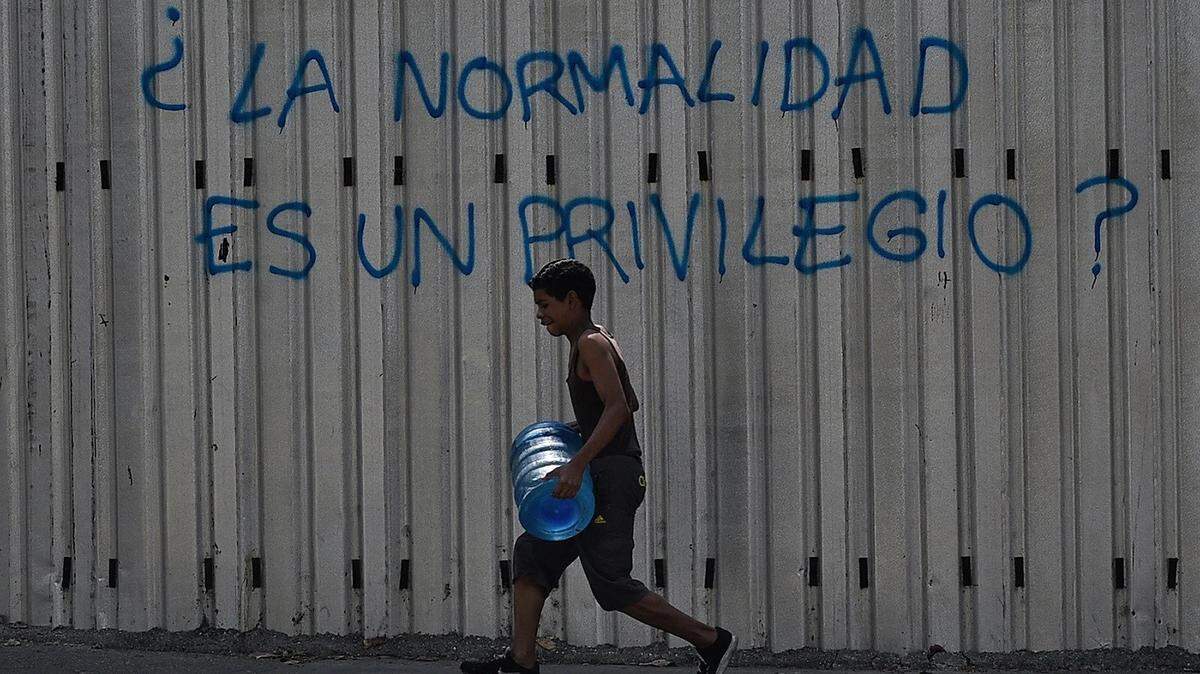
Venezuela is suffering its worst economic, political and social crisis in recent history. Has this been covered by international media? Yes. Has enough been said to understand what is happening and how to take action? Maybe not.
Recently, results from the “Living Conditions Survey” (ENCOVI), were released. The research is presented by the Universidad Católica Andrés Bello, Universidad Central de Venezuela and the Universidad Simón Bolívar. The numbers are chilling, revealing that social inequality, extreme poverty, educational exclusion and infant mortality — among others—increased from a status already categorized as a “humanitarian emergency.”
The results are heartbreaking. ENCOVI finds that: 76.6% of Venezuelans live in extreme poverty; people have lost almost three years in life expectancy; and the infant-mortality rate is similar to that of 30 years ago. Only 40% of the population is employed in the formal sector, and only one-third of women are economically active. The average monthly salary of a public employee is estimated to be $12, while a self-employed person may receive $33.
Agencies of the United Nations and organizations such as the World Food Program also paint a grim picture. According to its statistics, one in five households (17.8%) have an unacceptable level of food consumption; 59% do not have enough income to buy food and to survive; 33% have agreed to work in exchange for food; and 20% have sold family assets to cover basic needs.
In turn, the U.N.’s Office for the Coordination of Humanitarian Affairs says that 7 million adults and 3 million children are in a state of need. Likewise, Response For Venezuelans, a platform led by the International Organization for Migration and the U.N. High Commissioner for Refugees, indicates in its September update that 6.7 million Venezuelans have been forced to flee the country in search of opportunities.
Our country is suffering a complex humanitarian emergency — and it is quickly getting worse. The deterioration is occurring much faster than the national and international community’s capacity to react to — and act on — the pace of Venezuelan politics and the design of new strategies. Worse, Venezuela’s humanitarian decline is happening much faster than Venezuelans can cope with.
Venezuela’s crisis must be approached from a totally different perspective than in the past. Support for its people must not be pegged exclusively to political or electoral progress or solutions — or to interactions that seek long-term agreements, such as the Mexico negotiations. Addressing Venezuela’s humanitarian emergency and the deterioration of its citizens’ living conditions must be a priority in itself for the international community.
To date, multilateral organizations, foreign governments around the world and cooperation agencies have expressed their support for Venezuela. We give them our heartfelt gratitude and recognition for their efforts and support for the Venezuelan cause.
However, the gap between the level of care and the level of need, is widening. It is necessary, for example, to increase funding for initiatives such as the Humanitarian Response Plan or the Regional Refugees and Migrants Response Plan. It’s also essential to provide greater support for the development of humanitarian agreements, such as those reached in 2020 and 2021, that enabled the entry of vaccines and supplies to alleviate the pandemic’s damage and strengthen the healthcare system.
With profound humility, we make an urgent plea to the international community to consider Venezuela’s humanitarian emergency as a priority, in and of itself, not one to be defined or conditioned upon political or electoral processes or decisions.
We owe that to its victims. To every mother who can’t feed her children; to every child who drops out of school to be a breadwinner; to the elderly who can’t see or enjoy the fruits of their life’s labor.
Today, attention to the humanitarian tragedy in Venezuela requires greater effort, greater pressure and greater support from the world.
Miguel Pizarro is Venezuela’s commissioner for the United Nations and for Humanitarian Assistance for the Guaidó government.