
Private-sector funding can provide the infrastructure improvements Florida needs | Opinion
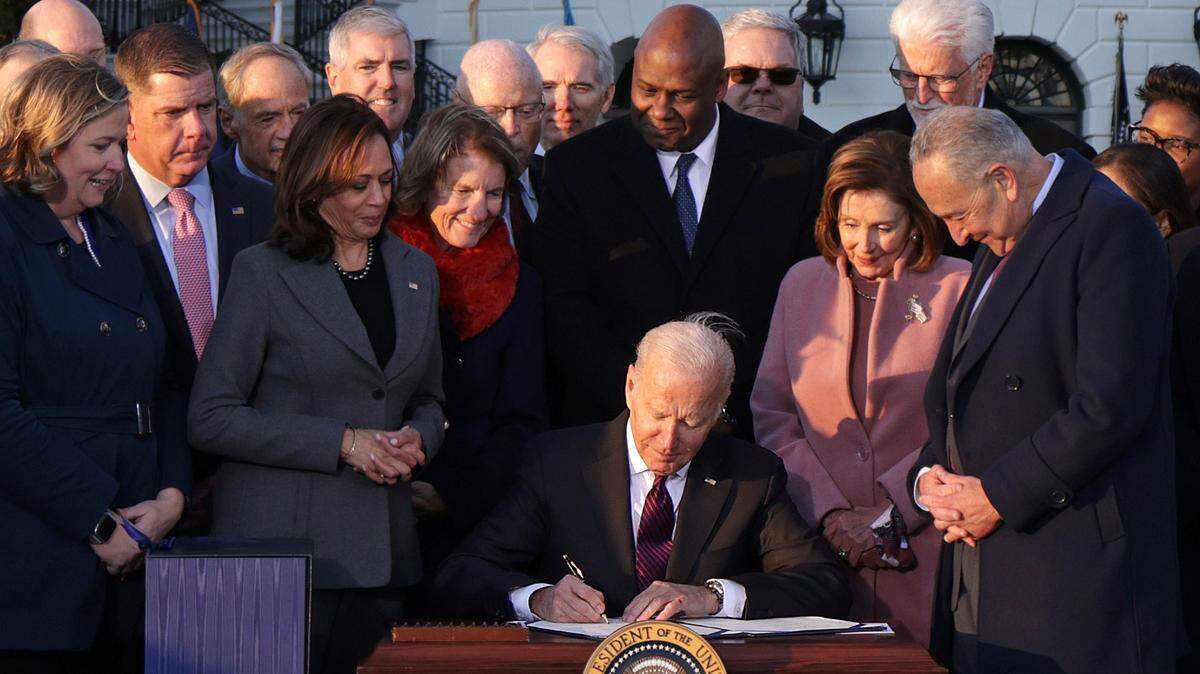
Congress has finally approved the $1.2 trillion infrastructure bill — a landmark piece of legislation that should launch a new era for America’s infrastructure — including Florida’s.
The impact on our state promises to be significant. Florida stands to receive $19 billion in direct infrastructure allocations over eight years and access to an additional $30 billion by applying for federal funding. This represents roughly a 20% increase in the state’s annual budget dedicated to infrastructure for the coming eight years, which is a once-in-a-generation boost to the state’s economy.
Our next governor should take heed: The need to improve Florida’s infrastructure is pressing. Although our state fares better than many others, Florida still received a C grade in the most recent analysis by the American Society of Civil Engineers (ASCE). Home to 26 major airports, eight major water ports and more than 12,000 bridges, the state continues to face infrastructure hurdles as climate challenges ramp up and as millions of people flock to Florida for tourism, business development and to call the state home.
This funding is a major opportunity. It can launch a new era of infrastructure for Florida, featuring 21st century, technology-enabled and climate-resilient projects — roads, bridges, clean water, resilient power grid systems and climate mitigation — that would make us the envy of other states.
But achieving this requires a bipartisan commitment. Can we get there?
Our political realities are not cause for optimism. Not one of Florida’s Republican representatives voted to support the bill. That speaks to polarization and partisanship. As a result of our broken politics, traditional infrastructure funding mechanisms no longer work. Taxes are a political impossibility. So is increased spending. The damaging political fight over the infrastructure bill suggests it is unlikely to be repeated.
But the people have spoken; investing in infrastructure is what they want. In a recent national survey I helped conduct, a majority of Americans (57%) thought the current state of U.S. infrastructure put their health and safety at risk; 54% thought that fixing it is an important national priority — more than COVID-19, unemployment, the national debt, racial inequality or other social issues. In roughly equal numbers, Democrats (53%) and Republicans (57%) agreed.
How then to fund our infrastructure? It is time to turn to the private sector. There are several advantages. The private sector can provide significant levels of private capital on a long-term basis, independent of political cycles, as well as experience and expertise in technology-based and sustainable infrastructure — exactly what the state most needs.
How to provide private funding? There are several pathways. Private funding doesn’t just mean private capital. Private and state pension funds can be encouraged to invest in infrastructure projects, as can individual investors. For example, Florida has a $30 billion unfunded pension liability. Under the right Public-Private Partnership (PPP), state pension funds can invest in infrastructure projects with long duration, linked to inflation, and generate attractive returns for Florida’s pensioners while investing in our own state infrastructure.
This also applies to other than Florida’s state pension funds that could invest in the state. The private sector can also participate in building Florida’s 21st century infrastructure through PPPs for airports and toll roads, to name a few sectors. Florida should be a leader in attracting private capital to invest in its infrastructure.
The infrastructure bill opens the door to Florida’s future. But to fully seize the opportunity, we must put aside partisanship and look beyond federal support. Florida’s elected officials should align with pragmatic voters who want solutions, and with the private sector that can help realize them.
Sadek Wahba is a member of the Wilson Center’s Global Advisory Council, the nation’s key non-partisan policy forum for tackling global issues. He is chairman and managing partner of I Squared Capital, an independent global infrastructure investment company based in Miami. The views expressed do not necessarily reflect those of these organizations.