
Invisible group among the homeless holds lessons for the rest of us to live by | Opinion
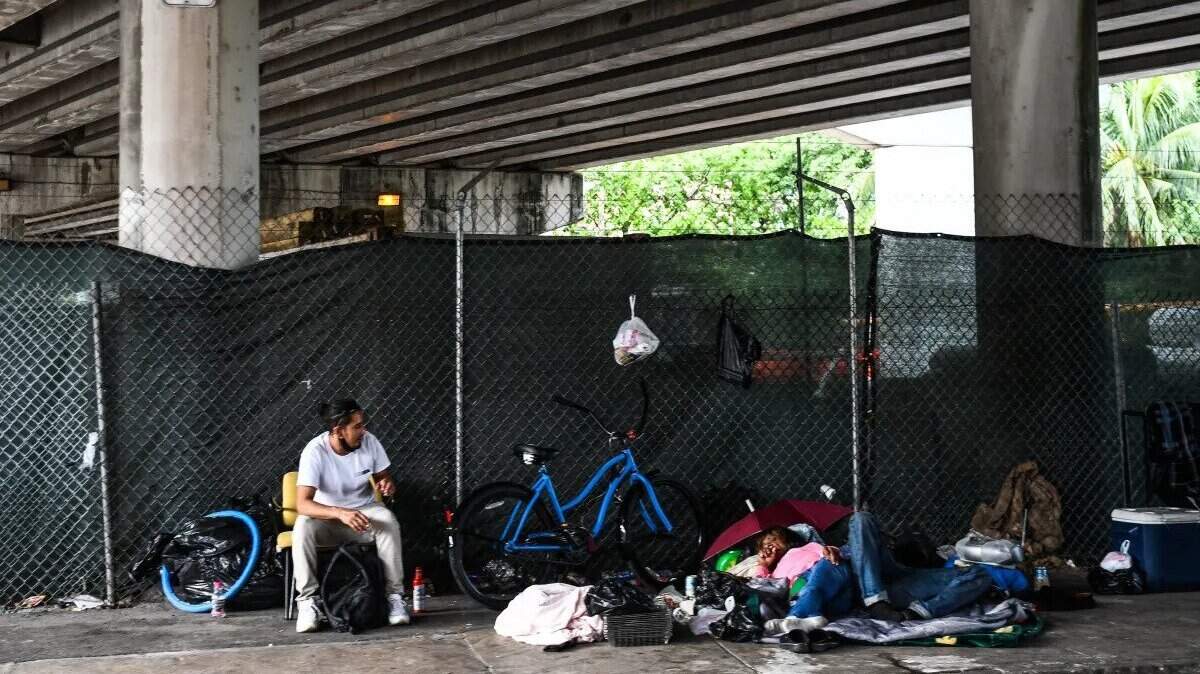
Tent encampments on the streets, in the parks and under Miami’s expressways and other cities have become symbols of the nation’s housing crisis. Reminiscent of the tramp colonies and hobo “jungles” of the late 19th and early 20th centuries, or the Hooverville shantytowns of the 1930s, the tents are in full public view, impossible to ignore. Occupants’ evictions by local authorities have generated intense disputes over the right to shelter and privacy.
Less visible, however, are homeless camps in the woods beyond the urban fringe. Overlooked by national media outlets, they have grown more quietly, outside of small towns and suburban areas where poverty levels have risen most rapidly in recent years. Now, they are part of an extensive population nationwide, swelling from year to year, in warm- and cold-weather locations alike. In some cases, there is a clear link between sharp job losses and the surge in woodland living. Escalating urban rent is the most immediate cause in other locations, where the impact of housing loss is magnified by the triple scourge of heroin, meth and opioid pills. Homeless populations in rural areas are the most neglected of all — and are the most undercounted.
In the two summers I spent visiting and interviewing woods dwellers in Florida’s hinterlands, I found they had a lot to teach about us. Like the occupants of Miami’s urban camps, the woods dwellers I got to know are looking for privacy and autonomy they can’t get in a homeless shelter, but they live close enough to commercial strips to ensure income, food and medical assistance.
Many of them grew up spending time outdoors, and have been in the woods for a decade or more — they are comfortable having possums and alligators as neighbors. Others are more recent casualties of the low-road economy. Their camps often are organized according to consumption choices (beer, meth and heroin), and have self-elected leaders, many of who have strict rules. They host a wide range of people — most of them working casually, panhandling or scavenging, though some are employed in regular full-time jobs. Not a few have terminal illnesses, and the woods are a sanctuary for them, where everyone is in some kind of pain, and where no one will moralize about the narcotics, pills and alcohol used to ease it.
Loners who live outside the tent clusters often have elaborate compounds — with generators, grills, fridges, inflatable swimming pools, sofa sets, solar panels, and flat-screen TVs. They are house-proud, and are the most likely to insist that living between four walls would be too claustrophobic. Yet, by far, the majority would thrive with a proper roof over their heads, rather than a leafy canopy of live oaks and sand pines, battered by the pitiless heat and rain of a Florida summer.
Among service providers, Housing First (which prioritizes housing the unsheltered) has recently replaced Treatment First (which ministers to clients until they are “housing ready”) as the preferred remedy for homelessness. But, tragically, it has done at a time when actual homes are in such short supply.
In the extremity of these camps in the woods, improbable friendships form around acts of sharing and offers of hospitality. Some are alliances of convenience, especially for women, who are usually driven out there by domestic abuse. Other bonds draw on long-standing relationships. Because mental illness is prevalent, wayward behavior and eccentric opinions are tolerated for the sake of companionship. However loosely the camps are organized, they mostly run on the principle of mutual aid, with services, goods and information exchanged and divvied up according to need.
For sure, there are also acts of pilfering and aggression on the part of people pushed to their limits. But at its best, the communal life of the camps offers us lessons in how to make a less competitive kind of society, though not under conditions of anyone’s choosing. One seasoned veteran I got to know — a former police sergeant, now a heroin addict and expert panhandler — put it well: “If you need something, just ask around, because someone here will have it or know where you can find it.” He added, with a junkie’s knowing smile, “But there’s only so much that you can actually get.”
Author Andrew Ross is professor of social and cultural analysis at New York University. He will be in conversation with Miami Herald reporter Anna Jean Kaiser about his book “Sunbelt Blues: The Failure of American Housing” during the Miami Book Fair 2021. Their recorded conversation will be available at miamibookfaironline.com at noon, Nov. 19, and will be available for viewing indefinitely after the close of the Book Fair.