
Black voters in District 20 deserved a clear winner. Ranked choice voting could help | Opinion
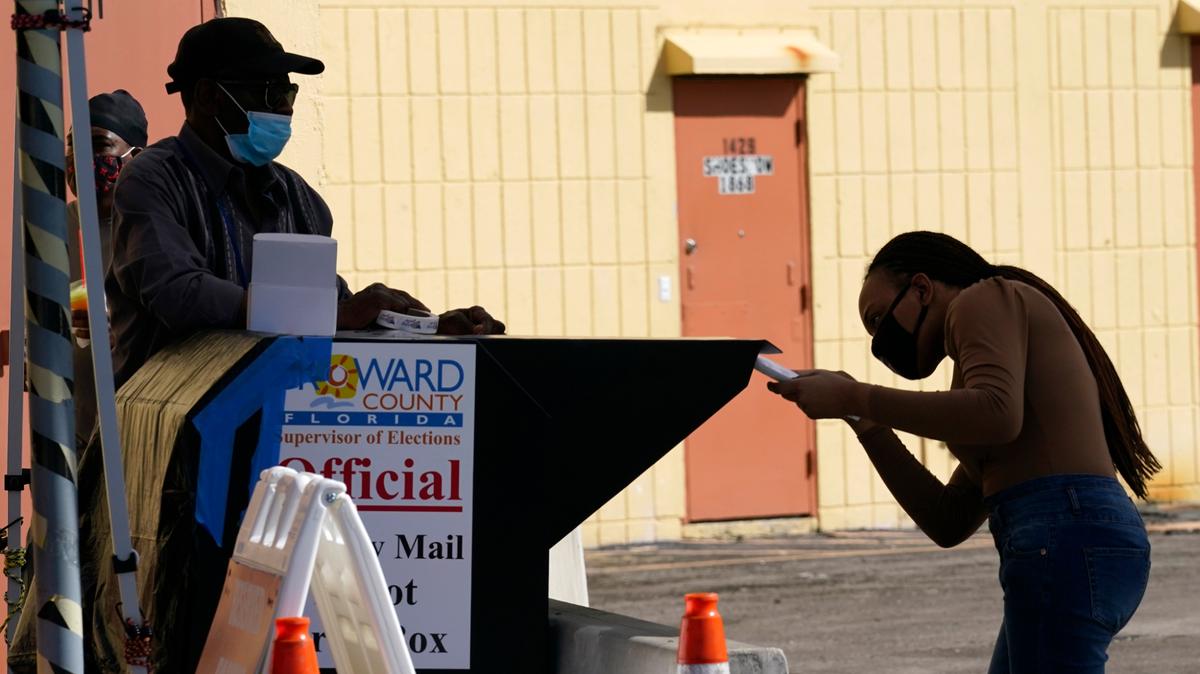
A special Democratic primary election in South Florida has been one of the most competitive in the country. Last Tuesday, 11 candidates vied to succeed Alcee Hastings, a longtime congressman and leader in the Congressional Black Caucus who died of pancreatic cancer in April.
The candidate field was strong with 10 Black candidates, including two Black county commissioners, two Black state representatives, and a Black state senator. The number of quality candidates shows the strength and ambition of Black leaders in the Deep South, who are seeking this higher office so they can get more done for their people. They are not waiting their turn, and that should come as no surprise.
We should be celebrating these talented individuals. But this crowded, 11-candidate field was destined to be complicated and confusing from the beginning.
Ranked choice voting
The race was so tight it went to a recount, with Sheila Cherfilus-McCormick ahead by just five votes and getting a mere 24% of total votes cast — not exactly a mandate to govern. That would leave 76% of Democrats unrepresented and put her in a weaker position without majority support.
The winner also will immediately have to begin preparing for another crowded, contested primary less than nine months away, in August 2022. While Black and Brown communities like Florida’s 20th Congressional District deserve to choose among many strong candidates, they also deserve clear winners with a mandate to deliver in Congress
There is a way for more Black candidates to run for office and win with a clear mandate, all while avoiding the “perpetual campaign”: ranked choice voting (RCV). The fastest-growing voting reform in the country, RCV lets voters rank candidates in order of preference — first, second, third and so on. If a candidate receives more than 50% of first choices, they win outright. If not, the winner is decided by an “instant runoff,” where whoever voted for the candidate with the fewest votes has their next choice counted, until the candidate with more than 50% of the vote wins.
In Florida’s 20th, an RCV victory could have given an inspiring Black leader majority support and a mandate to govern. The election would be easier for the district’s voters, who were instead gaming out the election and trying to figure out who stood a chance. Of course, all voters want their vote to count for a candidate who can win. But the burden is heavier on Black voters, because of how hard we’ve fought for the right to vote and how hard we continue to fight against vile and racist voter suppression efforts, including in Florida.
Worries of vote-splitting
Ranked choice voting would also make a difference beyond Florida’s 20th. Look at Virginia’s Democratic gubernatorial primary this year, which saw two strong Black women candidates in former State Delegate Jennifer Carroll Foy and State Sen. Jennifer McClellan. Already, North Carolina’s 2022 Democratic Senate primary has two strong Black women candidates, former State Supreme Court Chief Justice Cheri Beasley and former State Sen. Erica Smith. The number of talented Black leaders seeking higher office is growing.
But in crowded races, Black candidates risk winning with low percentages or even worse, vote-splitting — a white or conservative candidate “stealing their way up the middle” and winning a race, while votes are split evenly between two Black candidates. Under RCV, voters can rank multiple Black candidates without worrying about who is more “electable.”
Research and real-life examples show that RCV works for Black candidates. A recent report from the nonpartisan group FairVote found, “Instead of dividing community support, Black candidates who run against other Black candidates in RCV elections have a higher win rate.”
Three strong Black candidates ran in the ranked choice Democratic primary for mayor of New York City; now, New York City will have its first Black mayor in nearly 30 years, Eric Adams. Yet, as valuable as the New York City example is, the heart of the Democratic Party is Black voters in the South — the New American Majority that delivered Georgia to Joe Biden this past November, and delivered Democratic primaries to both Biden and Barack Obama.
We should think about bringing ranked choice voting to races like Florida’s 20th, and others like it across the country. RCV can give more Black candidates a mandate to lead. It can end the fear of vote-splitting. It can encourage leaders to deliver for all their constituents, not just their base. Ranked choice voting is better for voters and better for candidates.
Marvin Randolph is a nationally recognized political campaign expert and president of ONYX Communications and the Southern Elections Fund. Randolph has worked on more than 120 campaigns in 31 states.
This story was originally published November 12, 2021 at 2:18 PM.