
For a real-life education about the dangers of communism, go to Miami’s Cuban museum | Opinion
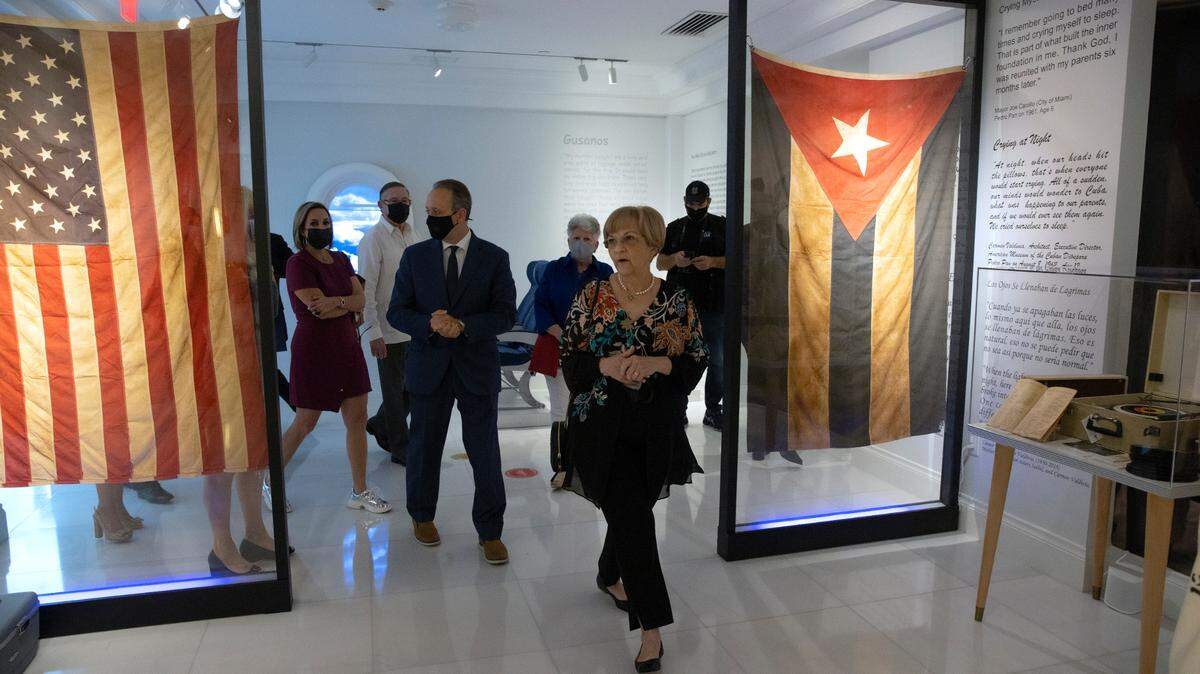
As a Texan-born American, I didn’t know much about the Cuban exile experience until my family moved to South Florida. My first contact was in the 1980s when my sixth grade class visited Little Havana, and I met with exiles who told us why they fled Fidel Castro’s so-called “communist paradise.”
Amidst our Cold War battle with the Soviets, the school system I grew up in required reading of books like George Orwell’s “1984,” Ray Bradbury’s “Fahrenheit 451” and Ayn Rand’s “Anthem” to teach children how censorship and historical revisionism can induce a free society into the chasm of totalitarianism.
Today, censorship in the form of “cancel culture” is used as a weapon to silence truth so cultural Marxists can vilify America’s heritage and acquit communist leaders like Che Guevara and Leon Trotsky of their crimes against humanity.
Teaching about communism
Historical preservation is at a critical juncture, which is why Florida passed “portraits in patriotism” legislation, which mandates its school curriculum teach children “first-person accounts of victims of other nations’ governing philosophies who can compare those philosophies with those of the United States.”
But children aren’t the only ones who can benefit from true stories about how millions deluded themselves into believing they were working toward communism as the “radiant future of all humanity.”
One of the greatest hidden gems in Miami’s cultural scene is a museum nicknamed “The Cuban,” now emerging as an educational center featuring events and exhibits about how Castro’s 1959 “revolution” stripped away the rights of a once free society.
After months of closure during the pandemic, the museum, officially known as the American Museum of the Cuban Diaspora, recently reopened. One exhibit, titled “Operation Pedro Pan: The Cuban Children’s Exodus,” details the experience of over 14,000 unaccompanied children who were sent to the U.S. by their parents with the help of the Catholic Church and Miami priest, Father Brian Walsh. The operation was Cuba’s version of Schindler’s list, an illustration of the measures parents took to ensure their children would never live under communist rule.
Today, many of those children are well-loved Miami figures, such as Miguel Bezos, Amazon’s first investor and step-father to Jeff Bezos; U.S. Sen. Mel Martinez and businessman Max Alvarez. All tours are given by Pedro Pan “kids,” many of whom are now in their 70s, providing visitors with first-hand accounts of these historic events.
Another exhibit displays distinctions between the two plans developed under the Eisenhower and Kennedy administrations to liberate Cuba in the failed 1961 Bay of Pigs invasion. The exhibit outlines how one plan led the CIA-trained, Cuban-American Brigade 2506 to capture, but how the other could have increased the opportunity for victory.
Interactive exhibit
Next year, the museum is scheduled to have exhibits by Jewish Cuban American artist Baruj Salinas and Cuban sculptor Roberto Estopiñán, known for his sculptures of political prisoners. The museum is also seeking to develop an interactive exhibit detailing the events that led to the 1959 revolution, the transformation of Cuban society into a totalitarian state, and the history of Cuban Americans in Miami.
In July, the museum hosted former Moscow correspondent and Wall Street Journal writer David Satter to discuss the genesis of communism in the U.S.S.R. The museum showed Satter’s documentary, Age of Delirium, for the first time in Spanish, and the event was aired live to Cuba. Satter now plans to offer the documentary as an educational tool to the Florida school system.
During his presentation, Satter discussed how the Soviets tried to create a “false reality” for its citizens by rewriting history and censoring the truth. Three decades after the Soviet collapse, Cubans continue to live in Castro’s false reality while Americans are slowly seeing their own history being rewritten while silenced by cancel culture.
While Florida’s new “portraits in patriotism” legislation will help educate children, “The Cuban” museum stands as a vehicle to preserve history and promote real life accounts, offering both Cubans and non-Cubans alike an opportunity to learn about the true impact of communism.
Jeffrey Scott Shapiro is the former director of the U.S. Office of Cuba Broadcasting. He is a practicing lawyer and journalist who is collaborating with the Cuban museum on academic and journalistic conferences.
This story was originally published November 9, 2021 at 4:43 PM.