
Do U.S. senators really think they can choose to do nothing to fight climate change? | Opinion
“What will you be having?”
It’s a simple question, a culinary fork in the road that thousands of waiters will ask customers at restaurants across Miami today. Some will go with arroz con pollo, others stone crab — and there might be a few salads thrown in there, too. In the end, all the choices are, generally speaking, equally palatable.
Washington politicians and pundits would like us to believe we’ve come upon a similar fork in the road in the debate over President Biden’s Build Back Better Plan, with equally tasty choices in either direction. They’re wrong. With every word they utter, these modern-day Cassandras clutch their pearls and wail about the potential costs, while ignoring the higher cost of inaction.
There is no fork in the road. We don’t even have a menu of half measures in front of us. We can either choose to move forward together or stay stuck and stymied in an economic system woefully unprepared to address the realities of climate change and the systemic inequality it creates.
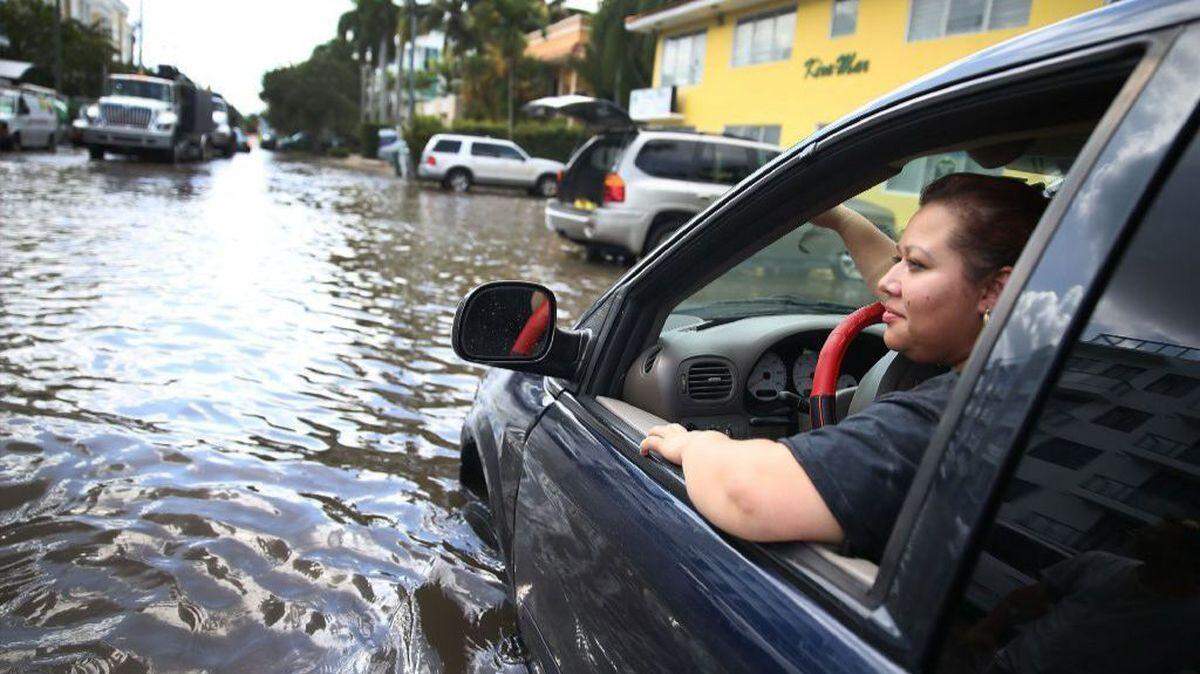
Instead of staring at each other across 1,300 miles, perhaps senators should just come to Miami. The ever-more-frequent king tides in Miami Beach make rain boots a more practical option than stilettos for fashionable folks.
In reality, Miami-Dade, Broward, Palm Beach and Monroe counties face a bleak future should federal inaction on climate continue. Rising sea levels could put the entire region under water by the end of the century, yet, instead of making changes in policy, the Army Corps of Engineers proposed spending $4.6 billion to build a 20-foot seawall that would have protected a mere six miles of downtown Miami and the financial district. Meanwhile, less-affluent residents in Hialeah and Opa-locka would have had to learn to swim.
For more than a decade, forward-thinking leaders from all four South Florida counties have collaborated with my organization, the Institute for Sustainable Communities through the
Southeast Florida Regional Climate Change Compact to implement policies that reduce greenhouse gases and position the region to delay the coming catastrophic impacts.
But Florida is a peninsula, not an island. We cannot fight this fight alone. Florida’s future depends on leaders of all political persuasions in Tallahassee, Washington, D.C. and in capitals around the world addressing the problem with the ambition and seriousness it deserves. President Biden’s plan offers a good first step.
Build Back Better would make a $63 billion down-payment on updating our nation’s dilapidated water infrastructure. That might sound like a lot, but a report from the Natural Resources Defense Council suggests the true price tag for everything that needs fixing is more than $1 trillion — and that report is 3 years old. Why are we putting a tiny Band-aid on a gaping wound? We must do better.
As currently proposed, the legislation offers $555 billion toward a transition to a low-carbon economy, a handsome pile of cash for you, me and anyone not named Jeff Bezos. But it really represents a drop in the bucket. Woods Mackenzie estimated that completely decarbonizing the U.S. power grid would cost roughly $4.5 trillion. If you are white and wealthy, you probably have no idea where the nearest coal plant is, but I promise you, if they are low-income, many of your fellow African-American citizens do. In 2012, an NAACP report noted that 6 million Americans lived within three miles of a coal-fired power plant. Each of those Americans had a per-capita income of $18,400, less than half the national per capita income. 40% were people of color. Non-Hispanic African Americans are more than 40% more likely to have asthma than non-Hispanic whites. Why are we stopping at $555 billion? We must do better.
Americans, particularly those from communities that can only dream about the American Dream, deserve better than the race to the bottom we’re seeing in these U.S. Senate negotiations. We need strong, comprehensive federal action that builds an economy that lifts all Americans up and prepares us to meet the challenges of a changing climate and world.
If not, we’ll remain stuck and stymied, just as we are now. And who wants to have that?
Deeohn Ferris is president of Institute for Sustainable Communities.