
Miami’s proposed anti-camping ordinance will criminalize homelessness, not fix it | Opinion
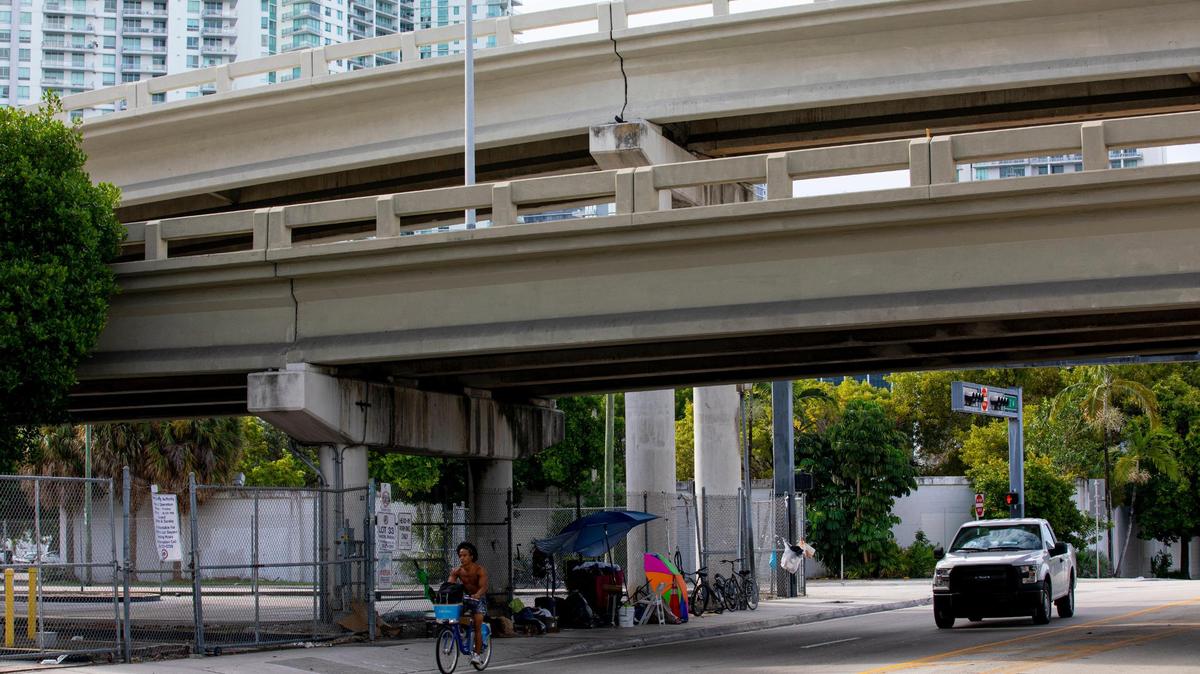
She was convulsing violently on the sidewalk, in need of urgent medical attention, when her boyfriend called out to us in desperation.
That’s how our Miami Street Medicine (MSM) team of medical students came to know Mary, as we provided medical assistance to unhoused individuals. It was about a week after city of Miami workers came through with garbage trucks, hoses and police to level tents and remove every possession to “clean” her street.
She didn’t have much to begin with — four nylon walls that became a place to keep dry, a refuge for her possessions and somewhere to sleep at night. She swept her sidewalk each day and folded her clothes in her tiny home. After the cleaning, her ID, clothes, toiletries and shelter were gone, along with her epilepsy medicine. As a result, Mary suffered that severe physical trauma.
Miami’s anti-camping ordinance
Mary’s story is one of many. Walkers, canes and wheelchairs were all carried off in the debris.
One woman lost her mother’s ashes in these sweeps. Another patient lost his diuretic medication, exacerbating his chronic heart failure and forcing him into the hospital. Yet another man lost his recently obtained birth certificate. On the streets, where people are robbed regularly, this type of paperwork is immensely difficult to obtain and keep. His hopes of getting a job were trashed with it.
The city isn’t stopping there. On Oct. 14, Miami commissioners will vote on an anti-camping ordinance to ban sleeping on public property. It will effectively criminalize homelessness in the city.
This isn’t the first time the city has conducted street “cleanups,” and it won’t be the last, especially if a ban on encampments is passed. Street sweeps like this now happen weekly and across the country. They can cost thousands or even millions in taxpayer money.
These “cleanups” contradict Centers for Disease Control and Prevention guidelines, which counsel localities to “allow people who are living unsheltered or in encampments to remain where they are,” because dispersing them means breaking connections with service providers while increasing the potential for disease spread. The United Nations has condemned the treatment of homeless people as “one of the most pervasive violations of human rights globally.”
The CDC’s concerns are now being realized. Homelessness is a public health crisis. People experiencing homelessness have higher rates of illness and die on average 12 years earlier. While health issues can lead to homelessness, life on the street itself causes immense stress and injury.
The trauma of the street
There are clear psychological and psychiatric outcomes from the lack of sleep, isolation and stigma, all contributing to the trauma of life on the street. Dispersing people through sweeps and criminalization furthers this trauma.
People don’t sleep on the streets because they choose to, but because they lack choices. They lack access to affordable housing, livable wages and connection to social services.
Shelters are an effective short-term solution for those who need a short respite to get back on their feet. But shelters have proven largely ineffective for the chronic homeless who are victims of intergenerational poverty. Crowded shelters can trigger paranoia, particularly during the COVID-19 pandemic, and inflexible shelter rules invite violations, sanctions and subsequent banishment. Shared hygiene and communal spaces make shelters hot-spots for COVID spread.
Experts have developed data driven, trauma-informed approaches that will end chronic homelessness. Instead of using police to sweep our nation’s homelessness crisis away — dispersing, arresting and strong-arming people into shelters — we need to invest in support programs such as Housing First, with a greater than 90% success rate. Attention to this issue is more important than ever, in light of Miami’s new status as the second most unaffordable city in America.
The Miami Coalition to Address Racial Equity (MCARE) is working to address these issues by bringing stakeholders together to advocate for housing justice. There will be a rally at Miami City Hall in Coconut Grove on Oct. 14 to protest this discriminatory bill. Join us there or send a letter or tweet urging commissioners to vote no and Mayor Francis Suarez to veto it, if it passes.
Political will
We know how to end homelessness. The city has the resources to do so. The only thing lacking is the political will.
It won’t be easy for Mary to obtain new seizure medication. Her modest possessions are gone, and she must start again with many obstacles against her. How long can she keep this up?
If she succeeds in rebuilding some semblance of stability, the city may well rip her world apart all over again. Trapped in the loop of a system that repeatedly undermines and dehumanizes them, how can people ever hope to get off the street?
Sabrina Hennecke is an MD/MPH student at the University of Miami Miller School of Medicine, working as a founding member of Miami Street Medicine.
This story was originally published October 11, 2021 at 11:35 AM.