
Miami’s homeless need house keys and stability, not handcuffs and jail time | Opinion
Amid a cantankerous clash between Miami city commissioners and the new police chief, it is hard to believe they are teaming up for something even more misguided and self-serving.
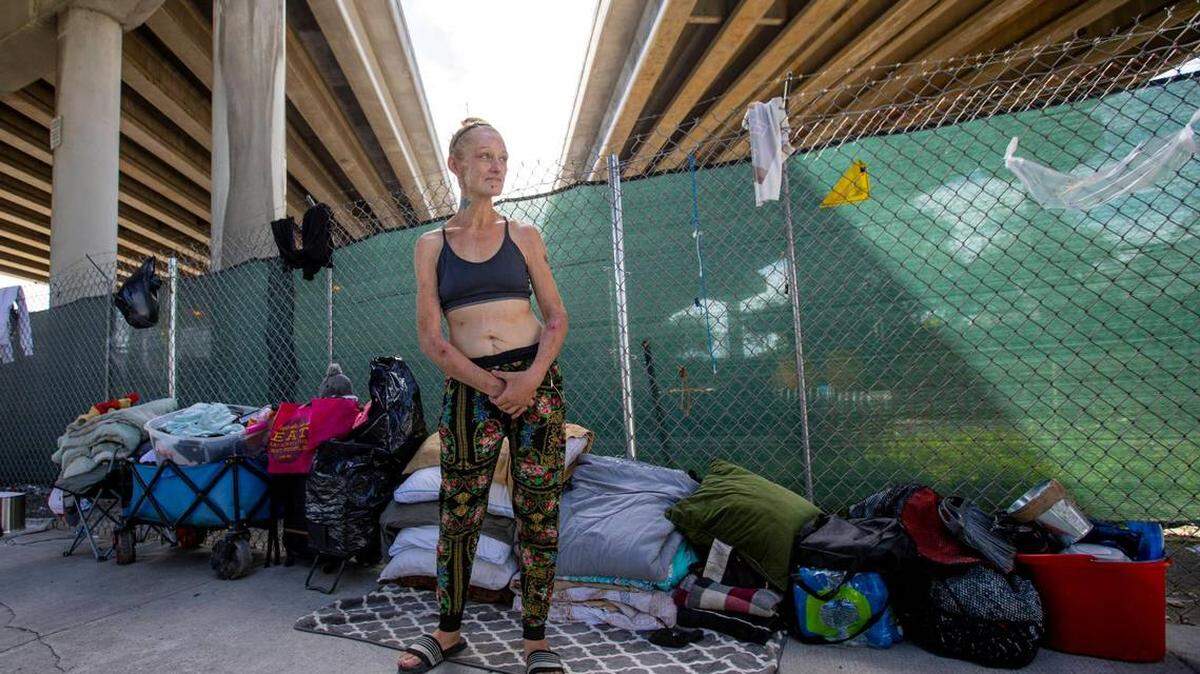
Commissioner Joe Carollo has proposed measures to criminalize homelessness by making it illegal to sit or sleep in public spaces, increasing sweeps, and creating a policed camp — mostly made up of unhoused Black and Hispanic people — perhaps on Virginia Key.
The city of Miami has tried this approach before, and it failed to reduce homelessness. However, it did bring costly lawsuits and fines. The proposed measures come without costs-benefits analysis, financial or human.
However, decades of interdisciplinary research challenge the measures’ logic. For almost 30 years, I have conducted research and applied work on homelessness in multiple locales, including the city of Miami and Miami-Dade County. I have shown in a recent article in the Annals of the Academy of Political and Social Sciences that, in Miami and three other global cities, a combination of housing and income subsidies — along with ties to social-service organizations and family and friends — truly help residents get out of homelessness. Moreover, these economic and social resources help rehoused people cultivate subjective feelings of security about their lives and futures. Criminalization measures are threats to this security.
The experiences of one of my interviewees, Tara — a pseudonym — an African-American and Puerto Rican woman in her 50s, demonstrate this. After a year-long jail stint for crack possession, Tara was back on the streets of downtown Miami. Police moved her along and sometimes berated her, but a friend let her stay in his tent behind a fruit market in Allapattah.
When she learned that the quickest path to housing was through a shelter, she walked a mile every morning before twilight for weeks to line up. Once in, she bonded with her case manager, Grace — also a pseudonym — herself a recovering addict. After several months, Tara got her “twisters” — keys to her own permanent supportive-housing unit. She has lived there for seven years, is healthy and is back in touch with family.
Tara still walks to the drop-in center every morning at 5 a.m., but now to volunteer. Under the palm trees of the courtyard, she said, “I clean up every piece of trash. I want to say ‘Thank you’ without saying anything. No one else would trust me, but my friend Grace did.”
Proponents of criminalization measures may say that shelter will be offered by compassionate, trained officers. However, sociologist Chris Herring starkly shows how a “therapeutic policing” approach becomes complaint-oriented policing initiated by citizens, government agencies and politicians that results in shuffling the unhoused. For officers with limited spots to offer in shelters, often seen as dangerous and cramped, this work is seen as better done by trained social workers. For the unhoused, this becomes “pervasive penalty” — punishment often short of arrest, but including the loss of important belongings, including medicine, documentation, mementos and survival materials; barriers to services, housing and employment; and exposure to crime and violence by disrupting supportive networks.
This approach prolongs homelessness and perpetuates the perceived disorder that it intends to eliminate.
The good news is that there are alternatives. In Miami and other global cities, substantially increasing permanent supportive housing is the only approach that has reduced street homelessness. Commissioner Ken Russell has mentioned a program that would create 500 units of such housing. Miami, including the mayor, and the county should work together to take advantage of COVID relief and FEMA funds to make it happen. The Miami-Dade County Homeless Trust has the infrastructure to carry out such a housing-first program.
In the pinch of the lingering pandemic, it is time to seize the chance to break out of Miami’s cycle of illogical and hateful politics and policies. A program that starts with house keys, and not handcuffs, is the only sensible way forward.
Matthew D. Marr, Ph.D., is an associate professor of sociology in the Department of Global & Sociocultural Studies at Florida International University.