
Fire Health Institutes leader. Animal experimentation is cruel and fails to help human beings | Opinion
The National Institutes of Health (NIH) is our nation’s foremost medical research authority, charged with the lofty and admirable goal of seeking scientific knowledge to “enhance health, lengthen life, and reduce illness and disability.” But under the leadership of Director Francis Collins, the agency has repeatedly failed in this mission and squandered billions in taxpayer money.
Collins’ apparent lack of interest in fostering scientific excellence and his inability to steer the agency toward innovative, cutting-edge research makes him ill-suited to lead NIH, and his remaining in the captain’s chair threatens to torpedo this country’s position as a world leader in scientific research.
It’s time to fire Francis Collins.
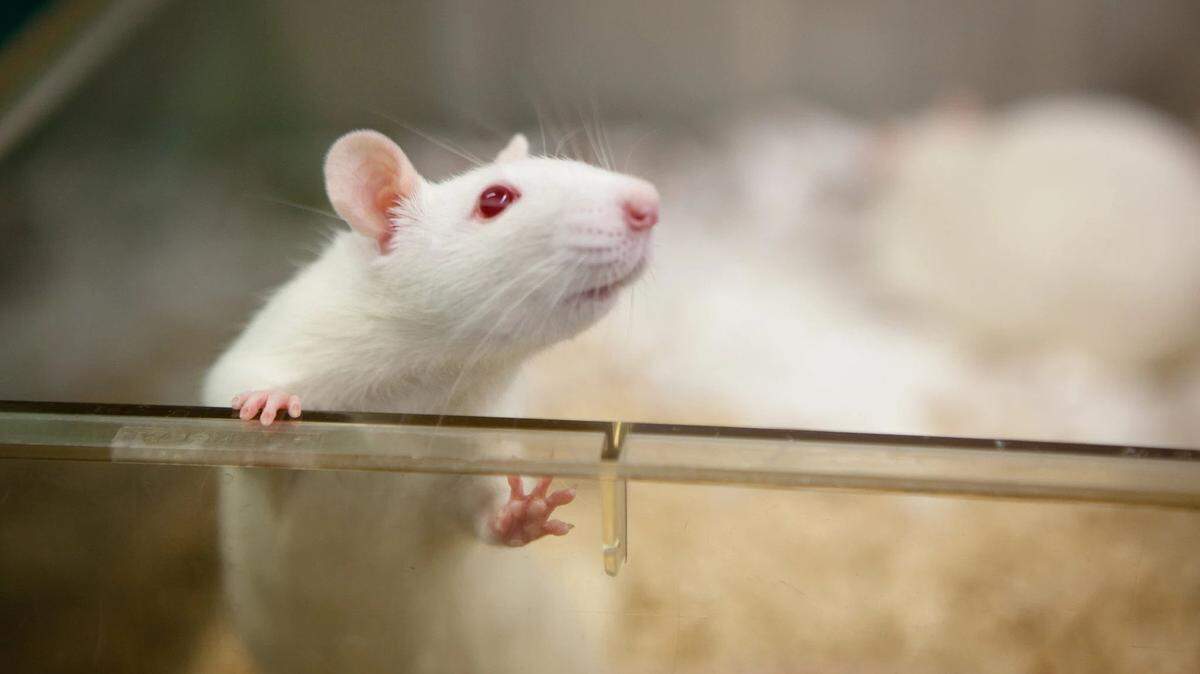
Collins’ reign at NIH, beginning in 2009, has been marked by an acute lack of vision. Inexplicably choosing to mine the dusty defeats of the past for future success, Collins has directed nearly half the agency’s taxpayer-funded budget of $41 billion toward cruel and senseless animal experimentation, despite overwhelming scientific evidence that animal studies seldom result in effective treatments and cures for human diseases.
Ninety percent of basic research — the kind that Collins loves and most of which involves animals — fails to lead to treatments for humans. A whopping 95% of pharmaceutical drugs that test safe and effective in animals are unsuccessful in human clinical trials. And in its strategic plan for 2016 through 2020, NIH actually acknowledged that, “Animal models often fail to provide good ways to mimic disease or predict how drugs will work in humans.”
Yet, in spite of these clear failures, NIH just can’t seem to quit animal experimentation. At a workshop earlier this year, the institute discussed the well-documented difficulties of applying results from animals — including dogs, cats, monkeys, mice, rats and rabbits — to humans. Its solution? Continuing to chase the unicorn, it settled on “better” animal experiments.
But Collins’ loyalty isn’t even to science or the health of Americans — it’s to the old methods and to his constituency, largely made up of animal experimenters. In effect, our tax dollars are propping up the animal-experimentation industry. Myriad animal breeders and suppliers as well as companies that make everything from lab cages and equipment to kibble have found a good friend in Collins, who continues to provide for them with $19 billion a year.
That’s not just a waste of money and a waste of precious lives — it’s also a wasted opportunity. It’s endless suffering for those who desperately need new treatments left undiscovered. It is, at its core, poor leadership.
Collins has also refused to curb, or even acknowledge, the rampant negligence, cruelty and repeated violations of federal law in his agency’s own animal laboratories.
From January 2018 to June 2021, 75 cases of serious animal-welfare violations were documented in NIH’s Maryland laboratories. Animals were suffocated or starved or died of dehydration. They were injected with the wrong drugs and subjected to unapproved procedures. They became trapped in parts of the equipment and died while frantically struggling to escape. One mouse burst into flames — yes, you read that right — when experimenters failed to notice that alcohol fumes had built up during a heat-generating surgery.
But not a word about any of that from Collins, who either doesn’t know or doesn’t care. Either way, it’s an indictment. That’s not how a leader leads.
NIH should be the world leader in cutting-edge scientific research. Squandering billions looking for solutions to this century’s problems with cruel 20th century methods is not leadership. Just the opposite.
NIH needs a leader with vision, one who embraces the advancement of human-centric methods that can produce real-world remedies for human maladies. It’s what we deserve — and it’s what we’ve already paid for. Collins has had more than a decade to move NIH into the future. He has proved himself incapable.
It’s time for someone new.
Dr. Alka Chandna is vice president of laboratory investigations cases at People for the Ethical Treatment of Animals.
©2021 Tribune Content Agency