
Florida’s longstanding history of bigotry against LGBTQ people, regrettably, thrives today | Opinion
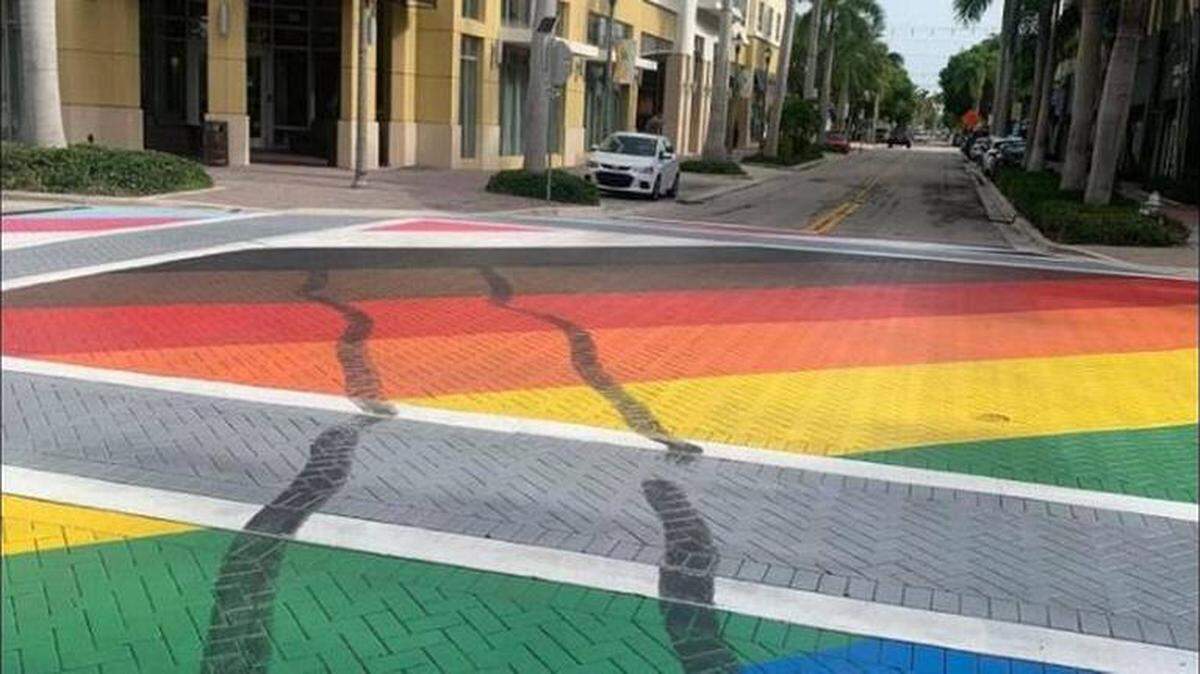
Florida has long been a petri dish for bigotry against the LGBTQ community. The damaging effects of state-sanctioned efforts began 65 years ago when Florida enacted the Johns Committee to stamp out LGBTQ people in state employment. Although great progress has been made across the country — and the globe — the LGBTQ community in Florida still faces obstructions to fundamental human rights.
For starters, LGBTQ people in this state lack full protections from discrimination. Only 60% of the population is expressly protected against discrimination based on gender identity in private employment, housing and public accommodations. In a recent study by Out Leadership, Florida, unsurprisingly, ranked 28th in the nation for the state’s climate toward LGBTQ workers. This is important, because we have learned through research that pro-equality policies are better for business. The Wall Street Journal’s first corporate ranking examined diversity and inclusion among S&P 500 companies and confirmed that socially diverse groups are more innovative and productive than homogenous groups.
One opportunity to grab at low-hanging fruit to make the state more inclusive is by codifying the 2020 landmark U.S. Supreme Court case of Bostock v. Clayton County, where the court held that Title VII of the Civil Rights Act of 1964 protects gay or transgender employees against discrimination. But that may be a bridge too far if one considers that Florida’s Constitution still wrongly defines marriage as between one man and one woman, despite state and federal Supreme Court rulings calling same-sex marriage legal.
In 1992, Florida refused to add sexual orientation and gender identity to the Civil Rights Act. The act bans discrimination in housing, employment and public accommodations based on gender, race, religion, even marital status. Year after year, lawmakers have introduced bills to ban discrimination against LGBTQ people, and each year, those bills have gone nowhere in the Republican-controlled Legislature. Upholding human dignity should be a bipartisan sentiment; unfortunately, we’re seeing longstanding supporters turn their backs on the LGBTQ community out of fear of what the party leadership will do to them.
It’s clear that the Republican majority in the state House and Senate is attempting to roll back hard-won protections. However, at the core of LGBTQ-rights debates is the false narrative about the Equality Act’s impact on the freedom of religion. Unfortunately, such misinformation is the currency of today’s political environment.
The freedom of religion is important to all of us. It is one of our nation’s most sacred and fundamental values. That is why it is already fully protected by the First Amendment of the Constitution, and the Equality Act does nothing to weaken those protections.
Instead, the Equality Act would simply amend the Civil Rights Act of 1964 to prohibit discrimination on the basis of sexual orientation and gender identity in employment, housing, public accommodations, education, credit, jury service and any program receiving federal funding. Yet, it remains stalled in the Senate — more than five months after the House of Representatives passed the landmark bill — because there is not enough bipartisan support to get to 60 votes to avoid a filibuster.
Even if the Senate passed the Equality Act, state legislation would still be needed. For example, the Florida Competitive Workforce Act, which was indefinitely postponed and withdrawn from consideration in March 2020 by the Florida House of Representatives, would prohibit discrimination against the LGBTQ community in the state in employment, housing and public accommodations. This is an initiative that my organization, SAVE, has supported and worked side-by-side with Florida advocates and elected officials to help get passed since 2009 when the bill was first introduced.
To ensure LGBTQ people are permanently protected from discrimination, we need to codify these policies into Florida law by passing a statewide discrimination ban that includes protections for the LGBTQ community. And while we depend on local laws for protection, we also rely on corporate entities, such as Power Financial Credit Union, which recently awarded SAVE a donation to celebrate the credit union’s 70 anniversary. The funding will allow the SAVE Foundation to improve its educational initiatives, including prejudice- and bias-reduction programs in the community.
Corporations like this are critical for the support and protections they afford their employees and members. SAVE remains proud of its South Florida roots, and our collective future, with allies and partners, remains hopeful and unified in the important work that still is ahead of us.
Orlando Gonzales is executive director of Safeguarding American Values for Everyone (SAVE).