
We must support our Cuban neighbors: Making the case for humanitarian intervention | Opinion
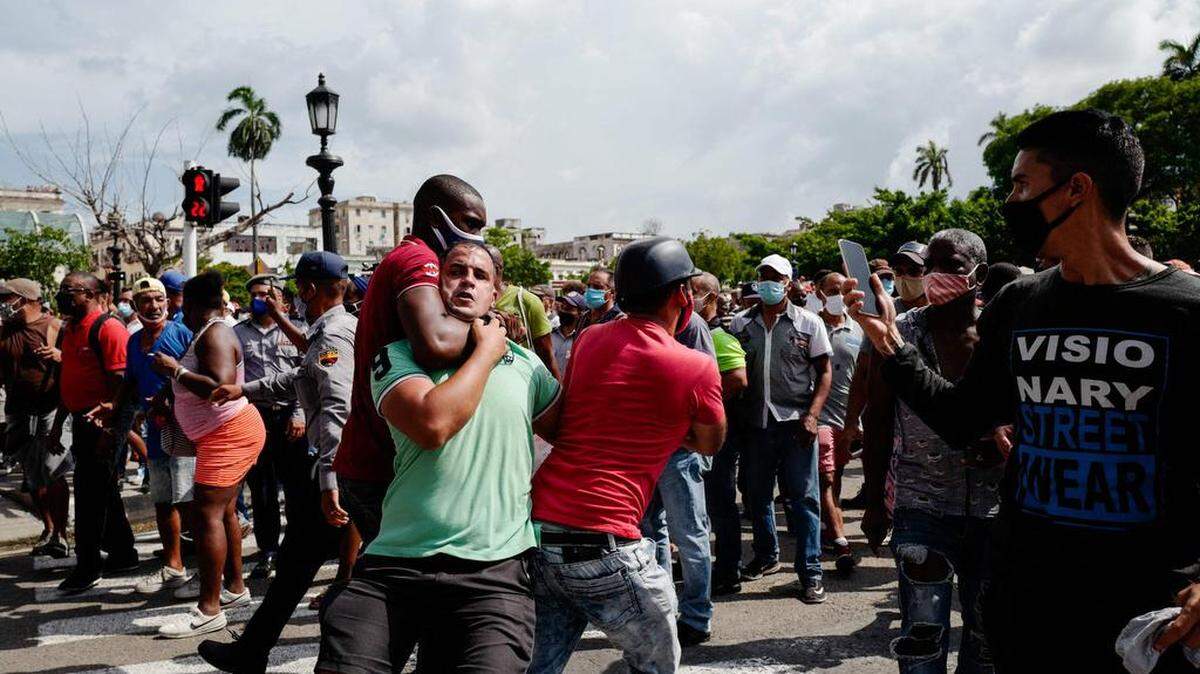
Unprecedented protests erupted in Cuba this week, fueled by young people, social media and deep frustration with several ongoing crises. The island is experiencing widespread poverty; surging COVID-19 cases; shortages of food, medicine and other basic necessities, and daily electricity blackouts — and residents are understandably getting desperate.
In response, Cuban leader Miguel Díaz-Canel and his government have demonstrated blatant and unacceptable abuses of power, including violence against protesters and restrictions on internet communications across the island.
The communist offshoots of Castroism and Guevarism have unequivocally failed. Today they manifest themselves in tragic humanitarian crises in Cuba and Venezuela. Meanwhile, the principles of democracy — freedom, choice and a system of rewards — have been inherently inspiring for humankind. The question now is what U.S. foreign policy should be in the face of humanitarian crises caused by authoritarian regimes that seek control at the expense of human suffering? And, to the case at hand, what should the Biden administration do about Cuba?
Sanctions haven’t worked
Before we answer that question, we must admit two points relevant to the American approach to Cuban relations in the past. First, public policy that aims to control the spread of communism is no longer needed. The perceived threat to the values of American society is long gone given the failures of various communist regimes over the last century.
Second, the past 60 years of economic sanctions as a “non-interventionist” way to pressure Cuba into collapse have simply not worked. In fact, they have had the opposite effect, suppressing the Cuban people in a way that today inhibits them from organizing themselves and mobilizing successful efforts to challenge their Communist leadership.
It is time for the United States to lift the longstanding trade embargo, especially restrictions on travel and remittances. A policy of “waiting it out” hoping for the failure of Cuba’s authoritarian regime has proven ineffective and is needlessly cruel to the millions of residents currently suffering. In addition, lifting sanctions would help economically empower the Cuban people, giving them a better chance of standing up to their oppressive government.
It is also imperative that the United States moves to adopt foreign policy rooted in collaborative humanitarian intervention, which may include leveraging public-private partnerships within the U.S. or working with other countries.
One of the top priorities is COVID-19 vaccine distribution, an effort particularly well-suited to a coalition of international stakeholders in medicine, public health and government. Next, the U.S. should send direct and immediate aid to the people of Cuba in the form of food and routine medical care. Lastly, the importance of internet connectivity on the island cannot be overstated. Protesters’ ability to use social media to share images of demonstrations, broadcast state-sanctioned violence and share updates with a global audience may be what sets this moment apart from the famous Cuban protests of the 1990s.
Cubans need internet
I second Governor Ron DeSantis’ call for Florida companies to offer remote WiFi hotspots, and urge the Biden administration to consider every avenue for the provision of internet infrastructure, whether provided by the public or private sector.
To the naysayers that balk at intervention funded with U.S. taxpayer money, realize that we will take care of our Cuban neighbors one way or another — we’ll pay for it now, or we’ll pay for it later as we seek to accommodate a wave of immigration. In either case, American involvement is justified on more than the merits of “doing the right thing” for humanity. The Cuban people are asserting fundamentally American values, demanding their right to freedom, peaceful protest and human dignity, and it is part of our national character to protect and support those who would further those ideals.
As John F. Kennedy once said, “Let every nation know, whether it wishes us well or ill, that we shall pay any price, bear any burden, meet any hardship, support any friend, oppose any foe to assure the survival and the success of liberty.”
Ultimately, we live in a world that is increasingly interdependent. What happens in other countries has major implications for U.S. citizens in terms of the economy, the environment, public health and immigration.
The White House’s response to this crisis so far is insufficient. Here in Miami and elsewhere in Florida, hundreds of supporters are taking to the streets in support of their Cuban families and friends. I implore the Biden administration to intervene with urgency and to make this effort a solid foundation to guide our international policy over the next decade. We already have one humanitarian crisis at the border with Mexico. If we don’t act now to help the people of Cuba, we’ll soon have another.
Orlando Bravo is founder and managing partner of private equity firm Thoma Bravo and founder of the Bravo Family Foundation. He lives in Miami with his family.