
In Haiti and beyond, we’ve made progress on pandemics for 20 years. We must keep at it | Opinion
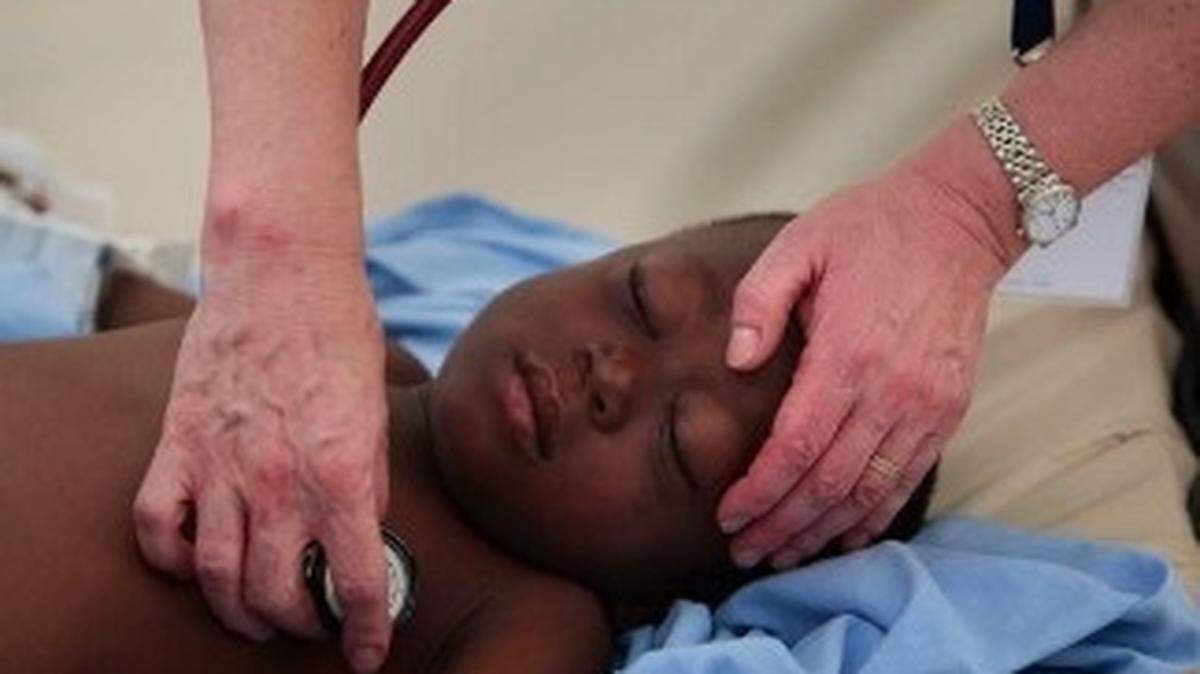
It’s remarkable to see the progress the world has made on longstanding pandemics such as HIV/AIDS, tuberculosis (TB) and malaria, and America’s heart and helping hand, in collaboration with local caregivers, have clearly played an important role in that success story.
Take Haiti, for example. When I first began working there as the director of the USAID Mission to Haiti in 2001, HIV/AIDS was endemic and affecting many more people than it does today. The statistics prove this out.
In 2002, HIV/AIDS had double the number of cases it has now. Sadly, more than 11,000 people died of HIV in 2002, while fewer than 3,000 died in 2019.
Significant progress
In 2020, more than 70 percent of people living with HIV in Haiti were on treatment. That number can and should go up, but the progress that has already been made is significant.
Since that time in Haiti with the USAID Mission, I became the vice president for missions with Cross Catholic Outreach (CCO), and have become familiar with many young people in Haiti and elsewhere who were stricken with HIV/AIDS and other infectious diseases, but managed to survive and thrive through healthcare, education and a chance to be reintegrated into society.
Moise is a good example. I met him when he was being helped by Maison Arc en Ciel (MAEC), also known as Rainbow House. Moise had been orphaned at age 11 during the 2010 earthquake in Haiti and as an HIV-positive child, he faced a lot of challenges.
For example, earlier in his life, Moise had moved in with relatives as a restavec (children sent by poor Haitian parents to be a domestic servant) and as a result, he had been denied an education and frequently beaten.
In fact, in 2013, he had to be hospitalized due to a coma. After his recovery, Moise was referred by the government to the Rainbow House, a model Haitian nonprofit for children affected by or infected with HIV/AIDS. There, the staff encouraged Moise to develop his aptitude for animal husbandry and, aided by vocational education and treatment for AIDS, he was able to apply his talents to poultry production and now lives independently.
Given this organization’s successes, it’s been good to see that the Rainbow House has been supported by USAID and CCO, as well as by funding from the Global Fund to Fight AIDS, Tuberculosis and Malaria, and the U.S. President’s Emergency Program for AIDS Relief (PEPFAR).
I believe it is also important we recognize the leadership of the George W. Bush administration. The annual U.S. investment in the Global Fund to Fight AIDS, Tuberculosis and Malaria since then, combined with the creation in rapid succession of PEPFAR and the President’s Malaria Initiative (PMI), created what Bono, the Irish rock star, once called a “1-2 punch” — an effective, integrative approach to tackling the world’s worst epidemics.
Successful strategies
Now the Global Fund is commemorating its 20th anniversary, and we should celebrate the benefits it has produced. The Global Fund was launched in 2002 to end the three pandemics responsible for hollowing out societies across Sub-Saharan Africa, Southeast Asia and the Caribbean, among other low-income areas, and there are clear signs that its strategies have been successful. In the 20 years it has been in existence, deaths due to AIDS have dropped by 41 percent, TB by 25 percent and malaria by 46 percent.
Even when COVID-19 threw a curve ball in the tremendous momentum it had gained toward ending these epidemics for good in 2020, the partnership found ways to adapt. For instance, the Global Fund rapidly developed a COVID-19 Response Mechanism and found ways to support vital health systems across low-income nations. This has included protecting the critical work of civil society leaders, faith implementers and community health workers on the frontlines, sustaining care to those vulnerable to AIDS, TB and malaria.
As Christians, we believe in the dignity and worth of every human being because we know each has been made in the image of God, and for that reason, I am proud my tax dollars are supporting U.S. global health investments, saving precious human lives today and advancing medical knowledge that can achieve even more in the future.
I believe our generation — with the U.S. leading in global health funding — will be remembered for reversing the tide of deaths from three of the world’s deadliest epidemics and thereby changing the course of history.
Incredible gains have been realized, but we must keep at it. We must empower proven and effective institutions that are dedicated to protecting every human life. Ending longstanding pandemics, tackling the current crisis we face, and working with other nations to prepare for inevitable new epidemics and pandemics will depend on it.
David Adams is Vice President of Missions at Cross Catholic Outreach in Boca Raton and Pompano Beach.