
We must break the link between climate change and modern-day slavery | Opinion
Imagine losing everything — your home, your job, maybe even your family — in an instant, in the flash of a flood or in the aftermath of a hurricane. Or watching as crops — the only source of livelihood — wither to the ground as once-fertile lands turn into desert.
Without a viable means of survival, you are forced to seek life elsewhere, becoming vulnerable to modern slavery, adding to alarming statistics on the rise. Today, 1 percent of the world is a “barely livable” hot zone. By 2070, that portion could go up to 19 percent, affecting millions more.
Climate change and modern slavery — an umbrella term that can include forced labor, forced marriage and people who are trafficked — arguably are two of the great crises of our times. But a closer look reveals they are bound together in a vicious cycle. If it remains unbroken, both are projected to increase dramatically in the coming decades. What if we could tackle both problems at once, by putting climate-change action at the heart of modern slavery prevention, and by supporting decent livelihoods as a core component of climate change strategies?
Over the past three decades, the number of migrants has doubled from the world’s 20 most “climate vulnerable” countries. These “climate migrants” are more likely to make risky decisions and to engage with exploitative recruiters who draw them into debt bondage and other forms of modern slavery. Exacerbating the cycle, victims are known to take work in industries like mining and forestry that are among the biggest climate and ecosystem offenders. The link is often illicit activity: in landscapes where illegal activity is occurring, such as deforestation, artisanal mining, or use of toxic substances in agriculture; perpetrators coerce vulnerable people into forced labor to get the work done. For example, there are known trafficking routes where young men from Burkina Faso are brought to the Ivory Coast to cultivate cocoa on illegally deforested land and become entrapped by debt and their remote locations. Some of these youngsters are teenagers: globally, one in eight migrants is a child.
As policymakers gather to negotiate global-scale agreements to the climate crisis, the carbon emissions commitments they make are vital not only to safeguarding our planet, they are also a critical factor in preventing modern slavery. As the U.S. NGO coalition Alliance to End Slavery and Trafficking said in its policy recommendations to the Biden administration, “When we address the systemic issues that make people vulnerable to trafficking, we cannot forget the effects of climate change that continue to make people vulnerable to exploitation. … Fighting the climate crisis is an essential step to ending human trafficking.”
Parallel to the progress being made at the global policy level, organizations such as the Rainforest Alliance are doing the vital work of implementing natural climate solutions to reduce vulnerabilities and build resilience against modern slavery at the local level.
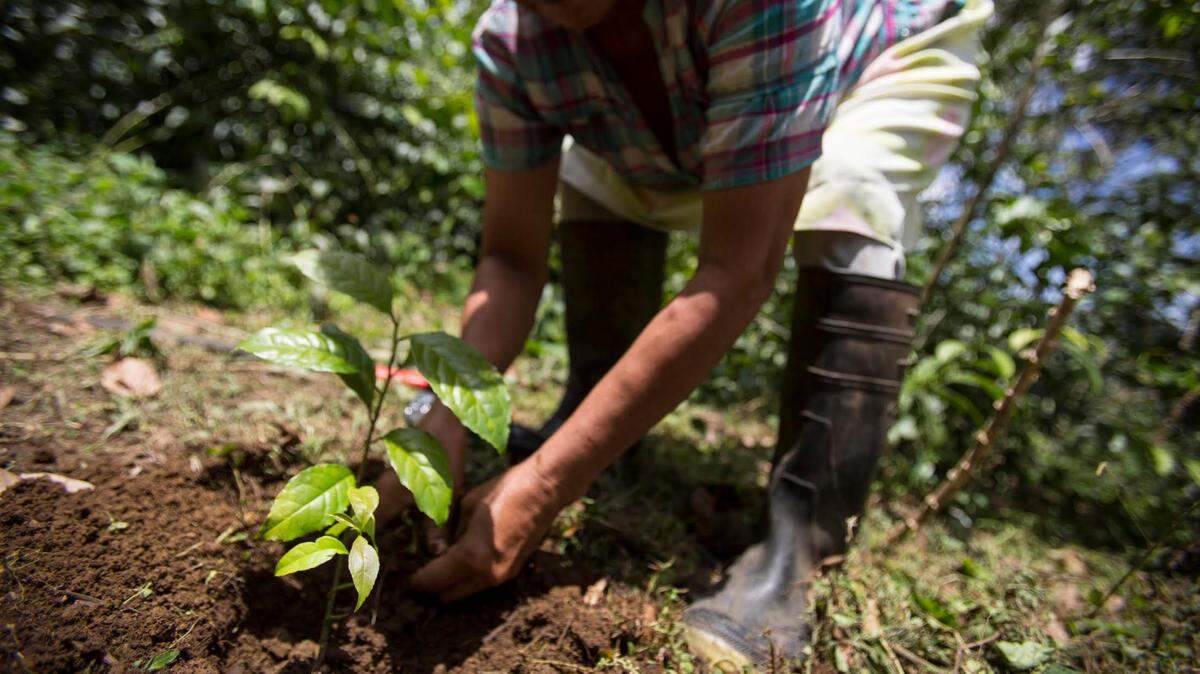
Reyna Cristina Castillo’s story is one of the positive examples. Her family’s home and livelihood were destroyed by Hurricane Mitch, and the family moved to a Honduran coffee-growing community where they now work on a coffee farm that has embarked on a path to sustainability. The farm is working on an improvement plan that will allow it to supply beans to a Rainforest Alliance Certified exporter, a linkage that can help ensure decent prices for the farm and decent wages and working conditions for Castillo and her family. While many coffee workers from their community have had to seek a livelihood elsewhere, the Castillo family has been able to remain in their homeland.
Coupled with government labor law enforcement, voluntary sustainability standards have an important role to play in demonstrating that environmentally and socially sustainable farming practices can stem climate change and worker exploitation.
But certification is not a silver bullet. Certification works best when partnered with landscape-level projects that provide innovative natural climate solutions like reforestation, climate smart agriculture, better water and soil health practices and integrated pest management. These interventions help ensure that land can be used to generate a sustainable income for farmers and workers — helping to stem out-migration from rural communities.
Contemporary slavery interventions have been guided by the “3Ps” framework: prevention, prosecution of perpetrators and protection of victims. While excellent work is being done targeting these issues, we need to pull back the lens to see the full picture, including their root causes.
We must do all we can to keep climate change from forcing people to leave their communities, migrating into situations where they are vulnerable and often exploited. Together, the anti-modern-slavery and climate-change communities could make a transformational difference.
Rachel Rigby is human-rights lead at the Rainforest Alliance.