These facts about the Formula One race can help ease Miami Gardens residents’ concerns | Opinion
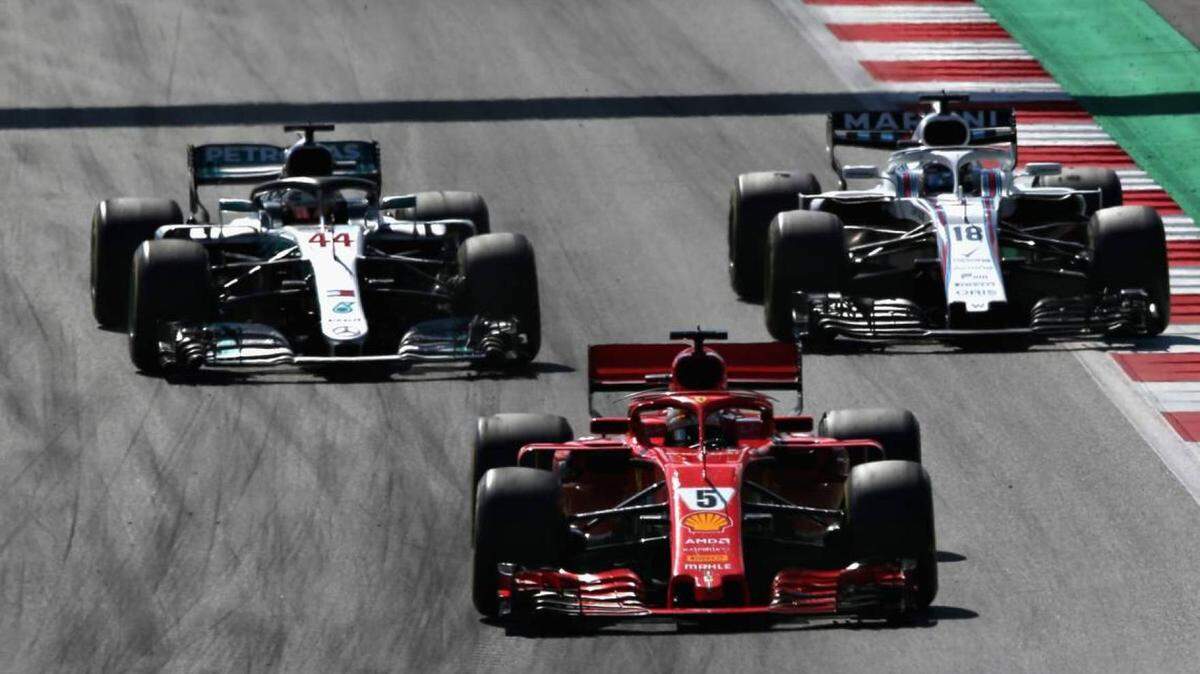
They’ll go 200 miles an hour. That is how fast the Formula One cars will race around Hard Rock Stadium in 2022. There is a lot of excitement about this race. The attention it gives to the area will be unprecedented, as F1 is one of the world’s most televised sports, and promoters believe that it will create thousands of new jobs, over 30,000 local hotel bookings and more than $400 million in positive economic impact.
Promotor Ralph Sanchez first launched the race in Miami in 1983. Ever since there’s been talk about bringing F1 back to Miami, people have raised some concerns. When F1 agreed to make modifications to the track — so that it is largely within stadium grounds — amend the hours of Friday’s sessions to after-school hours, and include noise-mitigation barriers, the city, the Miami Dolphins and F1 struck a deal. There also is a $5 million commitment to be paid over the next 10 years; a guarantee that the track won’t run along Northwest 199th Street and 27th Avenue; and the creation of a STEM program.
But some Miami Gardens residents in the area where the race will be held, want to remove three City Council members who supported the deal from their positions because the deal goes against “community interests.” They believe that the new measures do not protect the young and elderly from noise and air pollution, as well as that leaders should honor the origins of Miami Gardens and better serve their residents.
Whenever residents have a concern, they should be heard and the evidence about the concerns raised ought to be examined. Not surprisingly, since F1 ranks as among the world’s most popular sports, there has been some research done on issues that have been raised.
With respect to noise and air pollution, the F1 cars, which run on turbo-hybrid engines, are among the quietest of all motorsport’s cars. Moreover, when measuring the carbon footprint of F1 as an industry, power-unit emissions represent less than 1 percent of that footprint, with a goal of net zero carbon emissions by 2030.
It is also important to note that the technology used to engineer F1 cars also is used in commercial refrigerators and the the cars and buses in which we ride. Improvements in the cars’ construction have resulted in better strength, seat designs, occupant confinement, brakes, fire risk and hybrid propulsion methods that have benefited us all. Also, materials and designs used for barriers and fencing now protect all of us better on the world’s highways. There is a direct path from the racing designers and engineers to the factories that supply our vehicles.
There may also be concerns raised among some residents and local leaders about the potential crime, especially sex trafficking. Such concerns have been made surrounding other large-scale sporting events. Yet, a study I led was the first to examine crime at an F1 event. When we examined changes in crime before, during and after the F1 race in Austin, Texas, in 2018, there was no evidence that crime, including sex crimes, increased during the race weekend.
Finally, F1, largely at the behest of its most successful and popular driver, Lewis Hamilton, was the among the first sports to tackle the issue of racism. The series launched the #WeRaceAsOne initiative to bring attention to and combat all forms of racism. The series and its drivers are focused on making tangible differences in communities. This initiative is not a one-off event; before every race since the middle of last year, the drivers have a moment to celebrate diversity and inclusion, commemorating with shirts and racetrack markings.
There is so much to celebrate with F1’s return to Miami. The Miami Dolphins organization, local and city leaders, and the F1 have formed a partnership to bring us a grand event. As is the case with any deal to be brokered, there will always be some people who are unhappy with some aspects of the result. But we cannot let perfection be the enemy of good.
And F1 coming to Miami Gardens is good.
Alex R. Piquero is chair of the Department of Sociology and Arts & Sciences Distinguished Scholar at the University of Miami. Stephen E. Olvey, M.D., is associate professor of clinical neurology and neurosurgery at the UM Miller School of Medicine. Dr. Olvey started on-track safety development in the United States.