
Biden’s billion-dollar infrastructure plan needs a dedicated IRA to pay for it | Opinion
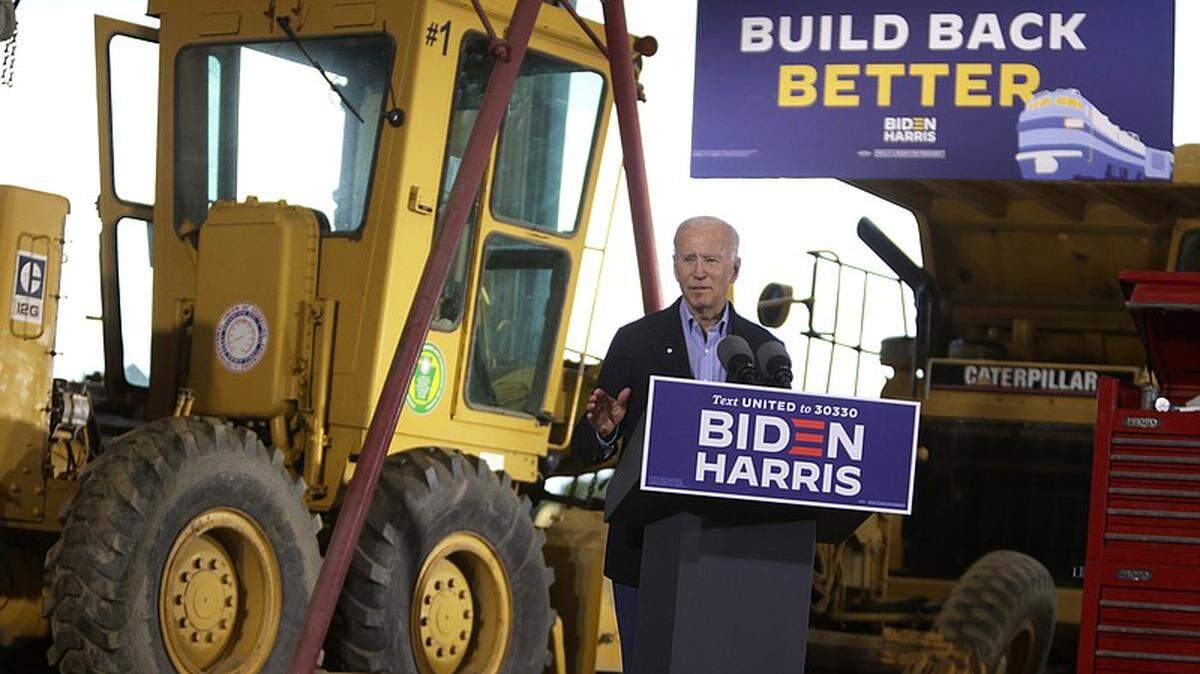
America is facing an infrastructure emergency. It’s time to abandon conventional thinking, take a cue from 529 Savings Plans for education and create a plan for infrastructure savings — the Infrastructure IRA.
If there was any doubt about the dire state of our infrastructure — and the resulting economic damage — the 2021 Infrastructure Report Card issued by the American Society of Civil Engineers (ASCE) dispelled it. According to the report, we are $2.59 trillion short of the funding needed just to keep existing infrastructure in good repair, to say nothing of improve it.
In Florida, the ASCE found that driving on roads in need of repair costs each driver $425 a year. Almost 3 percent of bridges in the state are rated structurally deficient, and 102 dams are considered high-hazard potential. And drinking water needs are an estimated $21.9 billion for the state over the next 20 years.
But the Biden administration’s American Jobs Plan calls for just $650 billion in spending on infrastructure, as strictly defined, allocated over an eight-year period. That is not nearly enough, and the proposed funding mechanisms are traditional — direct government spending, either supported by new taxes or driving up the deficit.
These are appropriate ways of funding the public good. But they are politically risky and do not by themselves cover the enormous shortfall.
How to close the gap? Congress should modify Section 408 of the internal-revenue code to allow for a new type of individual retirement account that invests solely in infrastructure development. Taxpayers would be able to make tax-deductible contributions of up to $10,000 each year, even after making the maximum allowable contributions to a 401(k) plan, or a traditional or Roth IRA.
The only available investment for this IRA would be for U.S. infrastructure. There are already models for such dedicated, focused retirement accounts – 529 Plans for education are the chief example. The Infrastructure IRA investment, like a traditional IRA, will have its investment earnings tax-deferred.
Through this vehicle, up to $300 billion of capital would be made available each year. Consider: Today, there are more than 30 million IRA accounts, with over $7 trillion in assets. If all IRA holders saved just $5,000 annually — half the maximum — that would generate up to $150 billion of capital annually. Fully funded contributions would double that.
Infrastructure projects are uniquely suited to the goals of an IRA. They are highly predictable, with stable cashflows often linked to inflation and a long-term time horizon, typically 20 to 30 years. They are administered by large, established, stable entities – federal and state governments and major infrastructure operators.
To disburse this massive private investment, there are several options. The first is to channel the proceeds to the Treasury Department, which in turn would allocate them to the states through a newly created office. The Treasury and IRA investors alike would benefit from the returns generated by the projects. The account holders will have the choice to allocate to different strategies with different risk return profiles. One strategy could be bond-like returns,while another could be equity-like returns.
Another option is to create an InfraTrust — a not-for-profit infrastructure bank to administer and allocate the funds. It could also serve as a clearinghouse, working with states and municipalities to develop, manage and execute infrastructure projects. Some of the funds could be used to capitalize the Infrastructure Bank and IRA holders will own direct shares in the bank.
And finally, the funds could be allocated to pre-approved fund managers who would invest the funds in long-term infrastructure projects similar to any other asset manager an IRA holder can choose from.
The real point is that we cannot rely solely on public financing — and a broken political process — to bring our infrastructure back from the brink and make it truly modern. Rather, it calls for a full mobilization of private capital, alongside public funding. The infrastructure IRA is the place to start.
Sadek Wahba is a senior fellow at the Development Research Institute, New York University. Based in Miami, he is also chairman and managing partner of I Squared Capital, an independent multibillion-dollar global infrastructure investment company. The views expressed in this paper do not necessarily reflect those of either organization.