
Harness cell phones’ power: Videotape every police interaction with Blacks that we see | Opinion
The leaders of the Movement for Black Lives should take a moment to celebrate Tuesday’s conviction of former Minneapolis police officer Derek Chauvin for the murder of George Floyd. Then, when they finish celebrating, they should take a second look at “Judas and the Black Messiah,” the brilliant new movie about the life and death of Fred Hampton. The leader of the Illinois chapter of the Black Panther Party, Hampton was betrayed by an FBI informant posing as a party member and murdered by Chicago police officers in 1969. The movie traces Hampton’s surprising success at creating a multi-racial movement for justice, a movement that fused Black, brown and white gangs from Chicago’s warring neighborhoods into a force that terrified FBI Director J. Edgar Hoover, leading him and the Chicago police department to collaborate over Hampton’s assassination.
“Judas and the Black Messiah” does a terrific job of recalling the sights, sounds and emotions of the late ’60s, a time when the seeds of the turmoil that rocks America today were planted. And like many of the best stories about that turbulent decade, the film contains an important insight for the leaders of today’s racial-justice movement: Because there was no video of Hampton’s murder, no one was held accountable for his death.
Cell phones did not exist in 1969, when half a dozen Chicago cops stormed into Hampton’s apartment in the middle of the night and shot him in the head while he slept next to his pregnant girlfriend. In the absence of video evidence, none of the officers involved were indicted or convicted. No video, no justice.
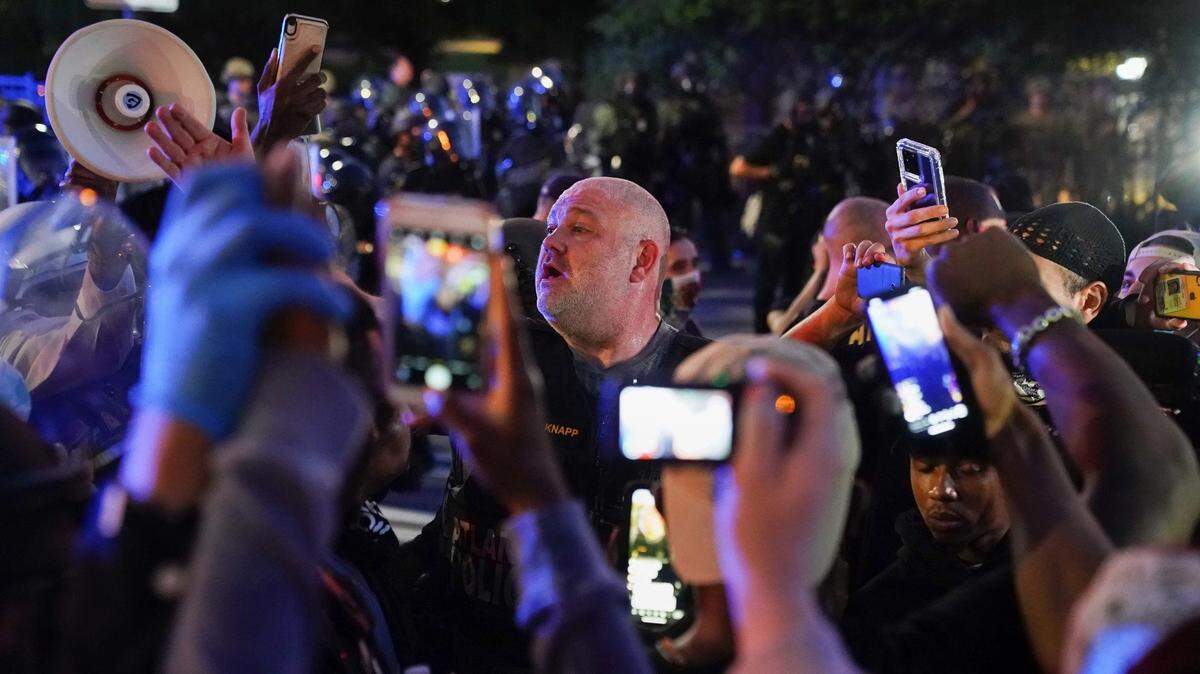
The videos taken by ordinary citizens in Minneapolis were essential to the case against Chauvin. Video has the power to make justice possible. The Movement for Black Lives, a coalition of more than 50 organizations representing the interests of black communities across the country, should harness that power.
Just as Uber has created a vast amount of value by organizing the use of vehicles that were already on the road, and Airbnb has created a vast amount of value by organizing the use of lodging capacity already on the ground, the Movement for Black Lives can create a vast amount of value — social value, in this case — by organizing evidence-gathering capacity that’s already in most Americans’ pockets.
MBL should ask anyone who sees a police officer interacting with Black citizens to capture the moment on his or her cell phone and upload it to an MBL server. Not to interfere in any way with the officer’s ability to do his job, but simply to record the interaction and send it to MBL.
In a very short time, MBL would have the nation’s largest video database of police-community interactions. The videos would be a treasure trove of evidence. They could be used in the trials of officers charged with taking the lives of unarmed Black men. They could be used to document patterns of behavior by officers accused of multiple instances of using excessive force against Black suspects. They could be used to show patterns of behavior by entire police departments in which mistreating people of color is a common practice.
In the extremely rare cases when police officers charged with killing unarmed Black suspects are held accountable for their actions, there’s almost always video evidence. The guilty plea of Michael Slager, the North Charleston, South Carolina, officer who shot Walter Scott in the back — and whose 20-year prison sentence was upheld this week — and the convictions of Roy Oliver, the Balch Springs, Texas, officer who shot Jordan Edwards in the head, and Jason Van Dyke, the Chicago officer who shot Laquan McDonald 17 times as he lay wounded on the ground, would not have happened without the compelling video evidence introduced at their trials.
Video sent to the MBL server would, of course, mostly show instances of good police work. After all, the vast majority of police officers are good people doing their best at a difficult job. It would be important for MBL to highlight these positive police/community interactions, perhaps with a monthly recognition of police officers caught doing the right thing on video.
But the videos would also capture the behavior of officers who see it as their job not to protect Black Americans, but to protect white society from us. Those images would not only be valuable as evidence; they would also be as effective in changing public perceptions about policing in Black communities today. TV footage of police in Birmingham using dogs and fire hoses against peaceful demonstrators and of police in Selma beating marchers on the Edmund Pettus Bridge was instrumental in changing America’s mind about the civil-rights movement more than a half century ago.
The Black Panthers’ approach to changing police behavior did not succeed. Their chapter in American history ended with the jailing of Huey Newton, the exile of Eldridge Cleaver and the murder of Hampton, the most promising of their leaders. More than 50 years later, we’re still fighting the same fight.
But if MBL can systematically gather, organize and use video evidence of excessive, deadly force by police officers against unarmed Black Americans, we can hope our grandchildren won’t be fighting that fight 50 years from now.
Harold J. Logan is a business executive and writer who lives in Miami.
This story was originally published April 21, 2021 at 3:32 PM.