
Unless Biden rescues our allies in Afghanistan, a humanitarian crisis looms when troops leave | Opinion
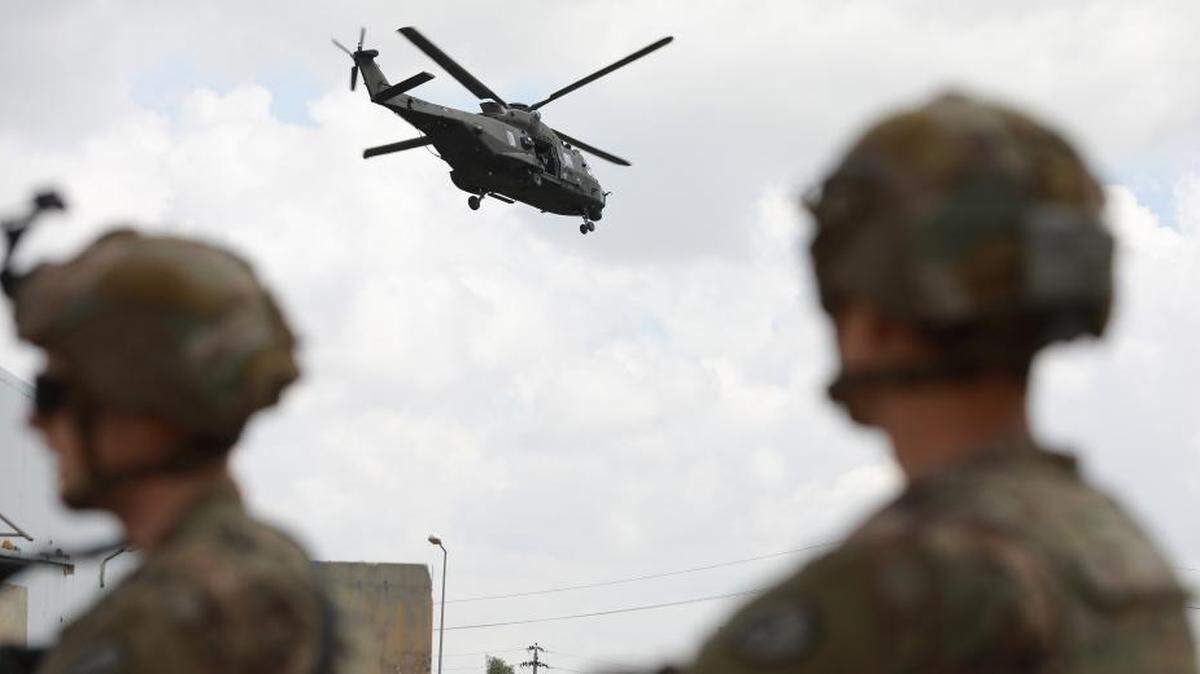
When President Joe Biden announced he was ending “the forever war” in Afghanistan by pulling out the last 3,500 or so U.S. troops based there by Sept. 11, my mind flashed to Afghans I know for whom that speech could spell prison or death.
I thought of Fawzia Koofi, a female member of the Afghan team negotiating with the Taliban, who was shot several months ago in an attempted assassination and fears for her daughters. And Suraya Pakzad, who runs shelters for battered women. And the female students of the Marefat School, which teaches K-12 students humanitarian values in a poor, Shiite area in Kabul.
By giving up our leverage before U.S.-brokered peace talks between the Taliban and the Afghan government make progress, we are dooming millions of women, girls, and urban Afghans to civil war hell and eventual Taliban takeover. Hundreds of thousands of students, female activists and ordinary Afghans face arrest or desperate flight in a massive refugee exodus.
So there will be a terrible human — and moral — cost to this pullout, which is why so many former U.S. officials who have served there were so depressed and angry during phone interviews.
“There is a humanitarian disaster coming,” David Sedney told me. He’s a former top Pentagon official dealing with Afghanistan under President Barack Obama, who then became president of the American University of Afghanistan (AUAF) from 2019-21.
“The Taliban are taking names, and they will start taking vengeance on women and young people, teachers, and their families, who believed in U.S. values. They will be killed and tortured because they bought into a vision the U.S. supported and encouraged, ideas of democracy and free speech.
“I know Afghans who have and will die.”
Still, Biden faced only bad choices. He inherited a disgraceful U.S.-Taliban “peace deal” negotiated early last year under President Trump. It basically conceded Afghanistan to the Talibs in return for a dubious Taliban pledge not to harbor al Qaida or Islamic State. Under the Trump deal, U.S. troops were scheduled to leave by May 1.
“President Trump wanted U.S. troops out and he wasn’t paying attention to the details,” I was told by a former official in the Trump administration. “He could have used U.S. leverage to far more effect. Why throw U.S. allies [in Afghanistan] under the bus?”
The Biden team tried to accelerate political negotiations between the Taliban and the Afghan government, which had barely started. They got nowhere. The Taliban made clear that, with U.S. troops leaving, they believed victory was at hand. They opposed any form of constitutional democracy or elections in favor of harsh Islamic rule.
Eager to focus on relations with China and Russia, and skeptical things would get better, Biden followed Trump’s lead, calling for an exit with a three-month delay for logistical reasons. The White House says it will encourage the peace talks and continue humanitarian and military aid.
But, when U.S. troops leave, the war will continue. Peace talks will become a dead letter, and the ensuing chaos will rule out aid deliveries.
Deprived of critical U.S. air support and intelligence in battle, Afghan forces are likely to crumble. The country is likely to descend into full-blown civil war with an eventual Taliban victory. U.S. intelligence agencies predict this will happen in two to three years.
Such circumstances are perfect for an al-Qaida and ISIS comeback. And the Taliban have made no believable pledge to cut their ties with these Islamists.
So it would have made much more strategic sense for the Biden team to change the narrative. Instead of “forever war,” we would keep around 3,000 troops in the country indefinitely as an insurance policy to prevent a Taliban win until such time as a regional peace could be negotiated.
After all, we have kept troops in Germany and South Korea for decades, as a preventative. And in Afghanistan, the military casualties have long been on the Afghan side, not ours.
Instead, the Taliban will crow that they have defeated another superpower, after beating the Soviet Union. Especially since, for some bizarre reason, the final pullout date is set for the anniversary of al Qaida’s greatest triumph, at the Twin Towers.
“This is a surrender. Everybody, China and Russia included, is taking note,” says former U.S. ambassador to Kabul Ryan Crocker.
And the damage to America’s reputation will be even greater if we abandon those Afghan allies who believed in the U.S. message of the past two decades. The least the Biden team can do is open the door wide to Afghan refugees — as the United States did with endangered Vietnamese after we quit that country.
Yet the Biden administration has yet to lift Trump’s draconian limits on legal refugee admissions. Even special congressionally approved visas for endangered Afghan translators for the U.S. military remain frozen.
“All those Afghan women I personally encouraged to step forward because we had their backs, what happens to them?” Crocker asked, in frustration. Will history record them as one more group of civilian allies abandoned to disaster by Americans when the going got too tough?
Trudy Rubin is a columnist and editorial-board member for the The Philadelphia Inquirer.
©2021 The Philadelphia Inquirer