
Here’s the real steal we must stop: Florida Republicans rekindle efforts to suppress Black vote | Opinion
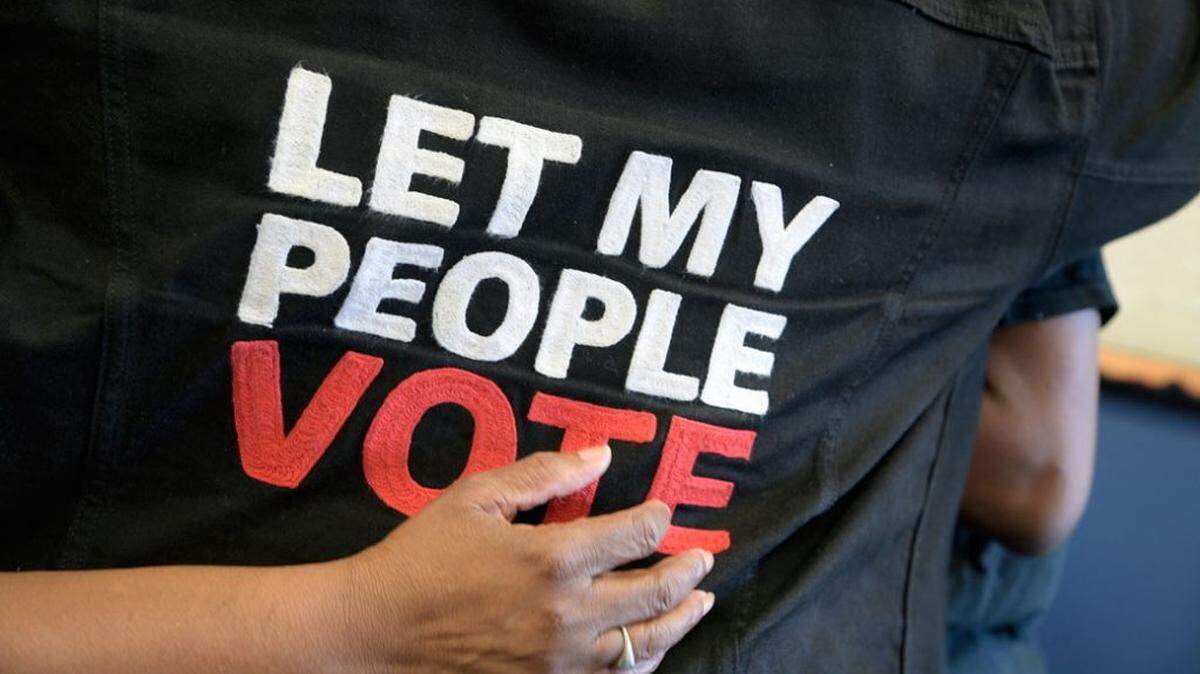
The long history of voter suppression in Florida is a bloody one.
In 1920, approximately 50 Blacks were slaughtered and the homes of 20 others were burned to the ground after violence erupted in the Central Florida town of Ocoee. The blood-spilling began after a single Black man attempted to exercise his right to vote. It was the largest election-related massacre in the 20th century.
Unfortunately, long after the Civil Rights Movement of the last century, long after laws better protected minorities’ voting rights — and even after Barack Obama twice carried Florida as a presidential candidate — the drive to suppress the vote has not ended.
And so it came as no surprise when Gov. Ron DeSantis recently announced that despite his lauding of the 2020 election in Florida as flawless, he was pushing for a major crackdown to make voting more difficult. Parroting the line of his mentor, Donald Trump, DeSantis relied on unfounded arguments about voter fraud, while proposing a measure that would restrict voting access to populations that historically lean Democratic — and perhaps more egregiously, those that have endured a protracted and grim history of voter suppression.
Recently, several of my colleagues in the Florida Senate voted to advance Senate Bill 90, which would eliminate secure drop-off boxes for absentee ballots and require already registered voters to re-enroll more frequently for absentee ballots, among other changes. An alarming reverberation of the Georgia Legislature’s recent moves to limit early voting, and of the Republican Party’s broader reaction to the 2020 presidential and U.S. Senate races, this bill stands to impede countless citizens who want to exercise their lawful right to vote. This will affect millions of Florida voters in the 2022 gubernatorial and U.S. Senate elections.
Should this bill be signed into law (a likely outcome) it will augur the latest chapter in a centuries-old tug-of-war around voter disenfranchisement, particularly for Black communities. This setback comes on the heels of Florida’s 2018 passage of Amendment 4 — widely lauded for providing an avenue for formerly incarcerated Floridians, who’ve paid their literal and figurative dues, to vote. While this ballot amendment granted the franchise to returning citizens of various races, ethnicities and political stripes, the exclusion it sought to rectify was very much rooted in the systemic ostracism of Black voters.
Following Reconstruction, poll taxes, ballot-box stuffing and lynchings were among the favored tactics to suppress the Black vote in Florida, mirroring other Southern states in unleashing fear as a powerful deterrent to reaching that elusive promise of “all men are created equal.”
SB90 may be more subtle, but no less targeted in ensuring that elected officials get to choose their voters, not the other way around.
The sanctity of free and fair elections was evident to civil-rights pioneers like Florida’s own Harry T. Moore, the first NAACP official to be assassinated for his activism. Moore labored diligently throughout the 1940s to register Black voters, but recognized that numbers alone could not restore fairness to tipped scales. He compounded this granular approach with a systemic one, filing lawsuits challenging white primaries that excluded Black and Hispanic Americans from then-dominant Democratic primaries in the South.
Although we stand almost 80 years removed from the U.S. Supreme Court ruling that overturned white primaries and almost 60 years from the Voting Rights Act, the passage of time has not been met by the elimination of prejudice.
In the Florida Legislature, a measure I’m sponsoring ensuring that the descendants of the Ocoee Massacre receive reparations, likely in the form of scholarships, is moving closer to passage. The bill follows one that I successfully passed last year, ensuring that the lessons of Ocoee are written into students’ textbooks and taught in public schools throughout the state.
As a Democratic senator and a Black man, I may not be able to stop the voter suppression Republican lawmakers will ram through this year to maintain their grip on power. But I can look to a coming generation, armed with the powerful lessons of Florida’s past, to break it.
State Sen. Randolph Bracy represents Florida’s 11th District, in Central Florida, which includes Orlando.