
This Black History Month, honor pioneers who broke barriers on federal court in Florida | Opinion
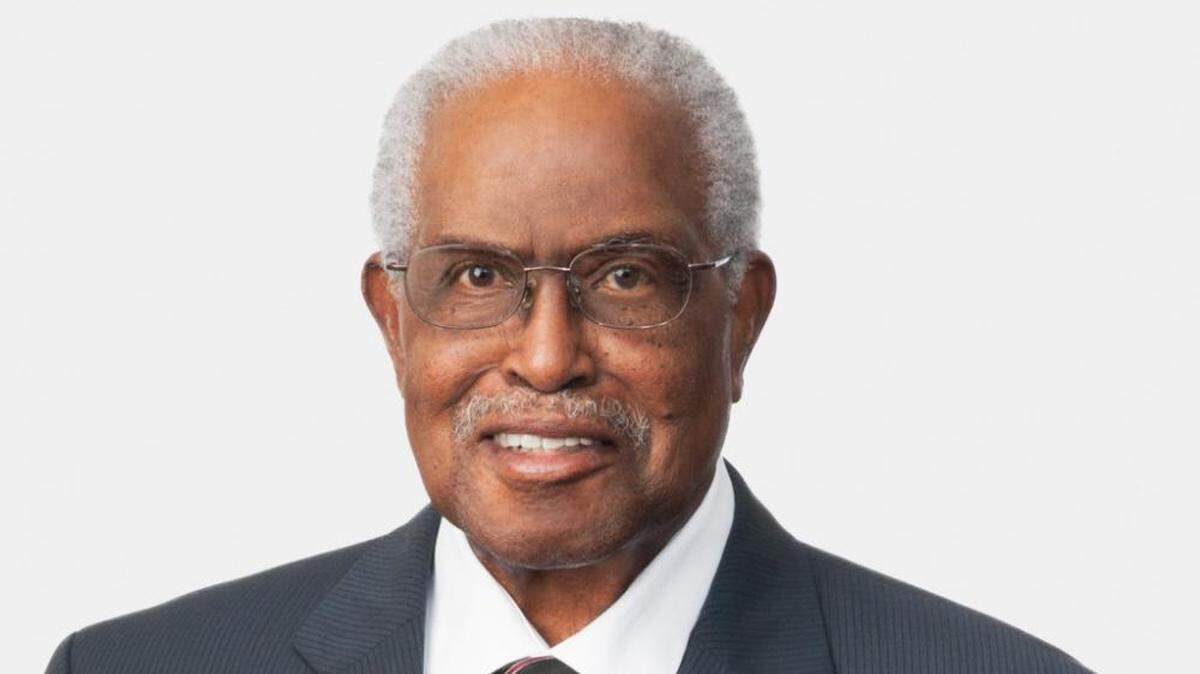
Judges Charles R. Wilson and Joseph W. Hatchett are heroes of mine.
They have devoted their lives to public service, serving with distinction on Florida’s courts for decades and embodying what we strive for in our judiciary: They are brilliant, independent and decent.
They also are pioneers.
Since the U.S. Court of Appeals for the Eleventh Circuit was established in 1981, 40 judges have served on it. Only two, however, have been Black — Wilson and Hatchett.
As we celebrate Black History Month, we not only should recognize these two men, acknowledging their significant contributions to our state, but also reflect on the Eleventh Circuit’s history. It matters.
The Eleventh Circuit is one of the most powerful courts in the country, presiding over a larger population of African Americans than any other state or federal court, save the U.S. Supreme Court.
The Eleventh Circuit hears all federal appeals arising in Florida, Georgia and Alabama. Twelve judges sit on the court; five in Florida, four in Georgia, and three in Alabama.
The court regularly decides important constitutional, civil-rights and criminal-law questions and, for the most part, its decisions become the law of the land in its three states, directly impacting the lives of millions of people, including around 8 million Black people.
The U.S. Supreme Court is the only court that can overturn the Eleventh Circuit’s decisions, and it rarely does so.
Yet since the Eleventh Circuit was established 40 years ago, it has never had more than one Black judge at a time.
President Jimmy Carter appointed Hatchett, who served on the court from 1981 to 1999, and President Bill Clinton appointed Wilson to fill Hatchett’s seat when he retired.
As a result, the Eleventh Circuit’s composition over the years has stood in stark contrast to the populations of Florida, Georgia and Alabama.
While just 5 percent of the Eleventh Circuit’s judges have been Black, 16 percent of Floridians, 31 percent of Georgians and 28 percent of Alabamans are African American..
Because both judges served in Florida, neither Georgia nor Alabama has ever had a Black judge on the Eleventh Circuit .
Finally, as with the U.S. Supreme Court, the Eleventh Circuit has never had a Black female judge.
That is troubling. As a lawyer, and former law clerk on the Eleventh Circuit, I greatly admire the court, but it’s important for our courts to reflect our community.
The judiciary has the power of neither the purse nor the sword; instead, its power depends on its legitimacy, which is undermined when those sitting in judgment over us do not reflect us.
We have work to do. And this month is an opportunity to begin it: by recognizing — and confronting — our courts’ history, we honor the giants of our courts.
Kevin Golembiewski is a lawyer in Tallahassee. He served as a law clerk on the U.S. Court of Appeals for the Eleventh Circuit from 2015 to 2017.