
We’ve talked long enough. Restore Miami Marine Stadium to the jewel it once was | Opinion
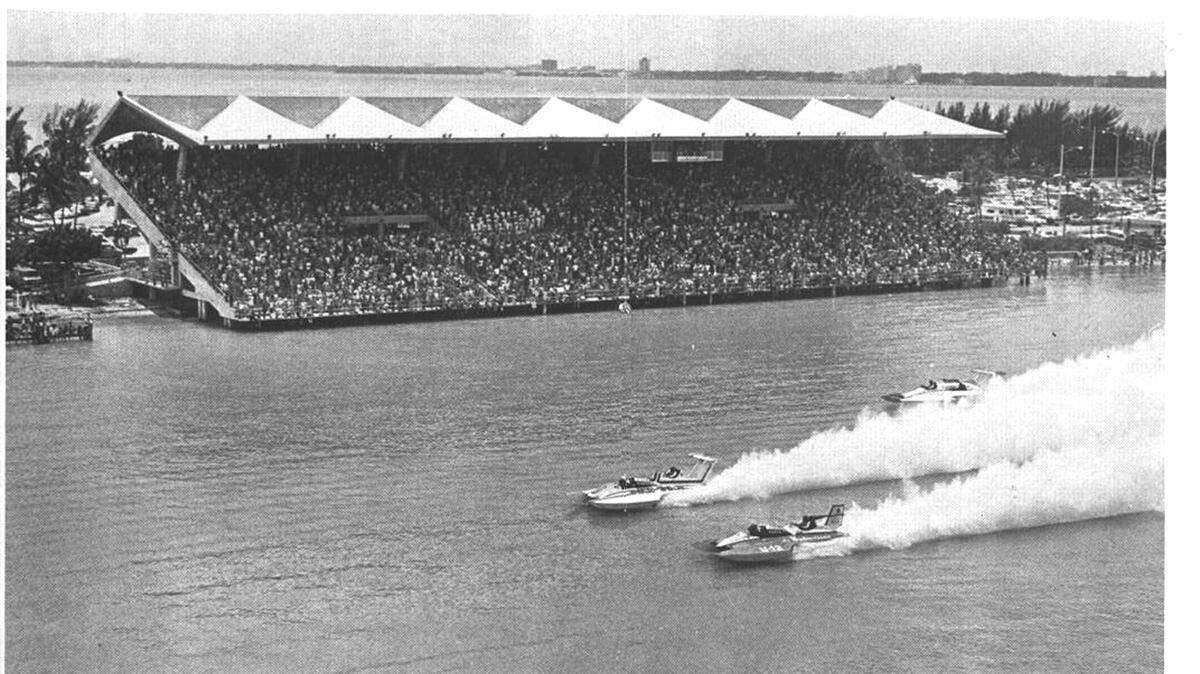
More than ever, Miami deserves a restored and revitalized Marine Stadium on Virginia Key.
At a time when Miami’s tourism-dependent economy is fragile, Marine Stadium will be a stunningly “new,” high-profile, headline-grabbing venue. It stands to become one of the greatest open-air performance spaces in the world, and it will turbocharge Miami’s events calendar.
The stadium will provide residents and visitors access to Miami’s best assets: the Biscayne Bay waterfront and unparalleled views of downtown. Most of Miami’s waterfront is reserved for the wealthy — condos, hotels and expensive single-family homes. Marine Stadium will truly be “the people’s stadium,” where everyone is a VIP and everyone has a water-view seat.
Our community has been talking about renovating Marine Stadium for too long. After all, advocates began pushing for restoration on Jan. 29, 2008, 13 years ago. This is just one example of why it’s not hard to be cynical in Miami.
But the city has been quietly and steadily making progress on the stadium. The City Commission approved a Virginia Key master plan and also created the citizen-based Virginia Key Advisory Board to help implement that plan. Architectural drawings to reconstruct the stadium are almost complete, and city bonds to finance the project have been authorized. The Florida Inland Navigation District provided a grant to begin restoration of the pilings supporting the stadium’s over-water floor. The start of that work is imminent. Through its contact with the event-production industry, the city knows there are market leaders that understand the stadium’s enormous potential and want to operate it — profitably — on the city’s behalf.
This last point — feasibility — is particularly important. Some have said Marine Stadium is a white elephant. But the opposite is true: This one-of-a-kind, globally iconic venue has enormous potential. In recent years, some of the most successful executives in the entertainment industry have toured the Marine Stadium property with me. To a person, they each had the same reaction: They were simply awestruck, stunned as they stood at the water’s edge — and they all asked why the stadium had not been reactivated years ago.
Another concern for some folks: In the past, the city of Miami operated the stadium, but did not do it well. The city is not well-suited to manage such a business. Miami previously lost money when it operated the James L. Knight Center and Bayfront Park Amphitheater. Now those facilities are run by outside operators and have become profitable for the city. That’s the money-making model for the stadium.
Even in its current condition, Marine Stadium continues to generate excitement beyond Miami.. The National Trust for Historic Preservation named the stadium a national treasure, and the World Monuments Fund added the stadium to its prestigious watch list of important heritage places. More recently, Tourism Cares, the not-for-profit arm of the national tourism industry, brought 335 professionals from around the United States to Marine Stadium and Virginia Key for an environmental cleanup and to raise awareness of Miami’s unique treasure. Articles have appeared in national and international publications Can you imagine what will happen when we actually start holding events there again?
The Miami International Boat Show, which was located at the Marine Stadium site from 2016-2020, has relocated to the Miami Beach Convention Center. This is another encouraging development. The Boat Show is extremely important to Greater Miami’s economy, but its presence at the stadium would have eliminated about three months of other programming during peak season. The relocation frees up Marine Stadium for year-round use.
The stadium was designed by a Cuban immigrant, architect Hilario Candela, and constructed in 1963. Almost 60 years later, Candela is an important part of the team that has developed the restoration plans. At this challenging time when we all need hope, can anyone possibly imagine a more positive story of rebirth?
Miami, let’s finally get this done.
Donald Worth is co-founder of the civic group Restore Marine Stadium, Inc..