
Enough of the broken promises. To really get moving, South Dade needs passenger rail | Opinion
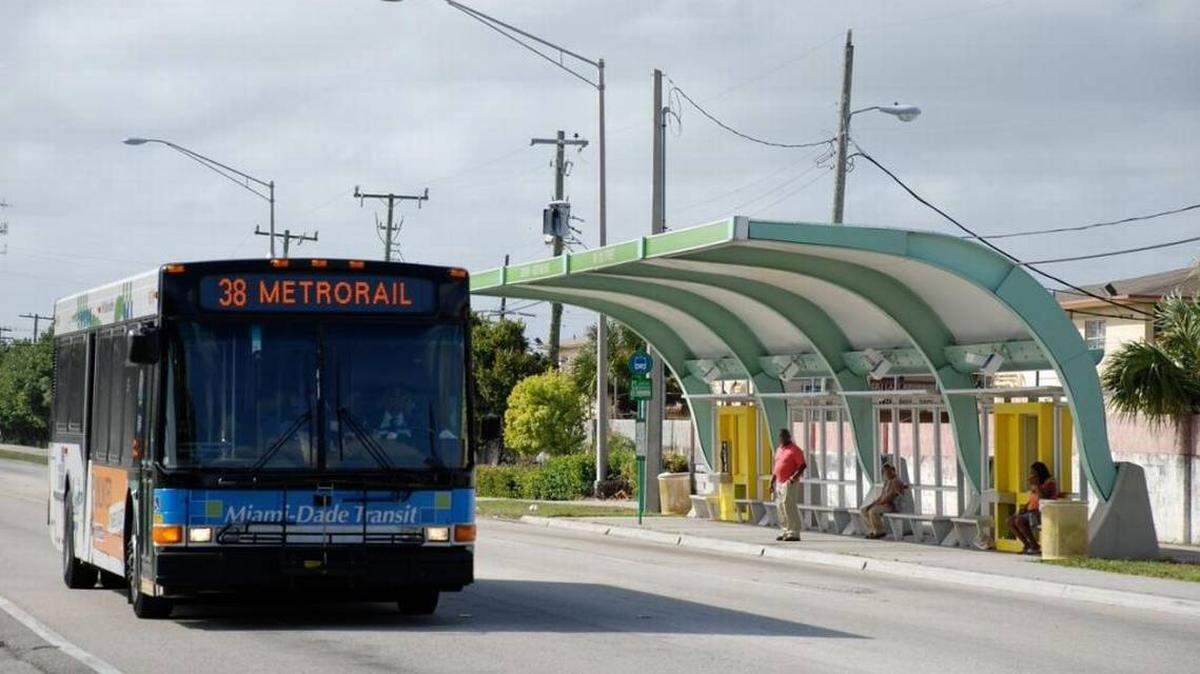
Traffic congestion and constrained conditions along U.S. 1 and the Busway corridor in South Dade are well-known facts and have been documented in studies. The Department of Transportation and Public Works (DTPW) claims that new technologies used with Bus Rapid Transit (BRT), which essentially amount to intersection-controlling devices, are going to improve traffic conditions. This claim mirrors the same song and dance that was presented to the people in 1997.
But conditions won’t improve, which is why South Dade needs rail — now.
Congestion is perhaps the biggest cost of automobile travel, and South Dade has plenty of it, along with exorbitant tolls. The assumption consistently has been that a dedicated Busway magically makes things better. It does not. South Dade has had Bus Rapid Transit since 1997, proof that transit conditions have not improved as promised almost 25 years ago. Continuing to force BRT on South Dade out of expedience always comes with repeated claim that South Dade will see improvement in traffic flow, speed, travel time and fuel consumption. But an aging BRT system has not shown that it is sustainable or capable of delivering promising results. The 1997 BRT has done little to stimulate South Dade’s economy.
Passenger rail will bring jobs and business to South Dade by finally linking it properly to the rest of Miami-Dade County in a real and meaningful way. Miami-Dade should no longer punish South Dade residents for living on what the county describes as the wrong side of town.
Other areas of the county, through their transit corridors, continue to see rail benefits. However, South Dade is discriminated against and told it must accept another updated version of the outdated BRT. Miami-Dade County must stop breaking its promises and deliver the one transit solution that will save South Dade — rail.
Studies have determined that transit demand can at times be price inelastic — that a 1 percent increase in fare only leads to a 0.33 percent decrease in ridership, according to the Simpson-Curtin rule. This is true in a big metropolitan area such as Miami-Dade County. Ridership will come, the economics of passenger rail make sense and the system will justify and pay for itself. A Harvard study of upward mobility has shown that being subjected to longer commute times, tolls and transportation barriers, increases poverty and makes it harder for low-income families to save more of their discretionary income.
A passenger-rail extension along the South Dade corridor will bring with it great economic development. Passenger-rail transportation projects often influence where future planned investments will happen. For example, Amazon has purchased a vacant lot in Homestead to build what could be its largest distribution facility in South Florida. Extending Metrorail to Florida City is something Amazon could factor in as it continues to consider greater plans for South Dade.
Connecting the south with the rest of Miami-Dade County by meaningful passenger rail is sure to bring more jobs. A strong regional economy stands to experience boom and gain where passenger-rail investments take place. In addition, points north stand to gain just as much as South Dade does. Connecting both allows the north to benefit from a rich agricultural supply of farm goods in addition to access to the Everglades and the Florida Keys.
Rail will spur unheralded growth. It will stimulate industry and commerce. It will be a catalyst for a new phase of regional economic development to a community that has waited a long time for its county government to deliver on past promises.
The time for the passenger rail on the South Dade Transitway is now.
Kionne McGhee represents District 9 on the Miami-Dade County Commission.
This story was originally published January 25, 2021 at 2:27 PM.