
New senators are going to kick the spirit of bipartisanship to the next level | Opinion
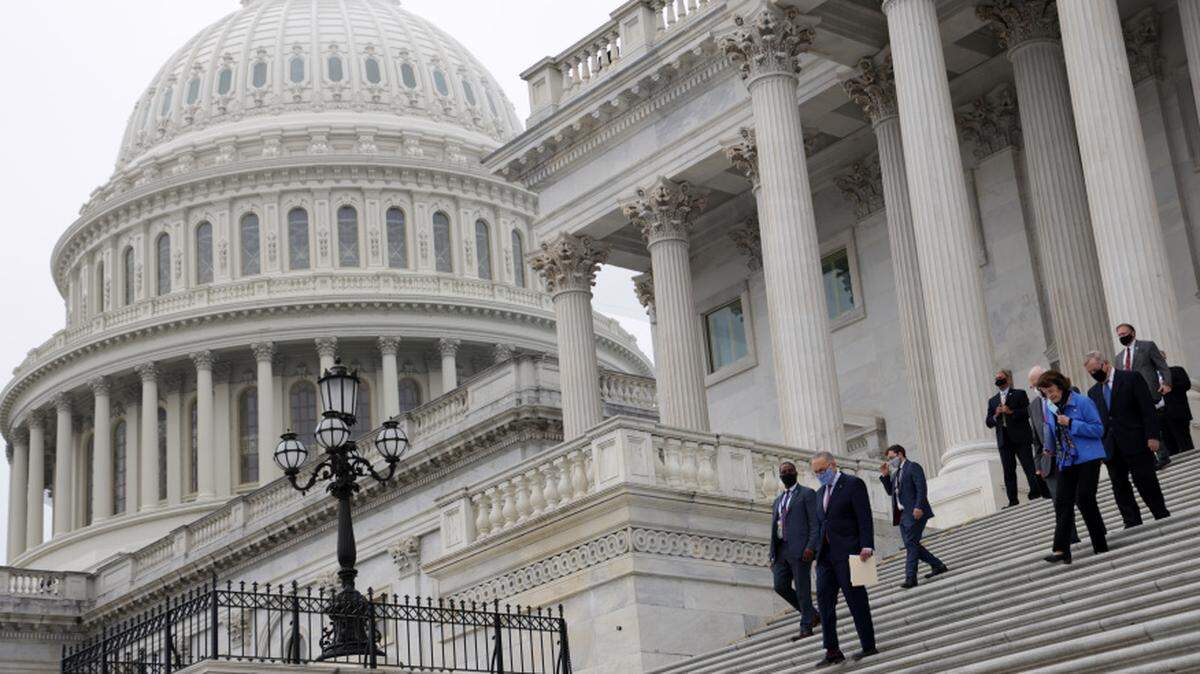
Our nation has been on a four-decade descent into stark partisanship. By virtually every measure, we are more rigidly defined by party affiliation. We have dramatically fewer swing districts; the virtual disappearance of liberal Republicans and conservative Democrats in Congress; less voting “across the aisle;” more partisan hardball tactics on Supreme Court nominations; a close and divisive presidential race; and splintering of information sources based on liberal or conservative preferences — reinforced by algorithms. People are even choosing where to live along partisan lines.
So now hardly seems the time to place your bet on an outbreak of bipartisanship in the U.S. Senate. But I’ll put my chips on that side of the table. As Kurt Vonnegut said, “History is merely a list of surprises. It can only prepare us to be surprised yet again.”
The new bipartisanship may not look like previous iterations, when we saw substantial numbers of elected officials working and voting across the aisle. But we are reaching a tipping point where a critical number of problem solvers will have extraordinary influence. Who are these new practitioners of bipartisanship? They are women and men like U.S. Senators-elect John Hickenlooper of Colorado and Mark Kelly of Arizona, who will join others already in the Senate such as Colorado’s Michael Bennet, Minnesota’s Amy Klobuchar, Utah’s Mitt Romney and Alaska’s Lisa Murkowski. These elected officials are more oriented toward finding common ground than scoring partisan hits.
The near-even split of Republican and Democrats in the upper chamber of Congress will further empower a small number of senators who are predisposed toward working across the aisle to craft and advance legislative solutions. They are inclined by personal manner and, in some cases, the purple hues of their states to bypass overheated rhetoric and artfully find ways to persuade. When confronted with opposing points of view, to “listen harder” as Hickenlooper is fond of saying.
One should not be naive about the tsunami of pressures these senators will feel to engage in the zero-sum politics that have increasingly defined our politics. The amount spent annually on lobbying public officials has more than doubled in just 20 years to nearly $3.5 billion, and technology-enabled targeted persuasion can be withering.
Nor should we ever deny or diminish those times in the past or present when an immutable position and outrage is called for and fundamental rights and civil liberties are at stake. “To be or not to be is not a question of compromise,” Golda Meir said. There are defining moments in the face of hatred, racism or injustice that history called on our forebears, and calls on us today, to confront boldly, clearly and unflinchingly. We should celebrate those essential moments of steadfastness and courage.
At the same time, our body politic will be healthier and our nation stronger if we eschew in ordinary political exchanges the all-too-common, reflexive reliance on turbocharged rhetoric, which is what the newest additions to the U.S Senate will reject. They continually will search for ways to persuade rather than attack. They recognize that, as Arthur C. Brooks, formerly of the American Enterprise Institute, has written, “Almost no one is ever insulted into agreement.” Brooks was referring to the “boomerang effect … that occurs when you insult somebody, and in doing so, actually cause them to harden their views.” We’ve seen this play out in Washington, D.C., across America — and robustly so in Miami.
A prediction of a new era of bipartisanship may seem surprising from a veteran of partisan political battles. Contempt for the other side is now deeply rooted in our political dialogue, social and opinion media, issue and candidate advocacy, and electoral system.
But we are at the convergence of two points. We are at the right historical moment, as polls show public exhaustion with the corrosive partisan conflicts in Washington and an appetite for public officials to work together constructively. And when these problem-solving senators arrive in Washington, we will have a critical mass of the right people in the right place to lead the charge to give each other room and find common ground.
Shepard Nevel, a Miami native, was senior campaign policy advisor to Senator-elect John Hickenlooper of Colorado.