
We can’t be at each other’s throats forever, or we’ll never get anything done | Opinion
When I was a boy I used to go vote with my mother on Election Day. At a nearby public school, we would enter a booth, draw a heavy curtain and I’d flick a number of little levers at her direction to mark our choices. Then I’d pull the handle to make it official and — voila! — we had done our democratic duty.
Afterward, I felt confident (and so did she) that even if our preferred candidates lost, the election would be honest and accurate and that the candidates who received the most votes would be declared the winners.
I no longer have that kind of unshakable faith in the system.
As Election Day approaches, I am wondering, like so many Americans, whether the process we’ve devised over two-and-a-half centuries is up to the task. Will the Electoral College once again stand in the way of the popular vote? Will a rigged redistricting process predetermine the outcome? Will the broken campaign-finance system that hands access and influence to billionaires and corporations allow ordinary voices to be heard?
And, more immediately: Will voters cheat? Will armed militia members show up at polling places to intimidate voters? Will all the ballots be counted? Is the Postal Service too inept — or too politicized — to handle this year’s heavy reliance on mail-in voting?
Apparently, many share my fears. In October, according to Gallup, fewer than one in five Americans were “very confident” that votes will be accurately cast and counted. In an NBC News/Survey Monkey poll, 56 percent of Americans said they were “not too confident” or “not at all confident” that the election would be conducted in a free and equal way.
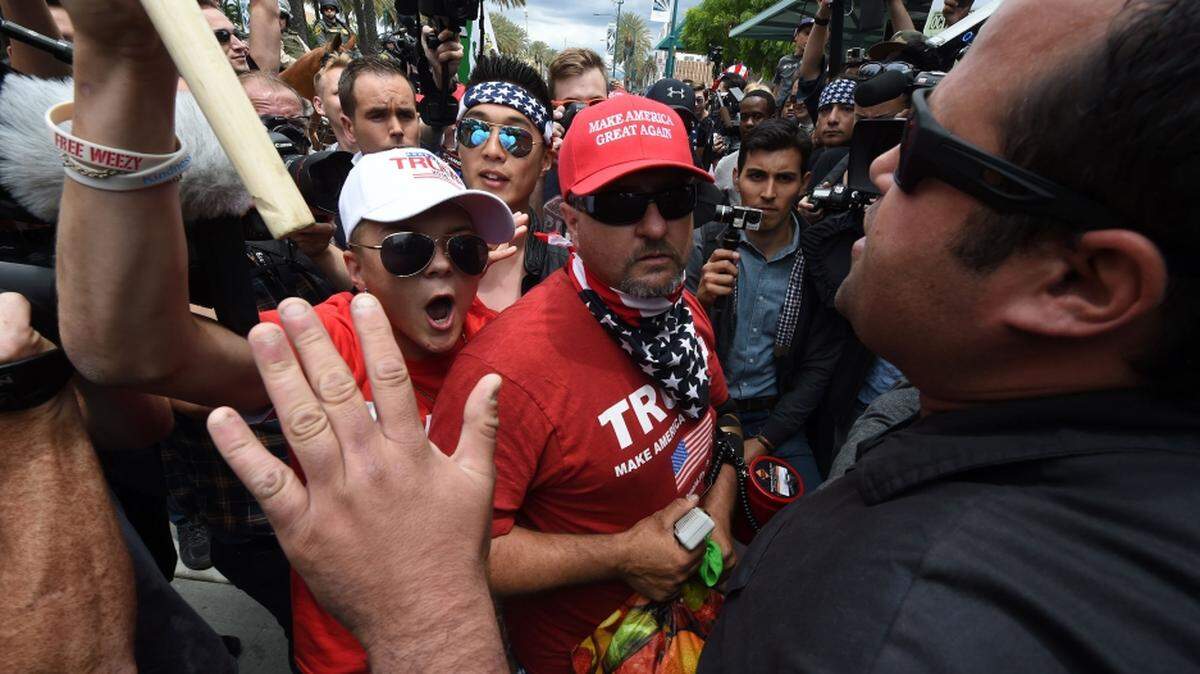
It’s depressing that citizens don’t trust their own election system, and I suspect the lack of confidence reflects a deeper, broader crisis. Political divisions have grown so great and cynicism about the system has become so pervasive that not only the electoral process but the very government itself has lost legitimacy in the eyes of voters.
I watched a focus group a few weeks ago in which more than a dozen undecided voters unanimously told the moderator they didn’t trust the media — but then made it clear that they didn’t trust the president either, nor did they respect his opponent, Joe Biden.
How bad has it gotten? One 2018 Axios poll found that 54 percent of Democrats think Republicans are “ignorant” and the same percentage of Republicans think Democrats are “spiteful.” Substantial numbers of Democrats and Republicans believe supporters of the opposing party are “evil.” A Pew Research Center poll found last year that almost 60 percent of Americans were “not satisfied” with the way democracy was working. A recent Pew poll found that only 20 percent of U.S. adults trust the government to “do the right thing” most of the time.
A substantial portion of the skepticism about American government and politics can be credited to President Trump. He has spent four years bashing the electoral system, the Democratic Party, the FBI and the intelligence community, the free press, government scientists and career civil servants, while deriding his opponents as criminal or socialist or dangerous or demented.
But Americans’ jaundiced view of the system predates Trump and will outlast him. It’s been decades in the making, as elected officials have grown more polarized and vindictive. The shattering of traditional rules and norms that has led to bitterness and gridlock in Washington goes back decades, at least to the battle over the Supreme Court nomination of Robert Bork in 1987, to the Newt Gingrich years in the 1990s, to the tea party and to the government shutdowns that have so incensed voters.
Even if Trump is voted out of office, partisan rancor, distrust of elections, demonization of one’s political opponents, rising incivility and unwillingness to work across the aisle will not go away on their own. Yet if they don’t, how will the country rise to the pressing challenges of the coronavirus, the economic crisis it has spawned, the imminent climate change catastrophe, racial unrest and a host of other serious problems?
We could fight forever about which party deserves more of the blame for the current standoff. But ultimately, someone’s got to figure out how to make government effective again. Even as they defend and advocate their own positions, politicians and public officials must learn to work together cooperatively to solve common problems. It is possible to stick fiercely to one’s principles while also recognizing the need for debate, compromise, bipartisanship and forward movement.
No matter how deep our divisions on issues from climate change to policing to China to trade to healthcare, democracy cannot function in an atmosphere of ever-escalating antagonism and self-defeating obstructionism.
Nicholas Goldberg is an associate editor and op-ed columnist for the Los Angeles Times.
(c) 2020 Los Angeles Times