
Political opponents in Congress are not “enemies” and are worthy of respect | Opinion
For God did not give us a spirit of cowardice, but rather of power, love and self control.”
2 Timothy 1:7
These days, the political mood in America is angry and rancorous, well beyond the normal rage of partisanship. We no longer have “opponents” on the other side. Now, they are “enemies.” Appeals for “compromise” and “working together” are considered signs of weakness.
This isn’t the first time.
As far back as the founding of the Republic, we have gone through periods when political passions seemed to come over us like a fever. Andrew Jackson’s presidency was, arguably, as disruptive as that of Donald Trump —minus the impeachment. The mood in the years leading up to the Civil War was so poisonous that one U.S. senator physically assaulted another — on the Senate floor. There was the long decade when Vietnam and urban riots tested America’s confidence in itself and, even, its survival. And, then, there was Watergate.
What is undeniably different today is the omnipresence of the media. Especially cable news and social media where, to get attention, one does not resort to soft words in an effort to turn away anger. To the contrary. The more vitriolic and profane and angry the words, the better one’s chance of being heard and noticed amid the tumult. While a soft answer may turneth away wrath, grievous words will get you a lot more clicks.
I gave considerable thought to these things recently as I worked on a memoir that deals with my own time in national politics —three terms in the House and two in the Senate. They were not times that anyone would call “placid.” There was plenty of partisanship and no shortage of angry rhetoric. On both sides. And the issues that we fought over were not trivial. Among the many votes I cast was the one to determine whether to convict a president who had been impeached by the House and, thus, remove him from office. That was only the second time in the history of the Republic that such a vote had been taken.
We are now up to three.
Then, there was a vote on whether to send American troops to war to liberate Kuwait from the Iraqi invaders. This was not an issue that was debated and decided in tranquility. Nor should it have been.
And, then, there was the vote to confirm the appointment of Judge Clarence Thomas to a seat on the Supreme Court. The passions that swirled around the hearings and the vote on this one were as hot and as ugly, I thought, as they could possibly be.
But, then came Kavanaugh.
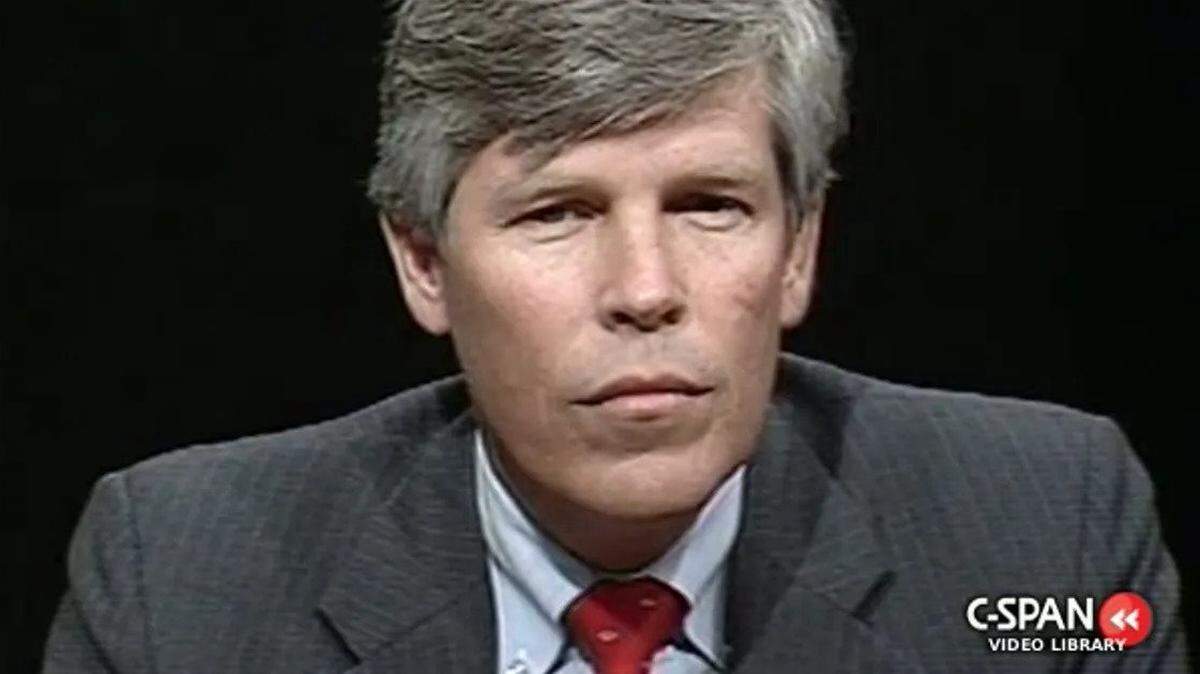
So the spirit of those years was not one of peace and harmony. And I was anything but a nonpartisan participant. In the House, I was one of the “young turks” who organized something called the Conservative Opportunity Society. We were a minority, within a minority, so we made ourselves heard on C-Span and elsewhere. Our effort led, in time, to the first Republican majority in the House since the Eisenhower years. Newt Gingrich, a prominent member of the COS team, became House speaker.
So I certainly wasn’t nonpartisan. What, after all, would have been the point? You go to Washington to get things done. Or you should, anyway. Too many, unfortunately, see it as a career choice.
But while I was undeniably partisan, I tried to maintain a sense of civility and, above all, to see people on the other side as “opponents.” Not enemies. In one case, when Sen. Robert Byrd, the majority leader and a partisan Democrat, accused me of violating the Senate’s rules of decorum, I went to the floor to apologize.
And he accepted it.
I was escorted down the aisle of the Senate to be sworn in by Bob Graham, a Democrat with whom I later worked closely to craft legislation that would restore the Everglades.
I am still friends with Joe Lieberman and many others who were political opponents. But they were never enemies. They believed in their positions as I believed in mine.
And I had to respect that.
To me, the way to approach the predictable nastiness of the next 60 days is to stay calm and civil, tune out Twitter and the attendant bile, think hard on the issues . . .
And then vote.
Connie Mack III, of Florida, served in the U.S. House from 1983 to 1989 and then as a senator from 1989 to 2001. His memoir, “Citizen Mack: Politics — An Honorable Calling,” is scheduled to be released on Tuesday.