
Harris’ nomination is historic for Asian Americans, but we need more than symbols | Opinion
It has been a complicated year for Asian Americans. The coronavirus has spurred discrimination and xenophobia, and the president himself is using the derogatory terms “Chinese virus” and “kung flu.” Paranoia in about Chinese espionage contributed to questions about Asian Americans loyalties.
Sen. Kamala Harris’ official acceptance last week as Joe Biden’s running mate could provide an unexpected spark for the Asian American community. She is of Indian and Jamaican descent, making her the first Asian-American vice presidential candidate for a major party. Indian-American political activists have praised her selection, hoping it will invigorate the historically apathetic demographic to turn out in November.
But I am less confident that Harris’ selection will have much of an impact on the Asian Americans’ voting habits.
In 1958, while a graduate student at Georgetown University, one of my classmates asked me to support her boss, Sen. John F. Kennedy, in the upcoming election. I knew little about him other than that he lived across the street from me in Georgetown, and that I sometimes saw his wife walking their dog.
I had become a U.S. citizen the year before and, ultimately, voted for Kennedy. I have voted in every presidential election since.
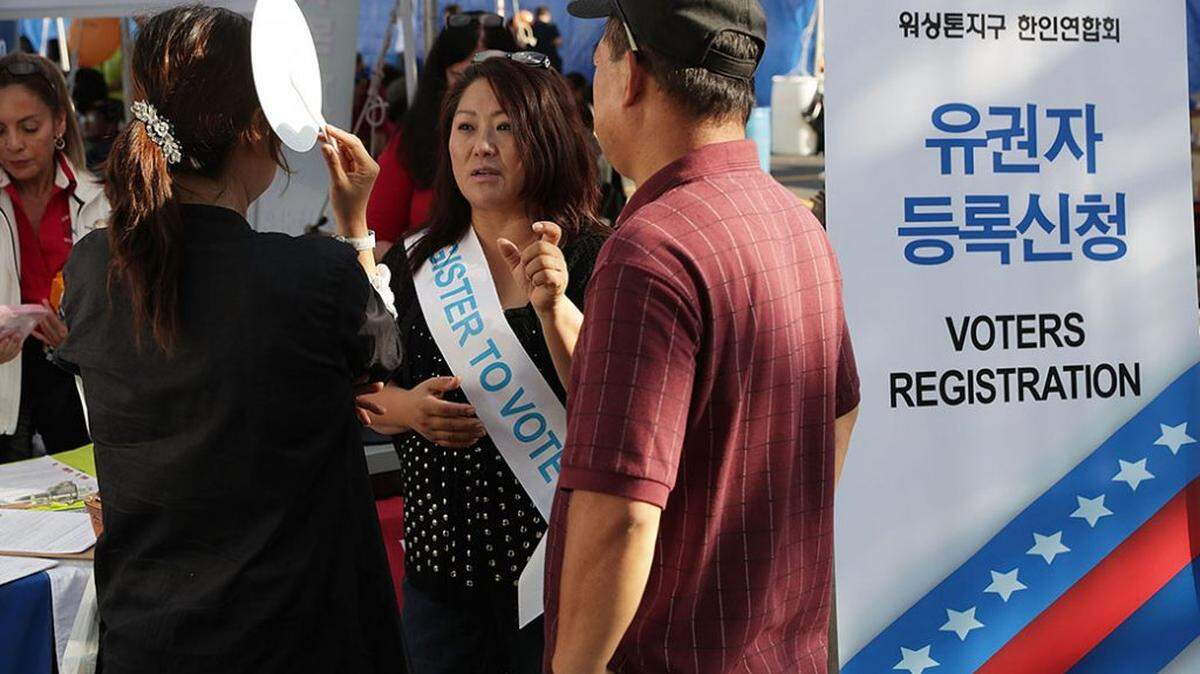
Now, both parties are courting Asian-American voters, but neither fully recognizes the true diversity of interests, experiences and perspectives of this group. Without addressing the issues impeding Asian-American turnout and solidarity among this loosely defined group, Harris’ mere presence on the ticket is not going to be enough to significantly change voting behavior.
The Asian-American population is estimated to be between 20 million and 22 million. Its members come from more than a dozen different countries, many without voting systems like that of the United States. Outside of states with large, vibrant Asian-American communities such as California and New York, potential voters are often scattered across states and districts and fail to attract significant time or investment political campaigns.
Lack of English proficiency is another barrier. While outreach to Hispanic voters can be directed by the large Spanish-speaking presence in the United States, Asian Americans speak more than a hundred languages and cannot be as easily targeted.
The media have begun to latch onto Asian Americans’ untapped potential. According to the Pew Research Center, the Asian-American electorate has grown 139 percent in the past 20 years. In the 2018 midterm elections, Asian-American turnout increased by 14 percent compared to the 2014 midterms, with 77 percent of Asian Americans’ votes going to Democratic candidates. The major parties waking up to the potential for Asian-Americans voters to sway elections, and are investing resources and personnel in outreach initiatives. The Democratic National Committee and the Trump campaign have full-time staff dedicated to Asian-American outreach. Trump’s campaign targeted Indian-American voters following the president’s state visit to India in February. Biden is wooing Asian American caucus-goers in Nevada by touting his support for the Obama’s administration’s DACA program, which benefited many young Asian Americans.
But I still fear that the media and the major parties fail to understand the complexity of Asian American political attitudes. The diversity of experiences and backgrounds among Asian Americans does not make generalizations easy, yet the media continue to use them to explain Asian American attitudes. Chinese-American support for Trump has been overblown. While some Chinese Americans have turned to Republican candidates in the past five years out of opposition to affirmative action, 61 percent of Chinese Americans voted for Hillary Clinton in 2016.
Much was written about how Nevada was the first litmus test for Asian American voter turnout in the 2020 primaries, but almost no attention was paid to the fact that the majority of Nevada’s Asian-American population are Filipinos working in Nevada’s hospitality sector. It is overly simplistic to think that this group’s voting behavior could be an indicator of how Chinese, Vietnamese and Korean Americans voted in California. By this logic, it remains to be seen whether Kamala Harris’s selection as Biden’s running mate will be enough to inspire voters from Asian minority populations outside of the Indian-American community.
Harris’ selection as the vice presidential candidate for the Democratic Party could help inspire greater participation, but without more systematic outreach to diverse Asian Americans, the real impact may be negligible.
Chi Wang is the former head of the Chinese & Korean Section at the U.S. Library of Congress and is the co-founder and president of the U.S.-China Policy Foundation, an educational nonprofit organization based in Washington, D.C.