
Federal elections watchdog has no teeth to prevent foreign interference | Opinion
On Aug. 7, the U.S. intelligence community issued a dire warning: Russia and China are actively interfering with the world’s oldest democratic system. The two global superpowers are using rudimentary techniques, such as fake Twitter accounts and bogus news stories, to sway Americans for their own agendas in advance of the 2020 presidential election.
This seepage of lies into our democracy is now an all-too-familiar nightmare, one we’ve come to ignore. Indeed, we failed to pay attention to the 2019 Mueller report, which highlighted the failure of critical domestic institutions to ensure a legitimate electoral process. Now we approach a presidential election that is sure to be tainted, just as it was in 2016.
There’s no doubt that electoral reform is necessary, but who’s protecting American democracy in the meantime?The simple answer is the Federal Election Commission. The FEC was created in 1975 — shortly after the Watergate break-in — to enforce campaign finance law in a bipartisan manner. It’s a critical institution, one that would enforce some of the solutions to election tampering.
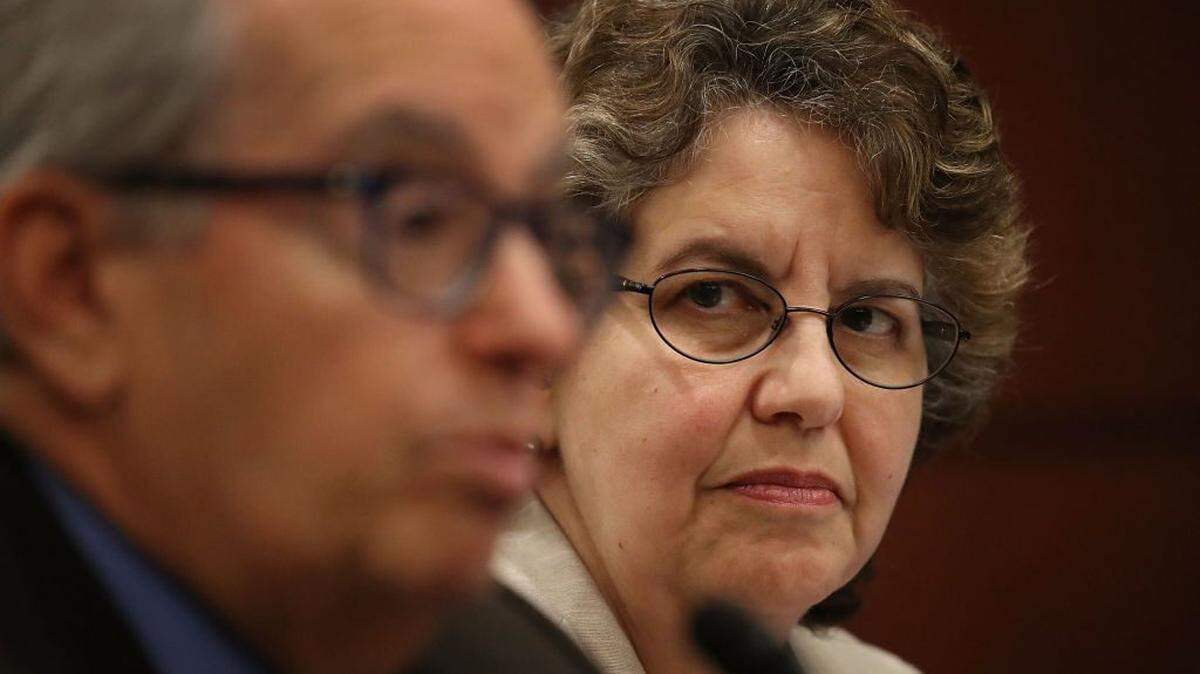
Yet, shockingly, the commission on which U.S. democracy rests is in complete shambles. Just months before the 2020 election, only three members sit on the FEC’s board; three seats are vacant. One member, Ellen Weintraub, is still on the board more than a decade after her term expired because of the lack of a confirmed replacement.
As foreign governments, namely Vladimir Putin’s Russia, aim to hijack online political advertising to sway the election, a dormant FEC shows America’s electoral vulnerability. Corporate entities, such as Facebook and Twitter, have disproportionate influence on voters, and regulation is currently impossible with an executive branch chronically disinterested in protecting American democracy.
One cannot expect for-profit social-media companies to self-police. Mark Zuckerberg, in a 2019 op-ed for The Washington Post, asked for federal regulation himself, calling for increased restriction on commercial speech and a definition of political ads.
Efforts to bolster the safety of America’s electoral process have all proved futile. A bipartisan proposal named the Honest Ads Act has failed to come to a vote in either chamber of Congress, almost three years after it was introduced. When a call to regulate social-media companies came up at the FEC in 2016, the partisan members couldn’t reach a majority consensus.
In response to this wave of manufactured misinformation, the federal government needs to reform the campaign finance process in a way that is constitutional. This can be done by requiring the same transparency from digital ads to which television and radio ads must adhere.
Our normally steadfast institutions failed us in 2016. They are sure to fail us again in 2020, regardless of who wins the presidency. We saw past election interference and stood pat for four years. Now, as we approach the 2020 election, we’re standing in the dark, and have yet to flip the ever-so obvious switch.
The reality is that our problems will not be fixed by November. Our democracy’s safeguards are in jeopardy now more than ever, and any solutions will need to come in the long term.
The longest-standing democracy in the world is under attack. The foundations on which our republic has stood for centuries are being eaten away by corporate greed and domestic inaction. We must use our power to fix them while the fight is still winnable.
Connor Wielgos is a freelance writer based in northern Illinois.
Progressive Media Project