
Cuba closed its borders to COVID, but people are suffering. To help, end the U.S. embargo | Opinion
I first visited my mother’s family in Cuba in 1979 when I was 12. On that trip, and the dozens of others during the next 40 years, I saw how my relatives and friends lived through a roller coaster of events, from the Cold War to the opening of relations under President Barack Obama.
I also saw how they suffered through the “Special Period” in the early 1990s after the Soviet Union collapsed and left Cuba bereft of its main trading partner. During those years, Cubans experienced extreme rationing that left many on the brink of starvation. Even if items were listed in the rations books everyone was given, often items such as meat, eggs, milk, bread or cooking oil — even Cuban-grown items like coffee and sugar — would be missing from the stores for weeks, if not months. Many of my relatives lost weight during that time, not out of vanity but for lack of food.
They were able to survive, in large part, because of my mother brought them bags stuffed with food, medicine, clothing and supplies — and, of course, whatever extra cash she saved up from cleaning houses in Florida —whenever she could visit.
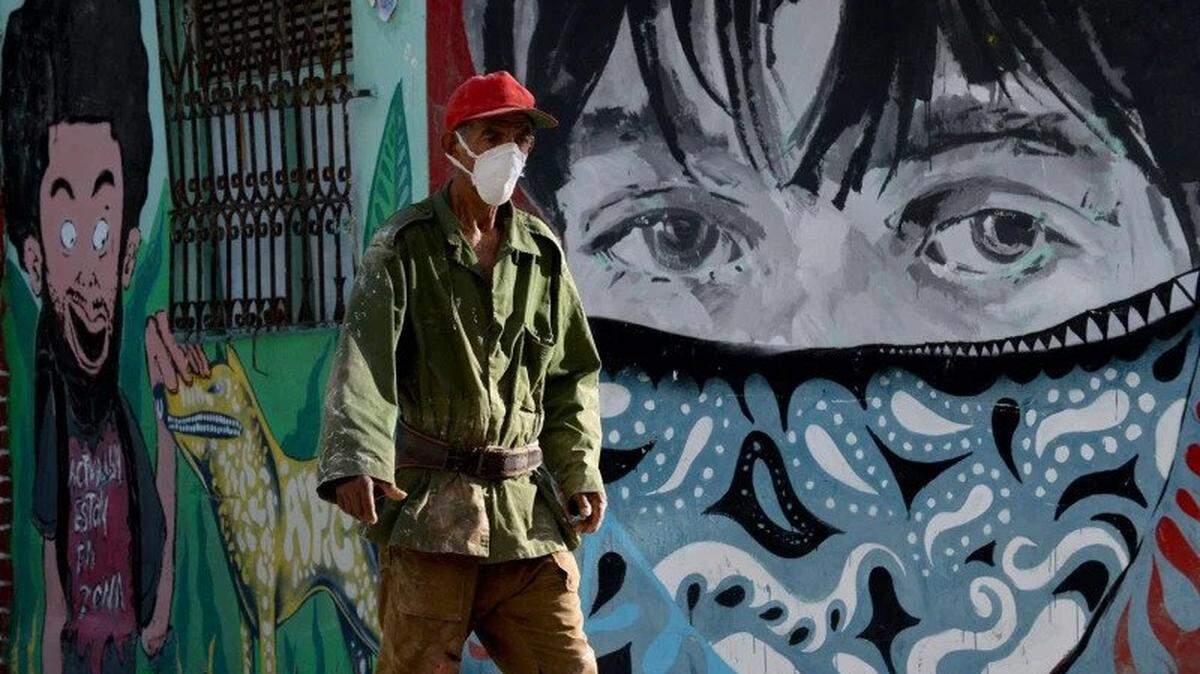
Now Cuba faces an even more dire “New Special Period.” When COVID-19 began raging across the globe, Cuba shut its borders in March to help control its spread, but in doing so, eliminated overnight a large chunk of the $4 billion generated annually by tourism. With a policy of social isolation, testing and monitoring, the island is mostly free of cases, but the normally cash-strapped government now has even less revenue to trade with, and Cubans are again facing a dearth of food, medicine, fuel and machinery.
Cuba is just beginning to reopen its outer island resorts to tourists, but most of the country remains off limits. Without knowing when that will change, Cuban Americans, like my family and me, are left on the sidelines, worried about how our relatives in Cuba will get through this economic crisis when we aren’t able to provide any significant support.
It’s time for President Trump to make good on his commitment that, “We will never turn our backs on the Cuban people,” not with more draconian rollbacks of President Obama’s policies — whose executive orders actually helped put hard currency in the hands Cuban citizens — but by finally ending the 60-year embargo.
In 2018, the United Nations estimated that, since the start of the embargo, Cuba had lost $130 billion cumulatively. Originally intended to pressure Cuba into embracing democracy, the embargo instead helped push Cuba further into the arms of the Soviet Union, and then Venezuela. Now, faced with a dwindling pool of trading partners, it has little choice but to do business with countries with anti-U.S. agendas. Russia, China and Iran all are deepening their relationships with Cuba, potentially gaining a foothold on an island that lies only 90 miles off the coast of Florida.
Eliminating the embargo would allow Cuba not only to trade with the United States, doing so also would give it access to a wider range of trading partners who are currently reluctant to do business for fear of prosecution under the Helms-Burton Act. It’s important that ending the embargo would also help bolster Cuba’s recently announced new economic strategy aimed at expanding the private sector. These reforms include removing the 10 percent tax on the U.S. dollar, allowing more stores to use that currency as payment and refocusing on internal food production and distribution.
Granted, the Cuban government has had a large hand in making a mess of its economy. The centralized distribution of goods and agriculture disempowers farmers and consistently leaves its citizens without stable sources of goods or food. Entrepreneurs are stymied by not being able to directly import goods legally. While the timeline for the new reforms is unknown, the recent announcement signals that Havana is willing to implement changes to benefit its citizens.
Indeed, Cuban President Miguel Diaz-Canel said in May, “It is necessary to have courage, and we have to do things differently. By doing the same thing we are not going to solve the problem, nor are we going to advance further.”
This is also time for the United States to have the courage to do something different that will truly help the Cuban people — whether with the current administration or with a new one — and end the embargo.
Katarina Wong is program manager for the Arts Administration program at Columbia University, an artist and arts writer. She is writing a memoir about her Cuban, Chinese and American heritages.