
If Guyana does not resolve its presidential elections, oil riches will slip away | Opinion
Guyana was poised on the cusp of staggering development just a few months ago. Enormous oil reserves found off the coast had raised hopes of turning one of South America’s smallest countries, still saddled with the legacy of its colonial past, into one of the continent’s richest.
Since 2015, an ExxonMobil-led consortium has found more than 8 billion barrels in deep waters off the coast, and ambitious production timelines had Guyana outpacing Mexico and even Venezuela in production within the decade —bringing in tens of billions of dollars that the revenue-starved government desperately needs.
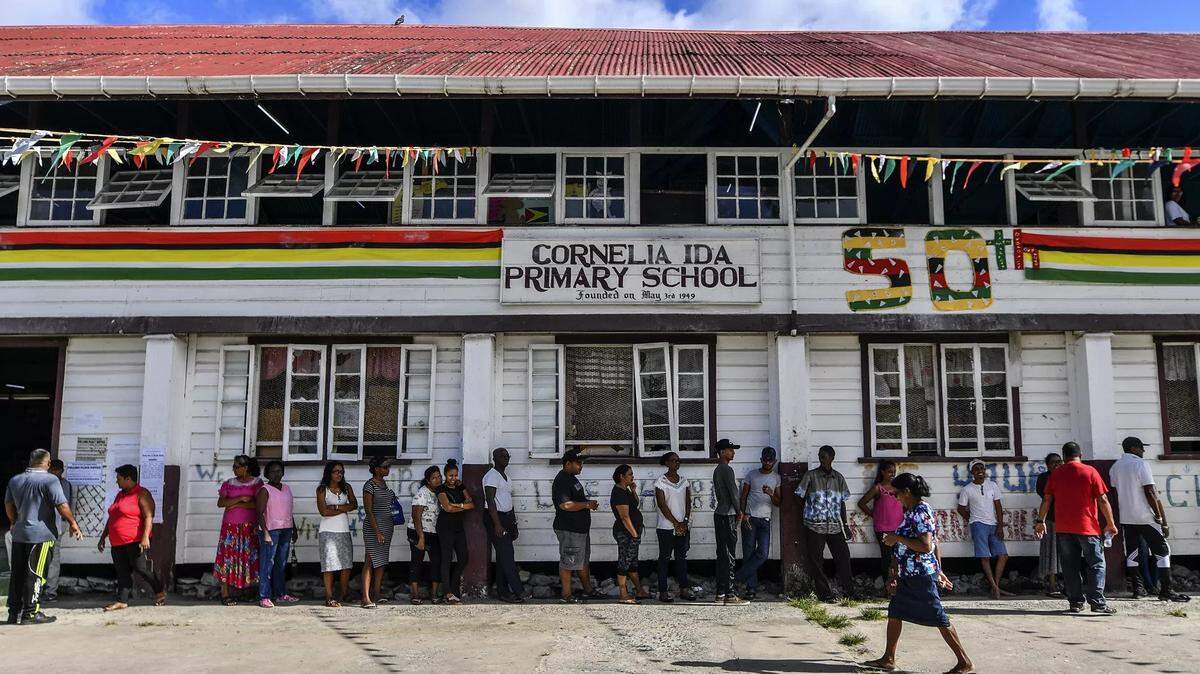
But that timeline is now in serious risk. Guyana is not only grappling with the spread of COVID-19 but also with the March 2 elections that remain undecided months later after widespread accusations of fraud and an internationally supervised recount that the government refuses to accept.
President David Granger and opposition leader Bharrat Jagdeo are in a political deadlock despite rulings from the Caribbean Court of Justice and Guyana’s High Court that the election must be declared based on the recount. The recount found that Jagdeo’s People’s Progressive Party (PPP) won by more than 15,000 votes. But Granger has refused to step down after claiming that the recount also uncovered massive fraud in the initial election — something that recount observers (national, regional and international) have soundly rejected.
Earlier this month, U.S. Secretary of State Mike Pompeo imposed sanctions on Guyanese government officials, restricting the U.S. visas of “individuals responsible for or complicit in undermining democracy in Guyana.” The international community is largely united on the subject with the European Union, every major South American democracy, the Organization of American States and the regional body CARICOM, all of whom are calling for Granger to respect the results of the recount. Canada and the United Kingdom, which are home to most of the Guyanese diaspora outside the United States, both appear to be preparing sanctions of their own.
That turmoil is putting the country’s rapidly growing energy industry at serious risk. The government now is months behind on approvals for the next project phase of oil development, and the regulatory backlog appears to be growing by the day as the political situation remains murky.
In the best-case scenario, the development partners involved would receive approval later this year, but analysts are now predicting that the Payara field may not be sanctioned until the first half of 2021 and will achieve first oil by 2024.
This might mean billions in lost revenues and a big hit to local companies that have invested heavily to meet the needs of the new industry. According to two new studies from the energy consultancies Rystad Energy and Wood Mackenzie, project delays could reduce the government’s take by more than $4.5 billion and could trigger a domino effect — delaying future projects one after the other and leaving the thousands of Guyanese who have trained to join the industry in the lurch.
For Guyana, this is no academic concern. It’s neighbor, Suriname, is competing for investment dollars as well and had a peaceful transition to a democratically elected government for the first time in decades earlier this year. That government has already pledged to attract investment in its own offshore oil fields to jump-start the economy.
In a time of extremely tight exploration budgets, low oil prices and a global economic slowdown, Guyana cannot afford to be seen as an unreliable or inhospitable partner. In order to secure its future as a leading producer, Guyana first needs to resolve its political unrest and establish a functional regulatory system ready to meet a new set of challenges.
The international community has already sent a strong signal that it will not accept a departure from democracy in Guyana. Resolving that uncertainty, empowering independent regulators and respecting the democratic process would go a long way toward reassuring investors that Guyana still wants to be a partner.
David E. Lewis is vice president of Manchester Trade Ltd., an international business advisory firm in Washington, D.C. A former assistant secretary of State for Caribbean Development in Puerto Rico, in 1991 he led the first U.S. investment mission to Guyana under the Caribbean Basin Initiative. He is an adjunct professor at the FIU School of Business.